

Moldavians Defeat the Poles at Battle of the Kozmynskyi Forest
Alexander Bely remembers the events of October 26th, 1497.
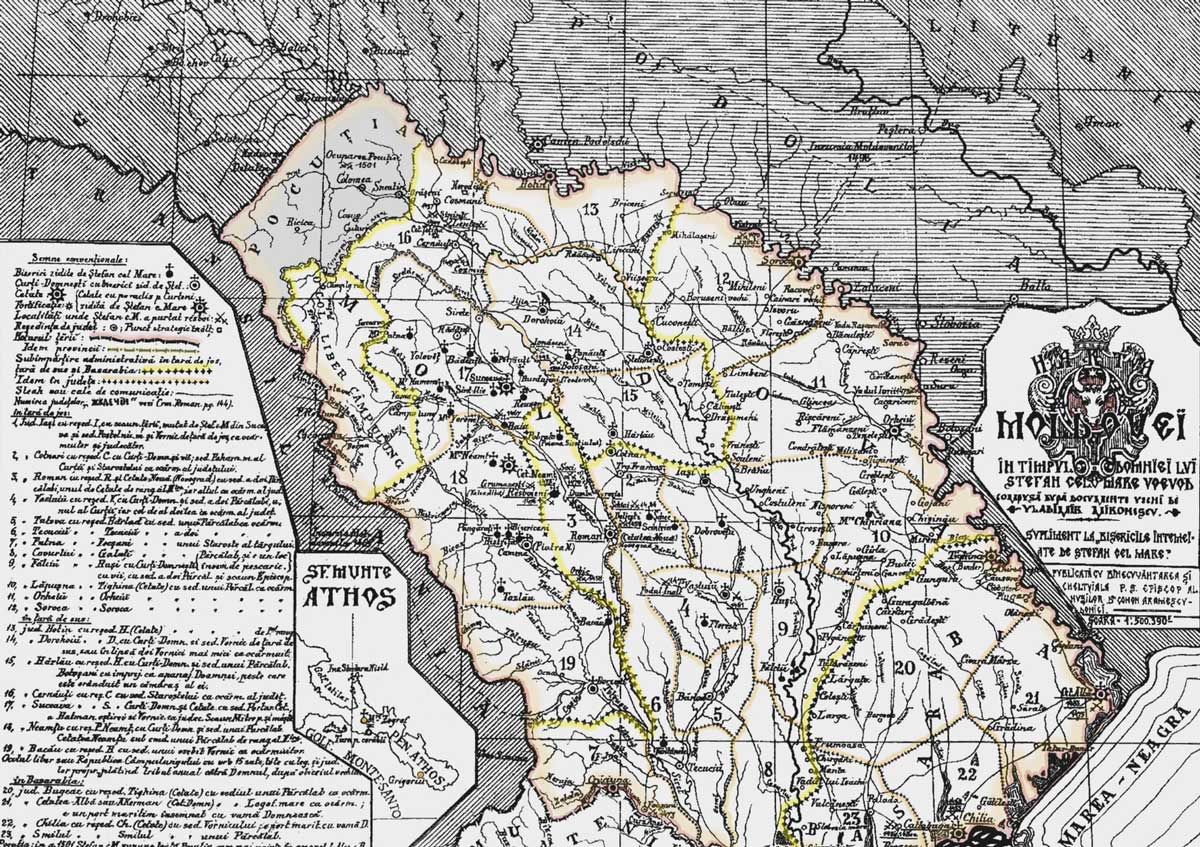
This battle was the last great victory won by the Moldavian Prince Stefan III the Great, who skilfully defended his small principality encircled by three great powers of the time - Hungary, the Ottoman Empire and Poland, for almost half a century (1457-1504). The main purpose of Polish invasion in 1497 was the incorporation of Moldavia, hidden behind plans to liberate the Moldavian Black Sea ports, Kilija and Bilhorod, from the Ottomans. Of the 80,000-strong Polish army, 60,000 were the Noble Militia, and the rest were auxiliary troops of Poland's vassals, Mazovia, the Teutonic knights of Prussia and its ally, the Grand Duchy of Lithuania.
Forced to withdraw after two months futile siege of the capital, Suceava, the Polish king Jan I Olbracht signed an armistice with Stefan in which, inter alia, the route for the withdrawal was specified. Deviation from this route gave Stefan a formal pretext for a sudden attack on the Poles from the rear in the primeval Kozmynskyi Forest on October 26th, 1497, at the site of the present-day settlement of Hlyboka, 30km to the south of Chernivtsi, provincial centre in the Ukraine. The Moldavian army was reinforced by Turkish, Tartar and Hungarian troops.
The Poles were utterly routed, the flower of their nobility perished, but the king himself miraculously escaped capture. According to tradition, Stefan refused to take ransom for the Polish captives, but harnessed them to ploughs and forced them to plough up the battlefield and to sow it with acorns. This, it is said, is the origin of the forest called by the Moldavians Rosie (the red oak-wood). From this time, too, comes the Polish proverb: 'When Olbracht did reign, was nobility slain'.
This article was amended to correct Stefan III's title, previously noted in the magazine as Stefan IV.

