

Louis-Philippe and the 1848 Revolutions
Robert Pearce asks why Louis-Philippe's 'July Monarchy' was overthrown.
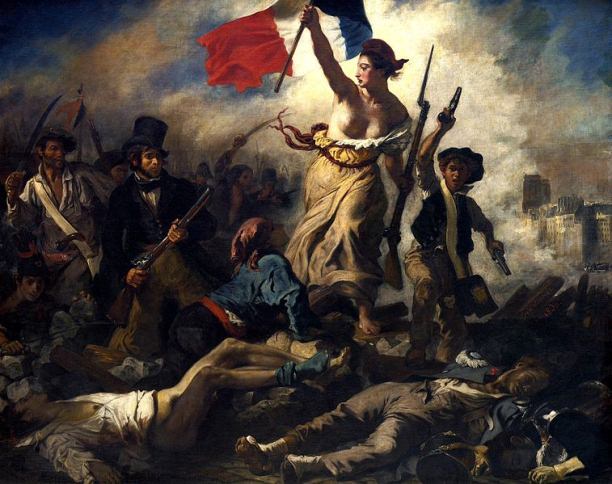 What started out as a revolution, in 1789, became a revolutionary tradition in France the following century, after further revolutions in 1830 and 1848. The 1830 coup owed a good deal to factors under no one’s control, including widespread economic grievances, but a good deal more to the actions of the restored monarchs, Louis XVIII and, especially, Charles X. But that of 1848 occurred despite the fact that the new monarch, Louis Philippe, had consciously drawn lessons from the failures of his predecessors. If they had been too reactionary, he in contrast was the ‘Citizen King’. Why therefore was he overthrown? To what extent was Louis Philippe responsible for the 1848 revolution in France?
Louis XVIII
Louis XVIII was clearly in for a rough time. The unparalleled upheavals of the previous quarter century had spawned opposition groups aplenty. Furthermore, Napoleon’s ‘Hundred Days’, and the consequent necessity for the Allies to bring about a second restoration, made him seem the enemy’s choice as monarch; and the Second Treaty of Paris was much harsher than the First. The omens for a stable future were inauspicious. A ‘White Terror’ against the supporters of Napoleon, which broke out in southern France in 1815, was certainly not the only example of violent score-settling in these troubled times. Perhaps survival was itself some sort of success – and Louis XVIII did manage to survive. He died in 1824 with his head firmly attached to his body, and the crown passed legitimately to his younger brother.
Economically, there were undoubted successes during Louis’ reign. Capable ministers such as the king’s favourite Élie Decazes reformed government’s finances, and despite bad harvests in 1816-17 the post-Waterloo war indemnity was paid off in 1818 and foreign troops withdrew. France began a period of quiet but real prosperity. Nevertheless Louis left Charles X a difficult political legacy.
Louis accepted the Charter of 1814, which gave him substantial powers but did regulate his rule, so that France was now a constitutional, though not a parliamentary, monarchy. The key issue was whether he could convince the pays légal (the 100,000 or so wealthy men who elected the Chamber of Deputies) that he would make the Charter a working reality. Many were immediately suspicious that he could not. After all, he believed in the divine right of kings, court ceremonial resumed its time-honoured and elaborate course, and Louis insisted that the white Bourbon flag should replace the more popular Tricolour.
A major problem was the king’s inability to control the ‘Ultra-royalists’. For them, the Charter was a temporary expedient, parliamentary institutions should be abolished, and the land taken from Church and aristocracy in the 1790s should be restored to its rightful owners. The king may have realised the impracticality of their programme, but he lacked the will to quash all of their demands. As a result, leading figures who had deserted the Bourbons and rallied to Napoleon were punished. Many managed to escape, but others – like the popular Marshal Ney, who faced a firing squad – became martyrs to the Bonapartist cause. In addition, thousands of civil servants and other officials were dismissed to make way for royalists. The situation became more extreme after the assassination of the king’s nephew, the duc de Berry, in 1820.
Amidst widespread public outrage, the Ultras – who included his own brother, the Comte d’Artois, the father of the murder victim – managed to convince Louis that his moderation had only encouraged such revolutionary activity. A new electoral law gave additional Deputies to the richest quarter of the electorate, so that the Ultras dominated the next Chamber of Deputies and the Ultra parliamentary leader, the Comte de Villèle, became the king’s chief minister. Now internment was allowed, French forces invaded Spain in support of the despotic Ferdinand VII, the Church was given fresh powers over education, and plans were laid to compensate the tens of thousands of émigrés whose lands had been confiscated. The years from 1821 to 1824 may have been a period of prosperity, but the origins of the 1830 revolution are clearly visible in the reign of Louis XVIII.
Charles X
Charles X became king in 1824. At 67 he was certainly past his best, but he seemed to have a charm and a vitality that his elder brother had signally lacked. Yet he promptly made a difficult situation worse. Already the pays légal harboured deep suspicious of the new king because of his Ultra associations, and now Charles emphasised ancien régime sympathies by being crowned at Rheims with all the pomp and ceremony of an absolute monarch. It was all too easy to believe that he was planning a counter-revolution.
Perhaps there was an over-reaction to a law passed in 1825 to compensate the émigrés and their families, but it was an unwise measure nevertheless. Émigrés did not get their land back, and the amount of money involved was relatively small, but it was understandable that the pays légal did not judge the measure on its merits. The money was to be raised by lowering interest payments to bourgeois bond-holders, so that many members of the pays légal thought they were being robbed to pay worthless aristocrats. Similarly, they were highly suspicious about the clerical policies of the new king. Charles’s initiatives, which included welcoming the Jesuits back to France and appointing a bishop as Minister of Education, were thought to presage a return to the supreme position enjoyed by the Church before the Revolution.
Nor was his policy towards the press enlightened. The Charter of 1814 had guaranteed freedom of the press, though adding that laws might be passed to check the abuse of this freedom. The pays légal interpreted this to mean that newspaper would be liable to legal action if they printed illegal material. Yet until 1822 the Government generally insisted that no political news or opinion should be published until vetted by the censor; and after 1822, it attempted to use restrictive regulations, specifying what could and could not be printed. In 1828 Charles changed tack and virtually abandoned censorship, but the damage had been done.
Matters came to a head in March 1830. Elections at the end of 1827 had left Villèle with only minority support in the Chamber, but instead of accepting more liberal policies Charles had appointed his favourite and an extreme Ultra, Prince Jules de Polignac, as chief minister. What remained of moderate support for the king then joined the opposition in a deadlocked Chamber. Hence Charles now called fresh elections in the hope of generating support for Polignac. He made every effort to influence the voters (‘May you all rally around the same flag! It is your King who is asking you to do this; it is your father who is calling upon you’). But two opposition Deputies were elected for every one government supporter.
The elections of June 1830 represented a defeat Charles was not prepared to tolerate. If things carried on like this, he reasoned, he would sink to the lowly status of the king of England. Monarchy was under threat, and he would not repeat the mistake of his brother, Louis XVI. He told his ministers that he remembered very clearly what had gone wrong in 1789: ‘the first retreat made by my hapless brother led to his downfall’. Instead, he would act boldly using royal edict to restrict the franchise to the richest elements (about a quarter) of the pays légal, at the same time instituting press censorship. To some contemporaries and many historians, he was planning what was in effect a coup d’état, embodied in the four Ordinances of St Cloud of 25 July 1830.
If Charles had conducted the actions efficiently, arresting potential leaders of an uprising before the Ordinances were published and stationing his own troops at key positions in Paris, he could have been successful, at least in the short term. As it was, barricades were erected 28 and 29 July and the rioting was strong enough to convince Charles that he must abdicate. He fled to England on 1 August.
The course of events does not fully explain why Charles fell. He had bad luck in that the difficult economic situation from 1826, exacerbated by bad harvests, created a revolutionary situation. The price of bread had risen sharply, unemployment was high, and many Parisians were prepared to revolt. But it was Charles’s unwisdom that transformed a potential for violence into a true revolution. He had been too reactionary and inflexible, too unaware of the need to generate support. Could his successor act more moderately and intelligently and provide political stability?
Louis-Philippe
The heady days of 1830 led some revolutionaries to call for a republic, but not so the many bankers, traders and professional men who, while welcoming the overthrow of Charles X, were aghast at the prospect of a revolution that did not respect the rights of property and might be in the hands of the ‘masses’. Placards appeared in Paris pleading the cause of Louis-Philippe, duc d’Orléans, as the next king, and he seemed the obvious compromise candidate. His father had supported the Revolution and even the execution of the king in 1793. Louis-Philippe himself, though a teenager in 1789, had enthusiastically championed the revolutionary cause and fought with the revolutionary armies in the battles of Valmy and Jemappes in 1792. He was therefore acceptable to the more moderate republicans, and even more so to the right, since he was a direct descendant of Louis XIV’s brother.
The new 56-year-old king was hardworking and energetic, good with people, serious-minded, and determined to make a success of his new role. Most important of all, he had no pretensions to absolutism. He did not claim to be king by divine right, and indeed was proclaimed not roi de France, a title suggesting ownership of the country, but roi des Français: in theory, he ruled because the people wanted him to and on terms they had agreed. Supporters compared him to William III after the ‘Glorious Revolution’ of 1688-9 in England. He restored the Tricolour, symbolising his repudiation of the ancien régime, and insisted that he would be bound by the Charter. So far, so good.
Personally, he was unlike any previous king. He was the bourgeois, or Citizen, king. In sharp, and to some shocking, contrast to his predecessors, he scorned being waited on hand and foot. He would get up unaided in the morning, shave himself and make his own fire. Rather than being remote and inaccessible, he talked to visitors quite informally. He even walked the streets of Paris virtually unattended and carrying that symbol of bourgeois respectability, a rolled umbrella. His sons attended the local lycée. He also bucked the trend by having no mistresses or illegitimate children – much to the dismay of gossips. In fact, the main charge laid against him was that the Court was now rather dull and that he personally – dressing without splendour, overweight and with sagging jowls – was just too ordinary to be a king. To many critics, a ‘Citizen King’ was a contradiction in terms.
He was also, in sharp contrast to Charles X, a sincere reformer. Important changes were made, all designed to remove the grievances that had led to revolution in 1830. The Charter of 1814 was revised, so that the Chamber could now initiate legislation, and gone was the king’s power to suspend laws and rule by decree. The franchise was extended to cover those over the age of 25 who paid 200 francs in taxation a year. Still fewer than three per cent could vote, but at least it was an improvement, 94,000 becoming 166,000. In addition, the minimum age for a Deputy was reduced from 40 to 30; more locally elected councils were established; and units of the National Guard could now elect their own officers. Catholicism was no longer the state religion but simply the religion of the majority; the church could not now control education; and the Jesuits were expelled. There were also purges of officials, many nobles being replaced by members of the bourgeoisie. Similarly, the censorship laws were changed, so that legal action could be taken only after stories had been printed.
The overall effect of the reforms was that the nobility had lost their preeminence, power passing to the haute bourgeoisie, the upper-middle classes. The key question is whether the reforms went far enough. The 1830 settlement certainly did not satisfy everyone. Workers in Paris were demanding guaranteed wage levels and a fixed number of hours in the working day, and several times barricades were erected in Paris and elsewhere in the early years of the decade. There were even attempts on the king’s life, so that societies of the extreme left and right were banned in the September Laws of 1835. Nevertheless it seemed to many that Louis-Philippe had made a good start to his regime. So what went so badly wrong that another revolution occurred in 1848?
Origins of 1848
The political question had been addressed in 1830, but there could be no final ‘solution’, not in a period of rapid socioeconomic change when newly wealthy men wanted a say in politics for the first time. What seemed perfectly acceptable to many in 1830 looked remarkably oldfashioned to most people in 1848.
After 1830 there were two main groupings among politicians: the ‘party of movement’, who wanted further changes, and the ‘party of resistance’, who continued to believe that ideal arrangements had already been reached – despite the fact the electoral system took no account of social and economic changes, so that growing cities, including Paris itself, were more and more seriously under-represented. Fatefully, the King sided with the ‘party of resistance’, and for eight years, after 1840, he worked harmoniously with a chief minister, François Guizot, who had the same ideas. The two men forged a cohesive, but ultimately calamitous, partnership.
By this time, things were looking up in France. The economy began to grow and the standard of living to improve. The development of railways was a particularly important engine of growth in the first half of the 1840s, and the production of pig iron and the extraction of coal forged ahead. Guizot said after his appointment: ‘Let us not talk about our country having to conquer territory … If France is prosperous, if she remains free, rich, peaceful and wise, we need not complain.’
Support for the regime should have been high, but a time of prosperity is also generally a time of aspiration. Guizot’s ideas were out of touch with those of the reformers. He saw no reason to extend the franchise – especially as he could use the government’s powers of patronage, and a little bribery, to produce a majority in the assembly. He was also increasingly out of touch with public opinion on foreign affairs. No longer were Frenchmen prepared to stand aside from the rest of Europe. After licking their wounds following Napoleon’s defeat, they wanted once again to be the leading Power in Europe. Key elements of the public would have liked at least a small war with Britain. When trouble arose between the two countries in 1842 over Tahiti and Guizot apologised to the British and paid compensation, a debate in the Chamber was won only with the votes of the government’s ‘placemen’. This led to vociferous demands for parliamentary reform and for the stamping out of corruption in high places. Further criticisms arose in 1846 over the government’s policies towards Spain and its timid reaction to Austria’s annexation of Cracow.
To the mix of growing troubles should be added the licence of the press. Louis- Philippe’s reign saw the appearance of some of the most subversive newspapers that had ever been allowed to exist. The press now had a much wider circulation than before, and a number of talented but sadistic cartoonists lampooned the government and monarch. An atmosphere was created in which it was difficult to retain faith in the regime even when it was doing well. Louis-Philippe later complained that he was the victim of the ‘printed lie, a cowardly and treacherous weapon … which inflicts wounds that never heal, because they are poisoned’.
Most important of all, prosperity disappeared in 1846. There were falls in share prices and an industrial slump. Food prices rose steeply and there was less to spend on industrial goods. A vicious downward circle of decline was formed. The government was blamed for causing the trouble and also for failing to help the poor. This discontent boosted the campaign for parliamentary reform, opposition groups organising banquets from July 1847 to circumvent restrictions on public assemblies. Timely concessions were in order, but Guizot stubbornly refused reform. The government was taken unawares on 22-24 February 1848. Once more the barricades went up in Paris, and now the National Guard refused to act. Finally Louis-Philippe sacked Guizot, but it was too late. Civilians were killed in the confusion, and the revolt had become a revolution. This king, like his predecessor, fled the country.
Conclusion
No form of politics and no ruler would have had an easy ride in the period from 1815 to 1848 – partly because of the divisive events of the past and partly because of the rapid change France was undergoing. No king could have pleased all the people all the time, nor even all of the people some of the time.
Both Louis XVIII and Charles X were reactionary. If they did not both attempt to return to the ancien régime (the good old days from their point of view), they gave the impression that they wanted to. The events of 1830 were, in many ways, a revolution waiting to happen at a time of economic depression. Charles X might have kept his throne if he had been far more flexible; but, as it turned out, he precipitated revolution by an attempted coup.
It is easy – in fact all too easy – to feel sorry for Louis-Philippe. Here was no would-be absolutist but a genuine ‘Citizen King’, unfairly mocked by other monarchs in Europe for his bourgeois lifestyle. Coming to the throne at 56, he seemed both intelligent and pragmatic. Yet in fact he was as set in his ways as either of his predecessors. They were true to their vision of the legitimate rights, duties and actions of a monarch, and he was true to his. He genuinely believed in the form of limited monarchy he established around 1830: to him, this was the ‘juste milieu’. Perhaps it was too much to expect that as he got older – and he was 75 in 1848 – he would become more flexible and intellectually adventurous. He had no sympathy with the calls of Adolphe Thiers and others that he should extend the vote significantly and himself become a figurehead. As with Charles X, Louis-Philippe’s resistance to reform helped produce revolution.
Both monarchs had the bad luck to be on the throne at a time of economic dislocation. Problems were much greater in 1848 than 1830, so much so that depression helped unleash revolutions in almost all of Europe’s major cities. Furthermore the opposition groups, bound by liberal or revolutionary socialist ideology, were more potent than in Charles X’s day. Nevertheless Louis- Philippe must take the responsibility for hanging on to Guizot, instead of granting parliamentary reform; and he did so not because an evil minister was leading him astray but because he wanted to.
Louis-Philippe’s monarchy was a sort of half-way house between the French tradition of a strong executive monarch and the British parliamentary system, with the monarch as a figurehead. British monarchs might have no real political power by the middle of the nineteenth century, but when prime ministers were criticised and forced from office, they were unaffected. Charles X had cast scorn on the weakness of his opposite number in United Kingdom: he said he would rather chop wood than be a British monarch. Yet had Louis-Philippe been less like William III and more like Victoria, he might well have retained his crown.
The ‘July Monarchy’ was inadequate as a system of government in that it revealed the flaws in the hereditary principle much more clearly than did the contemporary British system. When Queen Victoria refused to play her full role after the death of Prince Albert, it did not much matter; and when she became old and somewhat decrepit, a carefully fostered aura of majesty prevented calls for her abdication. Yet Louis-Philippe’s role did matter. He had real power and he scorned other than a bourgeois image; but in 1848 French citizens saw quite clearly that the ‘People’s King’ was old, doddery, garrulous and out of touch. He had to go.
Issues to Debate
• What were the key events in France’s past that divided society in 1815?
• How ably did Louis XVIII, Charles X and Louis-Philippe function as kings?
• Did the constitutional reforms of 1830 amount to much?
• Might the king have prevented revolution in 1848?

