‘Good Jesu, what will you do with my heart?’ These were supposedly the final words of Prior John Houghton, as the knife plunged into his chest. He was executed on 4 May 1535: a brutal business at Tyburn, the site famous for its garish public executions. Houghton and his fellow accused were dragged through the London streets and hanged, before being cut down, disembowelled while still breathing, and, finally, decapitated. Their severed body parts were sent around the city for public display, a ‘pitiful and strange spectacle’, and a stark reminder of their high treason.
The convicted were devout men, and included three leaders of Carthusian charterhouses: priors John Houghton of the London Charterhouse, Robert Lawrence of Beauvale, and Augustine Webster of Axholme. The Carthusians were a monastic order renowned for their deeply contemplative lifestyle. Established in France during the 11th century, the Order pursued a hermit-like existence of solitude and prayer. The Carthusians arrived in England in the 12th century, and nine monasteries were founded between 1178 and 1429. By 1540 they were all gone.
Register to read more articles for free.
When you register, you will receive the History Today newsletter. Click here to read our Terms of Use.
‘Good Jesu, what will you do with my heart?’ These were supposedly the final words of Prior John Houghton, as the knife plunged into his chest. He was executed on 4 May 1535: a brutal business at Tyburn, the site famous for its garish public executions. Houghton and his fellow accused were dragged through the London streets and hanged, before being cut down, disembowelled while still breathing, and, finally, decapitated. Their severed body parts were sent around the city for public display, a ‘pitiful and strange spectacle’, and a stark reminder of their high treason.
The convicted were devout men, and included three leaders of Carthusian charterhouses: priors John Houghton of the London Charterhouse, Robert Lawrence of Beauvale, and Augustine Webster of Axholme. The Carthusians were a monastic order renowned for their deeply contemplative lifestyle. Established in France during the 11th century, the Order pursued a hermit-like existence of solitude and prayer. The Carthusians arrived in England in the 12th century, and nine monasteries were founded between 1178 and 1429. By 1540 they were all gone.
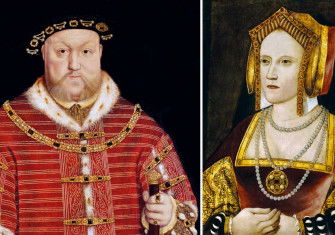
What crime had these godly men committed to elicit such violence? Quite simply, they refused to accept the Acts of Succession and Supremacy passed in 1534. The first had legitimised Henry VIII’s new marriage to Anne Boleyn and any heirs that it would produce, and the second declared Henry as the supreme head of the Church of England. These Acts were part of the severance of England from the spiritual authority of the pope which, in the reigns of Henry VIII’s children Edward VI and Elizabeth I, would develop into a move to Protestantism.
Almost immediately after the Act of Succession was published in March 1534, royal commissioners began to pressure the monks of the London Charterhouse to submit. The Carthusians were a significant target; due to their respected spiritual authority for ‘holiness of life and … learning’, their compliance might have spurred acceptance from the wider population. Henry’s mistrust may have also developed from earlier disputes with the Carthusians. In 1521 Nicholas Hopkyns of the Hinton Charterhouse in Somerset had prophesised that Henry would die heirless – a treasonous offence that likely tainted Henry’s perception of the Order.
When first questioned by the commissioners in April 1534 Prior Houghton was evasive, stating that the monks should not meddle with the king’s affairs. This pacified them. However, the Carthusians could not avoid swearing a formal oath of allegiance for long. The commissioners returned a few weeks later. When asked his views, Houghton questioned how the longstanding marriage between Henry and Katherine, which had complied with Church customs, could possibly be annulled; for this, he was imprisoned for a month in the Tower of London. By the commissioners’ third visit in May 1534 Houghton was more tactful, increasingly aware of the uneasy situation. He signed the Oath of Supremacy, acknowledging Henry, but included the caveat ‘as far as the law of God permits’. This was not active resistance, but it was defiance. It bought him time but, with the Treasons Act coming into force in early 1535 criminalising any denial of Henry’s supremacy, the issue was not settled.
Portrait of a Carthusian, Petrus Christus, 1446. Metropolitan Museum of Art. Public Domain.
Around this time the priors of Beauvale and Axholme arrived at the London Charterhouse and, alongside Houghton, were increasingly uncomfortable with what was being asked of them; accepting Henry as head of the Church would defy their obedience to the pope. They asked to meet with Thomas Cromwell, an instrumental player in dissolving the monasteries, to find a solution that did not compromise their values. This was a terrible idea. Cromwell not only denied their request but sent them immediately to the Tower of London. Joined by Bridgettine Father Richard Reynolds of Syon Abbey, the four men were interrogated ruthlessly, taken to Westminster, and charged with denying the king as supreme head of the Church. When asked a final time for submission, they refused, stating that ‘there is one Catholic Church, of which the bishop of Rome is the head’. The verdict was guilty, and the sentence was death.
After the executions, a dismembered arm of John Houghton was returned to the Charterhouse as a reminder of the price of his defiance. To the monks within, it held very different value. The arm was affixed to the front gate with strict instructions that it not be removed. However, three days later, the arm fell. It was quickly retrieved by the lay brothers and smuggled away. As a final piece of their beloved prior, the arm was treated with the deepest compassion. It was placed in a box with the shirt that Prior Houghton had supposedly worn to his death, and was, so the story goes, secretly buried somewhere on Charterhouse grounds.
Unfortunately, this bloody story did not end there. The following month, three more monks of the London Charterhouse walked defiantly to their deaths for refusing to accept the Oath. Then, in 1537, four monks from the London Charterhouse were hanged from the York city battlements. As Maurice Chauncy, a surviving Charterhouse monk, later wrote, the final group of ten monks and laybrothers from the London Charterhouse was accosted in May 1537, ‘loaded with chains and thrust into a foul prison called Newgate’. Disease ravaged the monks, and all but one died. The survivor, William Horne, was not spared. He was hung, drawn, and quartered at Tyburn in 1540 with a group of other Catholics: a final emblem of Carthusian resistance.
The prior of Sheen monastery had previously written to the monks remaining at the London Charterhouse to ‘advise them not to die for the cause, but save themselves and their house and submit to the Prince’. They did swear allegiance to Henry, but the monastery was closed in 1537 nonetheless and the monks disbanded, with many fleeing abroad.
Chauncy wrote favourably of John Houghton’s final moments: ‘If only, my reader you had beheld the merciful man … how kindly he spoke to his executioner … and lovingly he embraced and kissed him.’ Chauncy’s words preserve a pious image of the Carthusians, but we can imagine how appalled many were by these events. The bishop of Faenza wrote in 1535 of the ‘cruelty of the king of England to certain religious men’, just one of many to spread the news across Europe. The executions of the Carthusian monks offer a small insight into England’s break with Rome and the reshaping of the religious landscape. They demonstrate the painful divisions of Henry VIII’s reign and the human cost of the dissolution of the monasteries.
Victoria Sands is a DPhil History student at Lincoln College, Oxford.