‘Forgetting need not mean condemning the past to eternal oblivion’
Omar G. Encarnación is Charles Flint Kellogg Professor of Politics at Bard College and author of Democracy Without Justice in Spain: The Politics of Forgetting (University of Pennsylvania Press, 2014)
Reckoning with a painful history or forgetting and ‘moving on’ is a familiar conundrum for many countries. Those choosing reckoning might prosecute former leaders, organise a truth commission and issue reparations. Argentina, Germany and South Africa have each chosen this path.
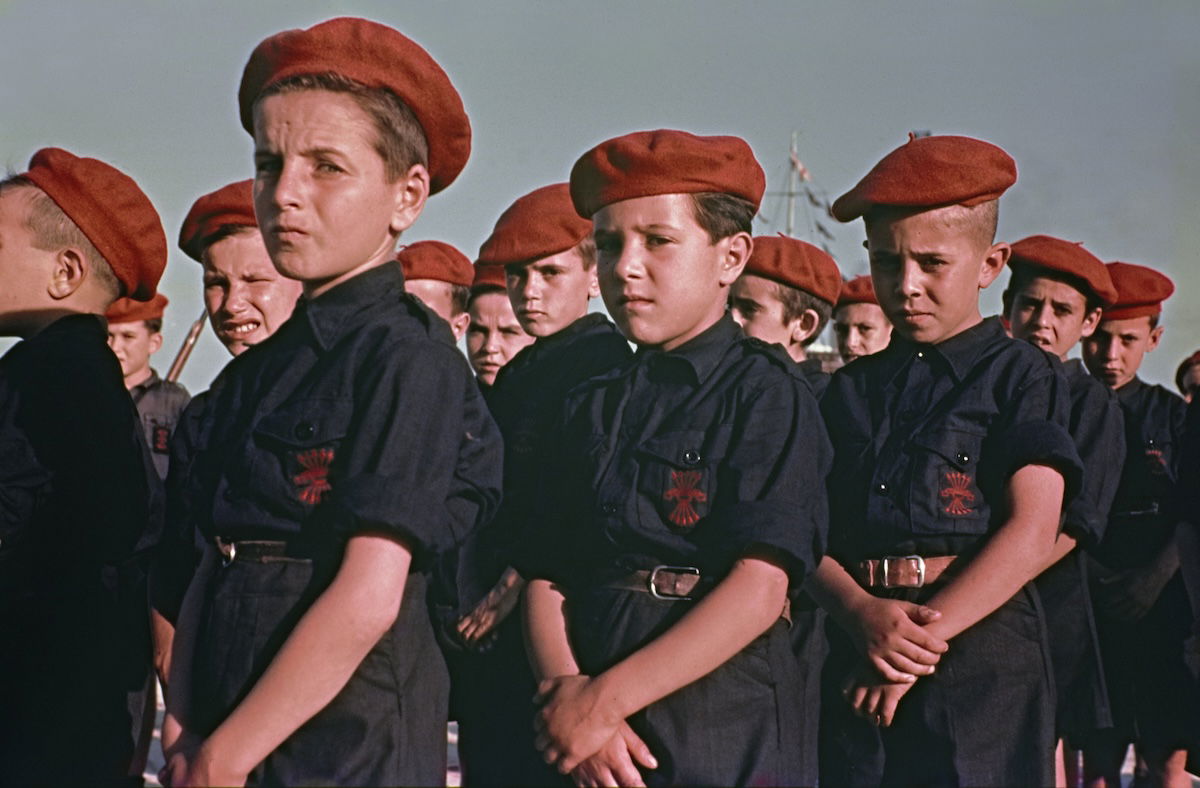
Forgetting offers less clarity. More often than not, it means doing nothing, as was the case in Russia after the collapse of communism or the United States after the abolition of slavery. But it can also mean adopting policies that actively promote political amnesia, as in Spain. Following the death of Francisco Franco in 1975, Spain’s political parties voluntarily agreed to a ‘pact to forget’, the Pacto del Olvido.
The pact extended a blanket amnesty to anyone associated with Franco’s reign of terror, especially the so-called ‘Spanish Holocaust’, a campaign intended to eradicate left-wing dissidents following the end of the civil war in 1939. It also ruled out policies that would rekindle the memory of the war, such as erecting memorials to its victims, observing war-related anniversaries and using the events of the war to attack political opponents.
Despite its obvious problems, the Pacto del Olvido contributed to the making of Spanish democracy. It allowed for the construction of a new political system unencumbered by painful debates over who was to blame for the war. This is no small achievement for a country that, before 1978, had never experienced stable democratic rule.
The 2007 Law of Historical Memory ended the Pacto del Olvido. While upholding the amnesty of the democratic transition, the law condemned the Franco regime, offered reparations, ordered the removal of monuments honouring Franco and created a national centre for the study of the civil war. A subsequent law opened the way for the exhumation and removal of Franco’s remains from state property.
Spain’s experience suggests that forgetting need not mean condemning the past to eternal oblivion, but rather setting it aside until society is ready to deal with it. It also reveals that, contrary to received wisdom, a democratic transition can succeed without reckoning with the past.
‘Rwanda’s is a victor’s memory, managed by an authoritarian regime’
Andrea Purdeková is Senior Lecturer in Conflict and Security at University of Bath
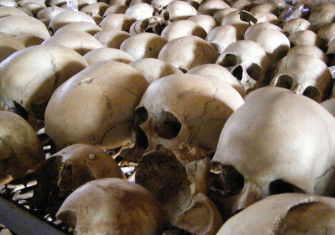
Rwanda’s recent history has been marked by mass violence, most prominently in 1994 when a genocide against the minority Tutsi was perpetrated by the then government, with the assistance of militias and civilian attack groups. More than half a million Tutsi Rwandans, as well as many in the Hutu opposition, lost their lives in a span of no longer than three months.
The government that has ruled Rwanda since – dominated by the Rwanda Patriotic Front (RPF) has decided to commemorate the atrocity intensively. Hundreds of memorials have been erected throughout the country and a week-long commemorative period marks the genocide each year. The International Criminal Tribunal for Rwanda and local Gacaca courts have gathered large archives of testimony.
Yet memory and commemoration of civilian atrocity in Rwanda is selective. The violence of the 1990s is complex and cannot be reduced to the genocide against the Tutsi. The four-year civil war (1990-94) that preceded the genocide produced mass displacement and its own violence, as did a brutal counter-insurgency in the northwest of Rwanda after the genocide (1997-99). So, too, did the RPF’s involvement in wars in neighbouring Democratic Republic of the Congo, which continues today. Yet broaching this subject is not only taboo in Rwanda, it is actively criminalised. Hutu victims of RPF violence, whether in Rwanda or in the DRC, have no recognition and are not commemorated in the public sphere. Memory of violence in Rwanda is tightly policed.
Rwanda’s, then, is a victor’s memory, managed by an authoritarian regime. The top-down management of memory, selective acknowledgement of atrocity and strict policing of that memory’s boundaries all have repercussions for reconciliation within the country. Grievances surrounding non-recognition, repression and partial redress proliferate. Rather than healing divisions, selective memorialisation has ensured they remain open. Rwanda, we might say, is a country that has chosen to remember – but remember selectively.
‘Remembrance is not a binary choice between “never forget” and the “tabula rasa”’
Thula Simpson is Associate Professor of History at the University of Pretoria and author of History of South Africa: From 1902 to the Present (Hurst, 2022)
South Africa has sought social harmony through ‘reconciliation’, an attempt to transcend its troubled past through organised remembrance. The country’s distinctive politics of forgiveness emerged from a 1992 impasse during negotiations over a new, democratic dispensation to replace apartheid, the system of rigid racial segregation imposed by the National Party (NP) in 1948.
The African National Congress (ANC) suspended participation in constitutional negotiations in June 1992 following the massacre of nearly 50 civilians in Boipatong, an atrocity the movement claimed was orchestrated by the country’s white security forces through black proxies. The NP did not object to the ANC’s demand for international mediation from the United Nations.
The UN’s recommendations to jumpstart negotiations included investigating human rights abuses by all sides, but accompanied it with a general amnesty, an approach to conflict resolution that had been pioneered elsewhere, notably Latin America. The belligerents accepted, marking the beginning of the Truth and Reconciliation Commission (TRC), which launched in April 1996, two years after the election of an ANC government led by Nelson Mandela.
The TRC’s remit was to offer amnesty to perpetrators of human rights abuses, in return for full disclosure about his or her role in violations. Individual perpetrators on both sides obtained legally sanctioned forgiveness in return for their testimony. But international praise for the TRC – which has been boosted by South Africa’s successful transition to democracy – has tended to overlook the internal repudiation of some of its key tenets. In May 1998 Mandela’s deputy Thabo Mbeki (later president) stressed that reconciliation was less a matter concerning individual perpetrators and victims, than two nations, one rich and white, the other poor and black, attempting to construct a shared economic base. That attempt continues: remembrance in South Africa is not a binary choice between ‘never forget’ and the ‘tabula rasa’, but a continually shifting melange of memory and oblivion, mediated by power politics.
‘Germany began turning its entire public landscape into a history lesson’
Joseph Cronin is Director of the Leo Baeck Institute London
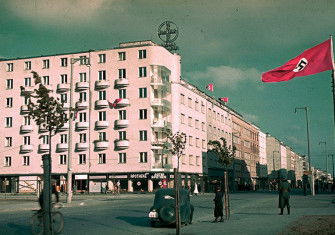
You cannot walk down the street in Berlin without stumbling across the past. It is in the concrete slabs of the Holocaust Memorial, in the hollow emptiness of the bombed-out church on the Kurfürstendamm and even in the shiny modern buildings that have risen confidently from the ruins of the war, symbols of Germany’s reconstruction. Germany has chosen not to forget. But it wasn’t always this way.
After 1945 many Germans embraced a kind of collective amnesia. The nation wanted to ‘draw a line under’ the atrocities of the war and rebuild. 1945 was the ‘zero hour’ – a chance to start again. The Nazis’ victims were a taboo subject. But, with time, this attempt to forget began to fray. In the 1960s there were trials of Auschwitz guards and student protests against lingering fascist tendencies in West German society. The whole country watched aghast when the American television show Holocaust was broadcast in 1979 – a moment that triggered national reflection. By 1985 West Germany’s president Richard von Weizsäcker could declare that the nation would never forget. Remembering the Nazi past became a national obligation.
Enter Vergangenheitsbewältigung – an unwieldy term for the exhaustive process of ‘coming to terms with the past’. Germany began turning its public landscape into a history lesson. Memory was institutionalised through school trips, memorials, exhibitions and strict laws against Holocaust denial.
But does all this remembering prevent history from repeating itself? The rise of the Alternative for Germany (AfD), a far-right political party that dismisses the Nazi era as a speck of dirt on an otherwise pristine history, suggests otherwise. With its calls to end a ‘cult of guilt’, the AfD has become one of the largest parties in Germany over the past ten years. They say there’s been enough remembering, that it’s time to move on. And they’ve found a receptive audience.
Forgetting comes at a price: the gradual erosion of the moral lessons that history has taught us. While memory alone may not have stopped the rise of the AfD, abandoning that memory altogether could pave the way for more dangerous currents of revisionism and denial. The alternative for Germany? We’ve seen where that path leads already.