‘They were simply more ruthless than their opponents’
Frank Dikötter is Author of Red Dawn Over China: How Communism Conquered a Quarter of Humanity (Bloomsbury, 2026)
The Communists never had much popular appeal in China, and their victory in 1949 can be ascribed to help from Moscow and a hand from Washington.
In July 1921 it took a Dutch Comintern envoy called Henk Sneevliet to herd a dozen people into a room in Shanghai to establish the CCP. The party did not thrive, even after Stalin convinced the Chinese Nationalist Party that they should accept CCP members into their ranks in exchange for money and munitions.
We think of China’s 1930s as a contest between the Nationalists and the Communists, but this view implies an equivalence that did not exist. By 1936, after many years spent wandering the countryside, plundering small towns and occasionally holding onto territory where the villagers were reduced to sheer destitution, Mao had 40,000 followers in a country with a population of half a billion. The figure represented one CCP member for every 12,500 people, compared to one communist for every 280 people living under the fascist dictator Salazar in Portugal. Every European country had relatively more communists than China, except possibly Nazi Germany.
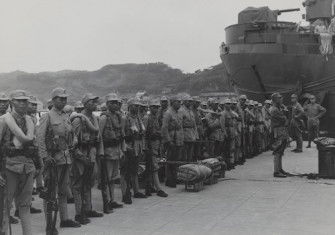
In 1937 Japan, concerned about a possible alliance between the Nationalists and Moscow, its most feared enemy, took pre-emptive action and launched a war against China. Japan achieved what the CCP could never have without help, namely the defeat of the Nationalist government in Nanjing. The CCP thrived in distressed terrain, occupying territory behind enemy lines, yet even by the end of the war in 1945 it controlled just a fraction of the country.
The Red Army invaded and then turned over Manchuria to the CCP in 1945-46. The US intervened, too, imposing first a coalition with the CCP, then a curfew, and finally an arms embargo on Nanjing in September 1946. The central government, besides fighting a civil war, had to rebuild a huge country in ruins. The CCP, on the other hand, received vast military support from the Soviet Union, with trainloads of war materiel arriving from Siberia and North Korea. By the end of 1947 the CCP were armed and in control of the Manchurian countryside. Their victory now was guaranteed: they were simply more determined and ruthless than their opponents, willing to starve entire cities such as Changchun into surrender, regardless of casualties.
‘The CCP had remarkable luck’
Steve Tsang is Professor of China Studies and Director of the China Institute at SOAS University of London
In China, the Chinese Communist Party has a monopoly on the country’s historical narrative and it paints a picture of itself as fulfilling a historic destiny, leading the Chinese people to ‘stand up’ (as Mao put it) when it rose to power. The reality is far more mundane: it won the Chinese Civil War (1946-49).
The Chinese Communist Revolution, often thought to have begun in 1927, only really came after the CCP seized power, and its victory in 1949 was overwhelmingly a military one rather than the culmination of a popular movement. Military victories are not inevitable. The CCP won partly because it received massive military aid from the Soviet Union, including enough weapons and materiel in Manchuria to equip an army of 500,000 in the autumn of 1945, and partly because China’s Nationalist leader Chiang Kai-shek badly mismanaged the Civil War. Chiang’s forces could have won key battles at various points during the conflict if he or his senior generals had not made bad decisions, such as ordering the army not to pursue and destroy Lin Biao’s Communist forces after defeating them at the crucial Battle of Siping in Manchuria in spring 1946.
The CCP’s victory was also based on its ability to avoid fighting Japan, which invaded and occupied large parts of China from 1937 to 1945, even while the Party’s own propaganda presented itself as staunchly patriotic. In fact, the CCP focused on expanding and building its military power while Chiang’s forces sustained horrendous losses fighting ferociously against the invaders. The CCP had further luck when Chiang failed to work with Joe Stilwell, the top US general in China, who could have helped him take advantage of the exigency of the war to rebuild, rearm, retrain, and reshape China’s military into effective fighting forces, as all the other major victors of the Second World War had managed to do.
The CCP’s remarkable luck preceded the war. In December 1936, about seven months before Japan invaded, Chiang had cornered the remnants of the CCP and its army, headquartered in Bao’an in Shaanxi province, and was poised to destroy them. At this point, Chiang’s top general in charge of the campaign kidnapped him to force him to stop the annihilation of the CCP – the so-called the Xi’an incident – mistakenly believing Chiang would not resist Japanese aggression. If any of these events had taken a different turn, the CCP might not have risen to power.
‘It rose to power on a promise’
Aminda Smith is Associate Professor of History at Michigan State University and co-director of the PRC History Group
In spring 1922 a young member of the Chinese Communist Party went out into the countryside near his hometown Haifeng in Guangdong province. He returned dejected. He had met several peasants and offered to help them rise up and confront their landlords. The peasants had laughed at him. No one in his own household was speaking to him on account of his political activities. They were landlords, too. He had been born into a landowning elite; his father rented to more than 1,500 farmers. Even his comrades in the Party thought he was wasting his time and should stick to organising workers in the cities. But by 1926 he was advising a peasant union with more than 600,000 members.
The man’s name was Peng Pai, and in 1924 he became the first director of the Peasant Training Institute, which taught rural organising skills to would-be revolutionaries. One of the Institute’s teachers was another young man named Mao Zedong. In 1927 Mao wrote his famous ‘Report on an Investigation of the Peasant Movement in Hunan’. At that time the CCP’s focus was still on urban areas. Mao urged his comrades to take the rural peasants seriously. ‘In a very short time’, he warned:
several hundred million peasants will rise like a mighty storm, like a hurricane, a force so swift and violent that no power, however great, will be able to hold it back.
The CCP, he said, had a choice: take the lead, trail behind, or stand in the way. But the decision the Party made would determine its future existence.
Historians have disagreed with many aspects of Mao’s version of events. A simple story about landlord power and peasant resistance does not capture the complicated social and political realities of China’s vast and diverse countryside. But Mao was right to identify widespread poverty and dissatisfaction. The rise of the CCP was not inevitable. Its leaders saw an opportunity: that, in the wake of Chiang Kai-shek’s Northern Expedition in 1926, with the country in tumult, the time was right for revolution because wealth and power were concentrated in the hands of a few and the many had begun to realise it. Defenders of today’s status quo might take note of how quickly Peng Pai convinced sceptical peasants that they could change their fate. However one evaluates the CCP, it is worth remembering that it rose to power, in part, on a promise.
‘It could have turned out differently’
Timothy Cheek is Professor of Chinese Research at the University of British Columbia
The rise of the CCP was not inevitable but the constant warfare in the first half of the 20th century meant that both China’s traditional monarchy and its imported liberal constitutional republic were unable to maintain order.
The birth (in 1921) and development of the CCP was defined by this contingent state of affairs. Unlike Western societies, by the 1910s China did not have a functioning national state. China’s nascent parties therefore had to create a functioning state apparatus before taking power. European-style liberal democratic parties, such as Song Jiaoren’s Kuomintang in 1912, failed and, after the initial success of the Russian Revolution in 1917, state socialism was embraced by progressive activists and, ultimately, by Sun Yat-sen.
The embrace of state socialism, however, did not make the rise of any particular version of it inevitable. The Nationalists were successful during the notable ‘Nanjing decade’ (1927-37) following Chiang Kai-shek’s Northern Expedition, during which his forces took Nanjing and declared a national government there, deposing the internationally recognised Beiyang government in 1928. Chiang’s new government was stymied by competing local militarists (the ‘warlords’) and utterly derailed by the invasion of the Imperial Japanese Army in 1937. Meanwhile, the CCP holed up in northwest China and let the Nationalist armies fight the Japanese. The CCP sorted its own internal rivalries, generated functional social and administrative policies, built up its army, and settled on a talented supreme leader, Mao Zedong, able to discipline his cadres and mobilise the public.
At any of a dozen points it could have all turned out differently: Washington or London could have answered Sun Yat-sen’s pleas for support in the 1920s which would have seen the Nationalists lean their way and not Moscow’s; Chiang’s ‘encirclement campaigns’ of the early 1930s could have succeeded in rubbing out the CCP altogether; Mao could have lost out to Wang Ming (Stalin’s preferred choice to lead the CCP in 1937) which would have resulted in the coalition government of Nationalists and Communists that Stalin preferred. The fact of the rise of the CCP reminds us of the importance of contingency and of individual agency in determining history.