Two Battles and Two Disasters at Kut al-Amara
Two imperial ventures at Kut al-Amara, one in the First World War and another in the Iraq War, reveal the similarities – and differences – in the exercise of power.
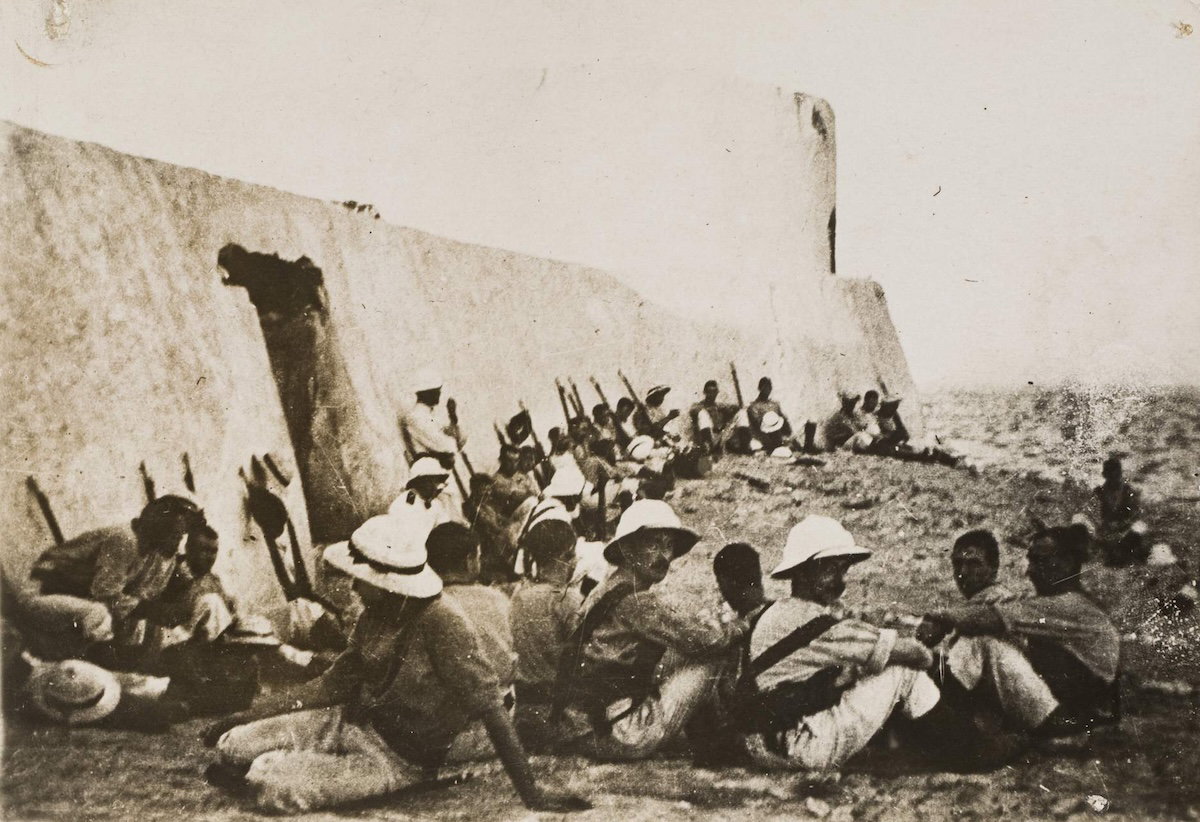
This is a story of one town, two individuals and what their fate can tell us about transformative events in world history. Few people outside Iraq have heard of Kut al-Amara, which occupies a loop on the River Tigris some 180 miles north of Basra and about 100 miles south of Baghdad. A century ago it was a settlement with a few thousand inhabitants; today, it has become a city containing about 375,000 people and is on the main road to the capital. Despite its relative obscurity, Kut has been the scene of two dramatic episodes in the history of modern empires. The first, in 1915, is known to military historians; the second, in 2003, has yet to be studied. The events of 1915 can be seen through the eyes of a senior British officer who represented the military caste that had supported the British Empire since the 18th century. The second episode can be glimpsed from the perspective of a young recruit who joined the US Marines on leaving college and participated in the invasion of Iraq in 2003. In both cases, Kut was a site of battle and individual tragedy. It also serves as a parable that illuminates the rise and fall of empires.