

President or King?
How the Republican triumph over the Federalists in the fiercely fought US elections of 1800 was due to skilful appropriation of the American Revolution to partisan ends
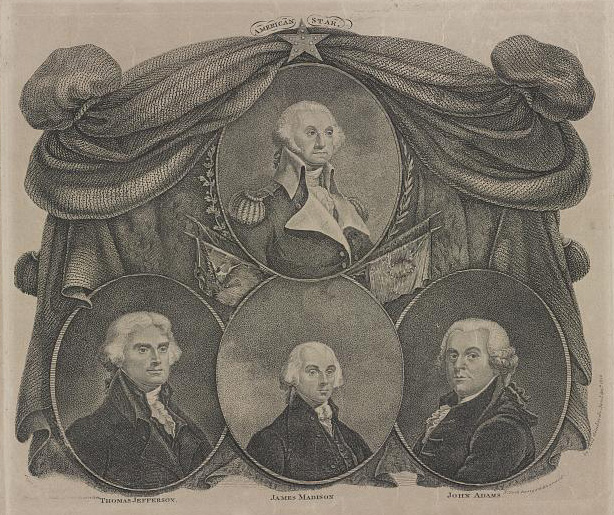
As the media frenzy surrounding the approaching US presidential election reaches a climax, the historically-minded may wish to cast their minds back 200 years, to the election of 1800. That election appears essentially modern in its forms and practices. Two surprisingly well defined political parties, the Federalists and Republicans, submitted competing tickets to the democratic will of a broad (albeit white male) electorate. Party structure, although paling in comparison with today’s organisations, was sufficiently robust to ensure energetic attempts at voter mobilisation, with urban-based central committees co-ordinating partisan activity through communication with statewide local elites and politicos. Above all, America’s burgeoning print media furnished party activists with an ideal means of getting their message to a dispersed population. By the end of the eighteenth century America not only had the largest circulation of newspapers per person in the Atlantic world, but possibly the most partisan as well. As Thomas Jefferson, the Republican presidential candidate in 1800, observed in 1799, ‘The engine is the press’.
Closer inspection, of course, reveals many differences between the political culture of 1800 and that of the present day. Popular deference towards elites, arguably declining everywhere, remained high, though uneven across the states (greater, for example, in Virginia than in Pennsylvania); women and African Americans only infrequently invaded political space in anything other than a passive role; the clergy, especially in New England, remained an important and at times intemperate source of political cues, frequently incurring the wrath of secular opponents; and slavery restricted the legitimate forms of partisan celebration in those areas of the South where whites comprised a self-conscious minority. Beneath the modernistic forms and practices of electoral politics, therefore, late eighteenth-century American political culture retained much that was pre-modern.
One aspect of the 1800 election of especial interest remains incomprehensible without an appreciation of the period’s broader political context. This is the rhetorical dimension of the Republican opposition’s sustained assault upon the incumbent administrations of presidents George Washington (1789-97) and John Adams (1797-1801). By the time of Jefferson’s defeat of Adams, the latter was routinely described as a ‘monarchist’ in the Republican press, his administration and party (Adams would have disapproved of the identification, having always disavowed any association with ‘party’) ridiculed as a collection of ‘aristocrats’ bent upon subverting republicanism and the Constitution. The overwhelming electoral successes of the Republicans in 1799-1800 - Jefferson’s election to the presidency being the result of a series of stunning state-level victories - were testimony to that party’s signal triumph over the Federalists in determining the rhetorical agenda of American politics in the course of the 1790s, a textbook example of the manner in which competing political parties attempt to control the ‘language of politics’.
To establish their own language as normative, the Republicans had first to establish the legitimacy of their oppositional stance. This was no easy task in a period in which political parties continued to be interpreted within a classical framework as dangerous, and potentially treasonous, factions. That they succeeded so brilliantly was due overwhelmingly to their employment of the Whig rhetoric of the American Revolution: natural rights, popular sovereignty, and ‘vigilance’ towards governmental power.
The employment of this revolutionary language had the effect of legitimating Republican opposition by enabling the party to claim that it was the legatee of the American Revolution - that it, not the Federalist party, was the true defender of that sacred event’s values and ideals. Consequently, instead of warranting ‘the epithet of a party’, argued one Republican writer, their solicitude for ‘the public good’ meant that the administration’s opponents ‘deserve rather the appellation of a band of patriots.’ When partisans become patriots in the public imagination, the historian can be confident that a successful act of political legitimisation has occurred.
This process took time, of course, but by the election of 1800 the Republicans had largely succeeded in inculcating a perceived continuity between their own ideology and that of the American Revolution. They employed every available opportunity to reintroduce the radical linguistic conventions of the Revolution into political discourse and popular consciousness.
The Federalists, having installed themselves as a national political elite through their support for, and ratification of, the federal Constitution in 1787-88, regarded such conventions as having no further practical application in the ordered, representative democracy they had created. An early indication that they were to be proved wrong in this assumption, and one in which it is certainly too early to discern the Republicans qua party performing an important organisational role, came when Congress passed an excise tax on spirits in February 1791. Public meetings were called in the various states at which the excise was denounced as being ‘dangerous to liberty’, ‘hostile to the liberties of the ’, and ‘a dangerous arbitrary violation [of] our natural and unalienable rights’. Popular sovereignty provided the legitimising principle for these early expressions of anti-administration sentiment:
We think it consistent with that duty we owe to ourselves, and to our posterity, to examine every act of government, that we may preserve our rights from encroachments.
Throughout the 1790s the Republican party would make this empowering rhetoric of popular sovereignty, and the rights-based ideology it ultimately defended, the mainstay of its political language. Rooted as such language was in the American Revolution, the Federalists, who had themselves used the concept so brilliantly in their defence of the Constitution, now found themselves quite incapable of halting its corrosive effects on their authority. In meeting after meeting and article after article, the government’s subjection to popular scrutiny was declared to be an ‘inherent and exclusive right,’ an ‘indefeasible [sic] right,’ an ‘unalterable right,’ an ‘unalienable right,’ and an ‘indispensable duty and right’ of the people. Such a right was a natural consequence of the fact that, according to Whig ideology, ‘all political power is originally in the hands of the people’; and because ‘the people are supreme,’ ‘there can be no legal authority, but by their consent’. The enervating consequences of such a theory vis-à-vis the activities of elected representatives were obvious. Should those representatives (the ‘agents and trustees of the public’) abuse the people’s trust, then ‘the people have a right to assume into their own hands, all delegated power’.
As the decade progressed, the Republicans came to assume an increasing monopoly over what was once a shared discourse. To the extent that this was a language associated historically with resistance to incumbent power, from the American Revolution itself to its ideological forebears in seventeenth- and eighteenth-century Britain, this was perhaps not surprising. It was, moreover, a sufficiently abstract and protean language - ‘the people,’ ‘rights,’ etc. - to enable the Republicans to transcend differences in local political culture and cement a socially and geographically diverse electoral coalition, one that allowed for the expression of all sorts of subcultural grievances. The benefits accruing to the Republicans by virtue of the partisan dimension they introduced into this discourse were enormous.
The American Revolution remained the crucial defining event in the American mind, and it was, more than anything else, the language and ideology of that seminal event which furnished Americans with the framework of a national character. The Republican party maintained not merely the symbolic relevance of such language, but its continued use as a prescriptive language of politics in an unfolding national experience. The Federalists thus faced the seemingly intractable problem of having to discredit an opposition party that ceaselessly espoused the central tenets of an ideology, which in late eighteenth-century America existed in a space beyond critical examination. In conceding to their opponents a language so crucial to American’s self-definition, they committed a fatal error.
While establishing their own legitimacy, the Republicans also set about ruthlessly destroying the foundations of Federalist legitimacy. This assault, which would eventually shatter Federalist credibility in all but its New England strongholds, was well under way by the time John Adams succeeded Washington as president in March 1797, reaching its most intensive and vituperative form during the latter’s term. The means by which the Republicans undertook this was a natural extension of their calls for popular vigilance towards government. With the national government subjected to such intense scrutiny at a time when it necessarily had to implement a series of consolidatory laws, it was not long before accusations of ‘corruption’ and ‘monarchism’ began to be heard.
The basic shape of this Republican rhetoric (which would become honed into a devastating language of assault) was evident as far back as 1793. With popular enthusiasm for the new French republic matched in intensity only by residual resentment towards Great Britain, the administration was accused of having secret designs to align America’s cherished republican government with the corrupt, monarchical government of the former mother country. The Federalists were crypto-monarchists. Unable openly to avow their detestable scheme, they sought to subvert the Constitution through systematic ‘corruption’ of the national legislature à la Robert Walpole (a figure the Republican party likened to America’s own first Secretary of the Treasury, the brilliant Alexander Hamilton) and through the introduction of monarchical practices into what had previously been a simple and virtuous republican political culture. Examples of the latter included public celebration of Washington’s birthday, the holding of presidential audiences, even an abortive attempt in the first session of the First Congress, instigated by Vice-President Adams, to adopt a suitably dignified title for the President, of which some favoured ‘His Highness the President of the United States of America, and Protector of their Liberties.’ Writing to his friend and political ally James Madison in July 1789, Jefferson, already beginning to differ from Adams on matters of style and principle, had declared the proposed title to be ‘the most superlatively ridiculous thing I ever heard of’.
For a decade the Republicans relentlessly exposed such monarchical and aristocratic proclivities as they detected in their political opponents. And they saw them everywhere. ‘New systems in politicks have been introduced’, declared one writer in 1793, ‘and our government assimilated to that of Great Britain as nearly as possible.’ The message would remain essentially unchanged until that party’s final victory in 1800. Thus in 1798:
The people of America at this time, are divided exactly as they are in Europe, and a strong struggle is taking place between monarchical and republican principles.
In 1799:
A question has been artfully presented to the public mind, whether the republican system of our federal constitution itself ought, in practice to be preferred to a monarchy.
And in 1800:
We believe it to be the duty of the Republican Citizens, of all Parties, to commence an immediate and thorough examination into the Monarchic, Aristocratic, and unconstitutional views of many Men, of public station and influence, in the United States.
Popular antipathy towards Great Britain remained intense throughout the 1790s. Long-standing causes of estrangement dating from the War of Independence were exacerbated by the commencement of war between France and Britain in February 1793. Many Americans felt an intense affinity for the new republic; while restrained from lending martial aid to France by a Neutrality Proclamation issued by Washington in April 1793, they joyously greeted news of French victories against the ‘combination of despots’ levelled against her. Celebration of Bastille Day and the anniversary of the establishment of the republic became important Republican rituals, not least because Federalists increasingly abstained from the public affirmation of what they regarded as a revolution gone terribly wrong. In such a climate, the British ministry’s determination forcefully to employ its maritime supremacy in the war against France only increased American hostility as merchant shipping fell victim to confiscation and seizure. No less offensive was the Royal Navy’s disregard for American citizenship in its continued impressment of her seamen.
By employing the language of Anglophobia, therefore, the Republicans tapped a rich vein of prejudice and raw anger. To their partisan supporters, Britons laboured under ‘Despotism, Corruption and Bankruptcy’, victims of ‘the most foul and corrupt government upon earth’. Worse still, that government still had designs on American freedom. As one writer pointed out in 1795, that ‘insolent perfidious nation wishes to trample on our rights, and if possible, to bind us with the chains of despotism.’ And yet the real danger, of course, was not so much Britain itself but an incumbent American administration that was actively seeking the same ends:
There has been a systematic effort in the part of the administration to alienate this country from France and to attach it to Great Britain.
The political use made by the Republican party of post-revolutionary opprobrium towards Great Britain was instrumental in the rhetorical destruction of their opponents. If the Federalists were pro-British monarchists, then the symmetry of intention on either side of the Atlantic was truly alarming and demanded an immediate response by republican Americans.
Washington’s retirement from the presidency in 1797 removed one of the chief obstacles to the full implementation of the Republican rhetorical agenda. Washington’s prestige remained immense throughout his turbulent presidency, his long years of public service and association with the American Revolution, making this ‘father of his country’ one of the most important symbols of the new nation, the epitome of republican virtue and self-sacrifice. Though even these credentials failed to render him completely immune to Republican attacks, under Washington the administration’s opponents were unable to inveigh against the ‘corruption’ and ‘monarchism’ of the executive department with anything like the force they would employ against his successor John Adams, who narrowly defeated Thomas Jefferson in the election of 1796. Inaugurated in March 1797, Adams would become a crucial variable in the ensuing contest between Federalists and Republicans and a key feature of the latter’s rhetorical assault upon the administration’s monarchical tendencies.
Was this classically-educated New Englander a monarchist? Doubts had first been raised following Adams’s spell as American minister to Great Britain in 1785-88. Jefferson was convinced that his revolutionary colleague’s exposure to the seductive corruption of the Court of St James had irremediably tainted what heretofore had been Adams’s impeccable republican principles. Particularly alarming was Adams’s Defence of the Constitutions of Government of the United States of America, a book he had written while fulfilling his ambassadorial duties in London. Jefferson would later write: ‘Can any one read Mr Adams’ defence of the American constitutions without seeing he was a monarchist?’ Certainly no Republican in the 1790s could. In a passage that would come back to haunt its author, Adams had written that the English constitution was ‘the most stupendous fabric of human invention’. In fact, this was the case only ‘in theory’, for Adams shared his countrymen’s belief in corrupted English forms, but Republican partisans almost never included the author’s caveat in their frequent citations. Seemingly oblivious to the new dogma of ‘popular sovereignty’ which would be fully institutionalised as a theoretical construct in the federal Constitution of 1787, and still obsessed with the ‘mixed’ government of English political myth, Adams had discerned a number of structural similarities between the new American state constitutions and the (balanced) English constitution. Reflecting his reverence for an idealised English model, Adams imprudently wrote in the Defence that: ‘the Americans ought to be applauded instead of censured, for imitating it as far as they have done.’
While his political opponents had assimilated themselves to the conventions of revolutionary thought with such vigour that they were the era’s chief proponents of popular sovereignty and natural rights, Adams seemed unable similarly to adjust his own understanding to new realities. As early as the presidential election of 1796, Adams was being described by Republicans as ‘the friend of monarchic and aristocratic government’, ‘one who has no faith, no confidence in representative or elective government,’ and ‘the advocate of kingly government and of a titled nobility’.
So frequent and unrestrained were Republican attacks upon the administration during the final years of the decade that the Federalists pushed a Sedition Act through Congress in July 1798. Designed to reverse the tidal wave of Republican invective, Adams and his congressional allies seemed finally to have publicly avowed their intention of destroying republicanism in America. While the Act can be interpreted either as an ill-judged expression of Federalist exasperation with their opponents or, less benignly, as a serious and unconstitutional assault upon the civil liberties enshrined within the bill of rights (opposition newspapers were closed, Republican editors were jailed), in truth it did little to silence the administration’s opponents. Along with an equally draconian Alien Act passed in June 1798 - one that permitted the President to expel from the United States, without trial, any resident alien he had ‘reasonable grounds to suspect’ of ‘treasonable or secret machinations against the government’ - the Sedition Act was in fact grist to the Republican’s mill. Here, surely, was irrefutable evidence that the Federalists were plotting ‘the overthrow of our rights and the destruction of our liberties.’ A resolution passed by a Virginia militia company in August 1798 was representative of the popular response to the Alien and Sedition Acts:
Resolved, That the sovereign power of the United States is vested in the people thereof; and that their agents and servants transcend their authority, when they attempt to narrow the right of speaking and writing, or abridge the freedom of the press.
Governmental authority was on a collision course with Republican-sponsored popular sovereignty. Throughout the 1790s, there had been for Americans an extraordinary convergence between the relevance of abstract ideology and of lived experience. This was in large part a consequence of the French Revolution and European war, France and Great Britain standing as two great symbols of diametrically-opposed ideologies given tangible governmental form. Above all, however, that convergence had been a result of the Republican party’s insistence that the democratic impulse of the American Revolution continue to be applied to political culture. The disagreement between the two parties was, in a very real sense, fundamental: to what extent were the animating principles of the American Revolution, however sacred in collective memory, of continued practical utility within the new national republic? Now, in passing the Alien and Sedition Acts, the Federalists were seen to be providing an emphatic answer to that question, by assaulting the two revolutionary shibboleths that the Republicans had attempted to re-prioritise: the sovereign power of the people and the natural rights of individuals. The administration had gifted its opponents, just two years before the presidential election, a declaration of governmental intent which seemed to make the Republican’s language prophetic and their ideology compelling.
Congress and the state legislatures were inundated with petitions remonstrating against the Acts; popular meetings were convened to draft such petitions and to instruct elected representatives. Republican activists laboured assiduously to ensure that such legislation functioned as an additional tool for levering disaffected groups into the Republican coalition. The Acts stood as unequivocal proof that, under continuing Federalist governance, ‘the American Revolution is to be from monarchy to monarchy.’ They represented nothing less than ‘Treason against the People’; and, as the radical English émigré Thomas Cooper observed in ‘On the Sedition Bill’ in a Pennsylvania newspaper shortly before he was himself jailed under that law’s authority, the people had but one recourse in the face of a law so ‘pregnant with danger to the public interest and the principles of republican freedom’:
Think well, before you vote in future for those who were prominent in supporting it.
Midway between the defeat of 1796 and the promise of 1800, the Republicans were furnishing an ever growing number of their countrymen with a standardised and, after nearly a decade of association, identifiably partisan language of opposition.
The Federalist edifice began to collapse in the Pennsylvania gubernatorial election of 1799. A local Federalist bailiwick for nine-tenths of the decade, the Republicans won control of both the (hitherto non-partisan) governorship and the Pennsylvania House of Representatives after an electoral campaign characterised by unprecedented effort and invective from both sides. The defeat was a crushing blow for the Federalists and a fillip to Republicans across the country as they readied themselves for the approaching presidential contest. Still more important were events in New York six months later, when the Republicans won control of the state legislature in the elections of May 1800. Jefferson was guaranteed New York’s twelve electoral-college votes. Adams, who had carried them in 1796, was essentially finished, a fact confirmed when South Carolina similarly went Republican. With internecine war breaking out within the Federalist hierarchy under the pressure of impending defeat, a jubilant Republican observed in late 1800 that, ‘Mr Adams has reduced himself to so strange a situation, that profound silence has become his only refuge against ridicule and censure.’
By late December it was evident that the Republicans had won. Adams had sixty-five votes, Jefferson seventy-three. Jefferson’s running mate, Aaron Burr of New York, also had seventy-three votes, thereby throwing the election of America’s third President into the House of Representatives. Amid excited whispers that Burr might steal the crown, Jefferson was finally elected president in February 1801. The so-called ‘Revolution of 1800’ was complete. Republicanism had been rescued from the jaws of impending monarchism, and its partisans could congratulate themselves on their ‘new declaration of independence, as important in its consequences as that of ’76, and of much more difficult achievement.’ With the destruction of the Federalists as a national political force, ‘the Revolution of 1776 is now, and for the first time, arrived at its completion.’ Viewed from an age immured in sound bites and spin, the sincerity of the convictions underpinning the Republican party’s decade-long language of politics is seemingly endorsed by the fact that the principles of the American Revolution remained the touchstone of political legitimacy not just in opposition, but in victory too.
Further Reading:
- Joyce Appleby Capitalism and a New Social Order: The Republican Vision of the 1790s (New York, 1984)
- Stanley Elkins and Eric McKitrick The Age of Federalism: The Early American Republic, 1788-1800 (New York, 1993)
- David Waldstreicher In The Midst of Perpetual Fetes: The Making of American Nationalism, 1776-1820 (Chapel Hill, 1997)
- Gordon S. Wood The Radicalism of the American Revolution (New York, 1993)
About the Author:
Simon Collinson has recently received a Phd at the University of Cambridge

