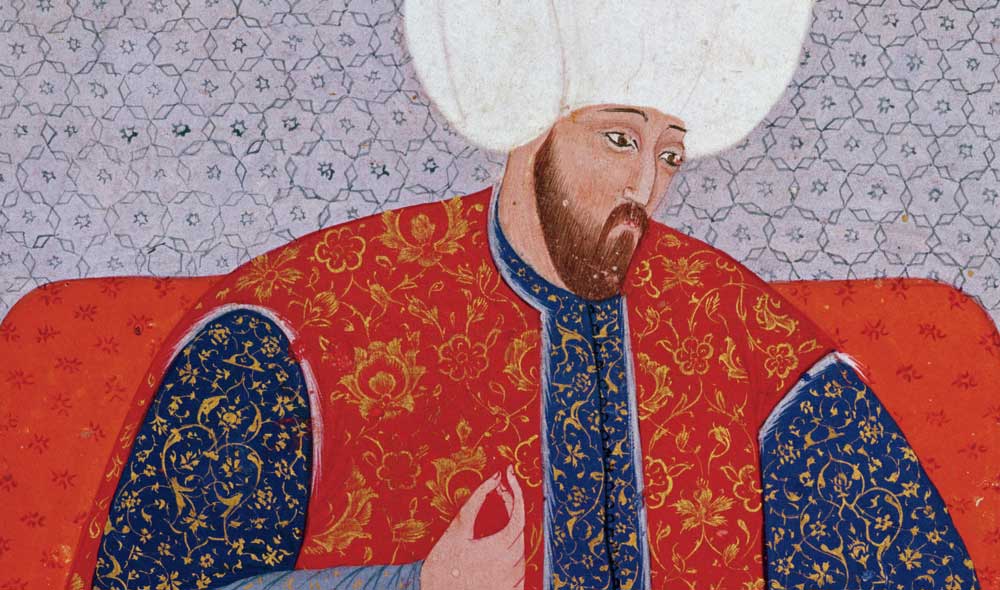
As sultan, Süleyman the Magnificent was portrayed as the Shadow of God on Earth, the Caliph of Islam, the Last World Emperor, the distributor of crowns to other rulers and the purveyor of justice.
In the spring of 1566, Süleyman, the sultan of the Ottoman Empire, was old and unwell. He had suffered from gout for more than two decades and was barely able to move. He was not alone – courtiers and palace servants swirled around him – but he was lonely, particularly after the death of his wife, Hürrem, in 1558. While he had left the conduct of most of the empire’s business to his high officials, Süleyman decided, against the advice of those around him, to lead his men one last time into central Europe. Ostensibly this was an attempt to fulfil his promise of support to a regional ally against the encroachments of the Habsburgs. Deep down, he longed for the victories of his youth. This last attempt at glory would end with his demise.
Register to read more articles for free.
When you register, you will receive the History Today newsletter. Click here to read our Terms of Use.
As sultan, Süleyman the Magnificent was portrayed as the Shadow of God on Earth, the Caliph of Islam, the Last World Emperor, the distributor of crowns to other rulers and the purveyor of justice.
In the spring of 1566, Süleyman, the sultan of the Ottoman Empire, was old and unwell. He had suffered from gout for more than two decades and was barely able to move. He was not alone – courtiers and palace servants swirled around him – but he was lonely, particularly after the death of his wife, Hürrem, in 1558. While he had left the conduct of most of the empire’s business to his high officials, Süleyman decided, against the advice of those around him, to lead his men one last time into central Europe. Ostensibly this was an attempt to fulfil his promise of support to a regional ally against the encroachments of the Habsburgs. Deep down, he longed for the victories of his youth. This last attempt at glory would end with his demise.
Süleyman left Constantinople on 1 May 1566. He was visible to his men on ceremonial occasions in the early stages of the campaign, but by late July he was too unwell to ride his horse. Roads turned to mud under heavy rains, hampering the advance of the Ottoman forces. Supply chains began to break. Angry and tired, he took his frustrations out on his men, ordering dismissals and public beatings. By the time Süleyman arrived in front of the target of the campaign, the fortress of Szigetvár in southwestern Hungary, he was exhausted. As the Ottomans laid siege, his health continued to deteriorate. He died on the night of 6 September 1566, just before the fortress fell.
His body was washed, placed in a white shroud and buried under his tent. Given the need for exhumation and eventual reburial in Constantinople, the corpse was preserved by being bound with wax-treated cloth strips and the application of perfumes and essences. To prevent turmoil and rioting in the camp the soldiers were not notified of his death. The news was shared only with a small group of confidants. Imperial decrees were issued in the name of the sultan, and physicians continued to enter Süleyman’s tent to create the semblance of ongoing treatment, while messengers were sent to inform his son Selim, the heir apparent.
As Selim joined the returning Ottoman forces near Belgrade, Süleyman’s death was finally announced to the troops. After a funeral prayer, the corpse was sent to Constantinople, where another, much larger funeral prayer took place on 23 November 1566. Süleyman was buried next to the mosque he had built in his name, the Süleymaniye, near the tomb of Hürrem. Süleyman’s worldly life thus ended. But his myth, parts of it already circulating during his reign, would go on to live a life of its own.
Peerless among princes
The longest reigning Ottoman sultan, during his lifetime Süleyman was hailed as a skilled military commander, a just ruler and a divinely anointed monarch. For his European contemporaries, who called him the ‘Grand Turk’, he was an awe-inspiring figure. He presided over a large household and army, and his wealth was legendary. European observers also depicted Süleyman as a tyrant whose conquests dealt mortal blows to Christianity and who cruelly ordered the murder of his own children and grandchildren. A similar ambiguity was exhibited by Süleyman’s rivals further east, the Safavids of Iran. Under the dual threat of military violence and accusations of heresy from their Sunni Ottoman neighbours, the Shia Safavids treated him with a mixture of apprehension and grudging respect.
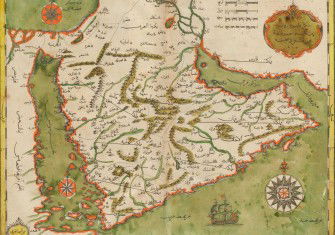
Süleyman’s image was based in part on his exploits as military commander. He travelled long distances, from the plains of central Europe to the mountainous terrain of western Iran. His fleets sailed across the Mediterranean and the Indian Ocean, and his armies marched into the Caucasus, Yemen, Hungary and Austria. Süleyman is also remembered for his contributions to Ottoman bureaucratic and legal practice. After his death, authors gave him the moniker Kanuni, the formulator of dynastic law, under which name he is widely known to Turkish-speaking audiences.
In the modern period, various conservative movements espoused Süleyman as a founding father for the ideal of a universalist Muslim empire built on bureaucratic efficiency and justice. From the beginning of the Cold War in the late 1940s to the recent resurgence of new forms of political Islam, Süleyman found his place in modern political discourses. As the global popularity of a recent Turkish-made television series, TheMagnificent Century, attests, the life of Süleyman continues to fascinate audiences across southeastern Europe, through the Maghreb and the Middle East, to Pakistan and Bangladesh.
Süleyman left behind a variety of legacies that continue to be debated today. Unlike many Ottoman rulers, he married a concubine from the harem and remained true to her for most of his life; the love between them is obvious from Süleyman’s poetry and Hürrem’s letters. Another legacy was the advocacy of Sunni Islam as a political identity, next to a religious or cultural one. A state-like administration was established during his reign to manage economic resources and legal matters across the empire. The growing emphasis on the supremacy of the law and the contractual relationship between the ruler and the ruled would eventually change the nature of the Ottoman polity.
The ‘Grand Turk’
Süleyman was born in 1494 or 1495 in Trabzon, on the Black Sea coast. His father, Selim, served there as provincial governor. Süleyman’s adolescence and youth were spent under the shadow of Selim, a violent, overbearing man who had rebelled against his own father, Bayezid II, and fought his way to the Ottoman throne. Against seemingly impossible odds, Selim had moved swiftly against his rivals, having his father killed and ordering the execution of his two brothers and multiple nephews. Following his bloody capture of the throne in 1512, Selim stemmed the advance of the millenarian Safavid movement in eastern Anatolia. He then captured Syria, Egypt and parts of the Arabian Peninsula.
Selim’s control of the holy cities of Mecca and Medina, and his adamant struggle against non-Sunni Islam, gave a particular flavour to the religio-political identity of the Ottomans. His conquests to the east and south also allowed them to benefit from global commercial networks that extended overland from China to the west, and over the sea from the eastern Mediterranean and the Red Sea into the Indian Ocean. A global empire with a large territory, a stake in regional and global commerce and a sophisticated cultural identity thus began to emerge during Selim’s reign. Upon his father’s death in autumn 1520, Süleyman inherited this imperial geography and mindset. He would go on to expand it further than any Ottoman ruler before him.
In the absence of nephews, uncles or brothers who might contest his accession, Süleyman’s rise was at first sight effortless. But there were disadvantages he had to overcome. He was unknown to large sections of the ruling elite and, crucially, he had not yet commanded forces on the battlefield. Süleyman’s first task was to promote himself as a just ruler, a virtue for which his father had not been known. His second was to direct the Ottoman armies towards regions his father had ignored. As sultan, he embarked on a series of military conquests. He took Belgrade from the Hungarians in 1521 and captured Rhodes from the Knights Hospitaller the following year. In 1526, he defeated the king of Hungary, Louis II, at the Battle of Mohács, bringing about the end of the centuries-old Jagiellonian dynasty and ushering in the collapse of the Kingdom of Hungary. These were among Süleyman’s biggest victories.
After 1526, Süleyman faced powerful rivals on the European front: the Habsburg brothers Ferdinand, archduke of Austria, and Charles V, the Holy Roman Emperor. As he competed with them for control of central Europe, Süleyman failed to take Vienna in 1529 and a large campaign he organised in 1532 produced mixed results. A costly stalemate began to emerge on the western frontiers of the empire. Süleyman then turned his attention to the east. A campaign against the Safavids, fought between 1534 and 1536, captured large territories, including Baghdad, but failed to decisively defeat the Safavids and their supporters.
Sultan enough
Süleyman’s challenges were not only military. He searched constantly for ways to present himself as a mighty emperor. With the help of his longtime companion and grand vizier İbrahim, he borrowed ideas from Central Asian and Islamic cultural traditions, such as the notion of a universal ruler born under an auspicious conjunction of the stars. He also toyed with European/Christian ideas, such as the ‘Last World Emperor’, in which the end of the world will be preceded by the return of the Roman Empire and an emperor to defeat the Antichrist. In the late 1520s and early 1530s, Süleyman increasingly presented himself as a messianic figure who would gather Islam and Christianity under a single mantle. His competition with Charles V was not only over control of central Europe and the Mediterranean, but also over Charles’ title of Holy Roman Emperor. Süleyman and his supporters argued that he was the one true emperor on earth.
By the early 1540s, despite his victories on the world stage, everything around Süleyman reminded him that he was entering old age. There were grey flecks in his beard and hair. He developed gout, the debilitating pain from which affected him more and more despite his physicians’ aggressive treatments. There were persistent, ever-growing rumours about Süleyman being replaced by one of his sons. Isolated, he felt increasingly lonely. His tutor, Hayreddin, a constant companion since adolescence, died, and his favourite son Mehmed succumbed to a contagious disease aged only 21. Süleyman’s political life was also filled with frustration. In his early years on the throne, he had dreamed of subjugating all his enemies and ruling over east and west with justice. After many long and costly campaigns, what he had achieved instead was a stalemate on both fronts. As for his allies, such as the anti-Habsburg Hungarians and the French, he viewed them as weak, uncommitted and unreliable.
As he grew old, Süleyman became an angry man. He openly scolded foreign envoys during audiences, abandoning his usually austere demeanour. He consulted with increasing frequency a geomancer to determine whether his health would improve, whether he would be able to remain on the throne and how he could conduct his armies to victory.
His life became more complicated as the 1550s progressed. He ordered the execution of a son on suspicion of rebellion. A few years later another son rebelled, was defeated, escaped to Iran and was executed there on Süleyman’s instructions. All the while, Süleyman’s health continued to worsen. Then Hürrem died. The empire he had expanded and the bureaucratic machinery he had helped build suffered from over-extension. Social and economic problems persisted, becoming increasingly difficult to ignore as casual or haphazard occurrences.
Süleyman’s solution was to construct his own legacy. He ordered the building of a major charitable complex centred around a mosque in Constantinople. He dotted the entire realm with signs of his largesse and wealth, from bridges to waystations for pilgrims, aqueducts to city walls, and from prayer houses large and small to soup kitchens. A lifelong reader and composer of poetry, Süleyman gathered his poems together, perhaps the most intimate part of his legacy that remains. He commissioned the story of his reign written from his own perspective. The result was a lavishly illustrated history in versified Persian called the Sulaymannama, ‘Book of Süleyman’. It described three-and-a-half decades of Süleyman’s sultanate, from his accession in 1520 to the mid-1550s. The Sulaymannama functioned as both a work of art and a politicised portrayal of Süleyman’s military victories and his benevolent reign, symbolically celebrating his rulership at a time when the sultan’s public image was in decline.
In 1566, his body devastated by painful gout and age, Süleyman still felt he had to personally lead his army to besiege a minor castle in order to prove that he was healthy enough – sultan enough – to remain on the throne. He lived in a world of competition: he competed with other monarchs; members of his elite competed for positions and favours; and commoners competed for access to scarce resources. This was a world full of violence and Süleyman experienced it firsthand, especially during his campaigns. The widespread use of gunpowder weapons and the invention of new military tactics rendered warfare even more destructive. Wars were fought in the name of religion, to bring in money and riches and to establish and maintain a martial reputation.
Global economy
Süleyman’s was also a world of expanding frontiers. The story of his life offers not just a study of impressive personal ambition but of how the world we live in today began to be built in the 15th and 16th centuries. During his reign, the Ottomans received dispatches from Poland, Muscovy and central and southeast Asia. Through the globalisation of commerce from the early 1500s onwards, the Ottomans became further entangled in a web of economic flows that impacted much of the globe. The world of new commodities was also a world of inflation, increasing prices, population growth and urbanisation. At the same time, this new global economy still depended on wood and coal, and animal and human labour as its main sources of energy. Economic development rested as much on human initiatives as on the limitations imposed by the natural environment. Moreover, this was a world in which plagues, diseases and natural disasters regularly wreaked havoc.
Süleyman’s peers were similar to him, having either inherited dynastic enterprises that they expanded or built them themselves. These included Charles V, Francis I and Henry VIII in Europe, Shah Ismail and Shah Tahmasp in Iran, Ivan IV in Russia and Babur and Akbar in India. Like Süleyman, these figures used warfare as an instrument of empire building, while seeking to establish control over their own elites and aristocracies with whom they competed over resources. They were all concerned with creating and maintaining a multilayered reputation as ruler, patron, soldier and statesman. Each sought central control over religious matters during a time of intense theological debates and spiritual anxieties. They were also acutely aware of each other and openly competed for control of land and prestige.
A new world
A very modern form of rulership was being crafted. The foundations of modern states and bureaucracies, and of modern capitalist economies, were laid in the midst of the first genuine wave of globalisation in human history. At the same time, Süleyman and those like him lived and worked in societies in which gender-based, racial and religious hierarchies created conservative, male-centric social systems and political regimes. Our world emerged from theirs.
Kaya Şahin is Associate Professor of History at Indiana University, where he also serves as the Executive Associate Dean of the Hamilton Lugar School of Global and International Studies. He is the author, most recently, of Peerless among Princes: The Life and Times of Sultan Süleyman (Oxford University Press, 2023).