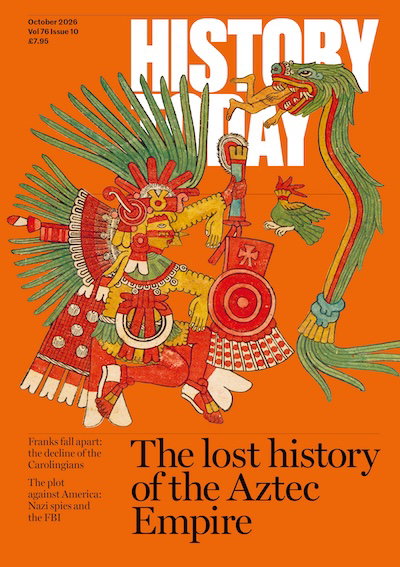
The Lost History of the Aztec Empire
Before the Spanish conquest, the history of the Aztec Empire was recorded orally and with hieroglyphs. In danger of being lost or forgotten, Indigenous historians began to write it down.

In Mexico City, around the turn of the 17th century, the Indigenous scholar Domingo Chimalpahin worked to transcribe a Spanish history of his people. The book in question was La conquista de México, written in 1552 by Francisco López de Gómara, a Spanish priest and friend of Hernando Cortés. It told the story of how Cortés and his fellow conquistadors had invaded Mexico in 1519 and conquered the Aztec Empire in 1521.
From Chimalpahin’s perspective, this history was woefully incomplete. We know this because he frequently amended the text, correcting details and inserting missing information. ‘Although the author … takes Cuitlahuatzin to be a nephew of the great lord’, he explained in one aside, referencing an Aztec lord present when Cortés first met Emperor Moctezuma, ‘he was not his nephew but a blood brother.’ Chimalpahin then signed his name, staking his honour as a scholar on this clarification. The facts, quotes, and corrections that Chimalpahin confidently supplied were drawn from an archive that no Spaniard could access, and that few knew existed: transcribed Indigenous oral histories.