By 1689, Isaac Newton’s groundbreaking treatise on the laws of motion and gravitation, Principia Mathematica, had been published for more than a year and was the focus of high praise, even by those who understood not a word of it. He was the Lucasian Professor of Mathematics, a fellow of Trinity College, Cambridge and recently re-elected as a Member of Parliament for the university. But there was one further appointment that he coveted: the provostship of King’s College. This required a petition to the king himself.
On 9 July that year, Newton found himself at Hampton Court for an audience with the newly crowned Dutch king, William III. The meeting had been made possible by Christiaan Huygens, whose brother Constantijn was the king’s secretary and whom Newton had first encountered only four weeks earlier when the Dutchman had given a lecture on some novel aspects of optical refraction at Gresham College, the home of the Royal Society.
Register to read more articles for free.
When you register, you will receive the History Today newsletter. Click here to read our Terms of Use.
By 1689, Isaac Newton’s groundbreaking treatise on the laws of motion and gravitation, Principia Mathematica, had been published for more than a year and was the focus of high praise, even by those who understood not a word of it. He was the Lucasian Professor of Mathematics, a fellow of Trinity College, Cambridge and recently re-elected as a Member of Parliament for the university. But there was one further appointment that he coveted: the provostship of King’s College. This required a petition to the king himself.
On 9 July that year, Newton found himself at Hampton Court for an audience with the newly crowned Dutch king, William III. The meeting had been made possible by Christiaan Huygens, whose brother Constantijn was the king’s secretary and whom Newton had first encountered only four weeks earlier when the Dutchman had given a lecture on some novel aspects of optical refraction at Gresham College, the home of the Royal Society.
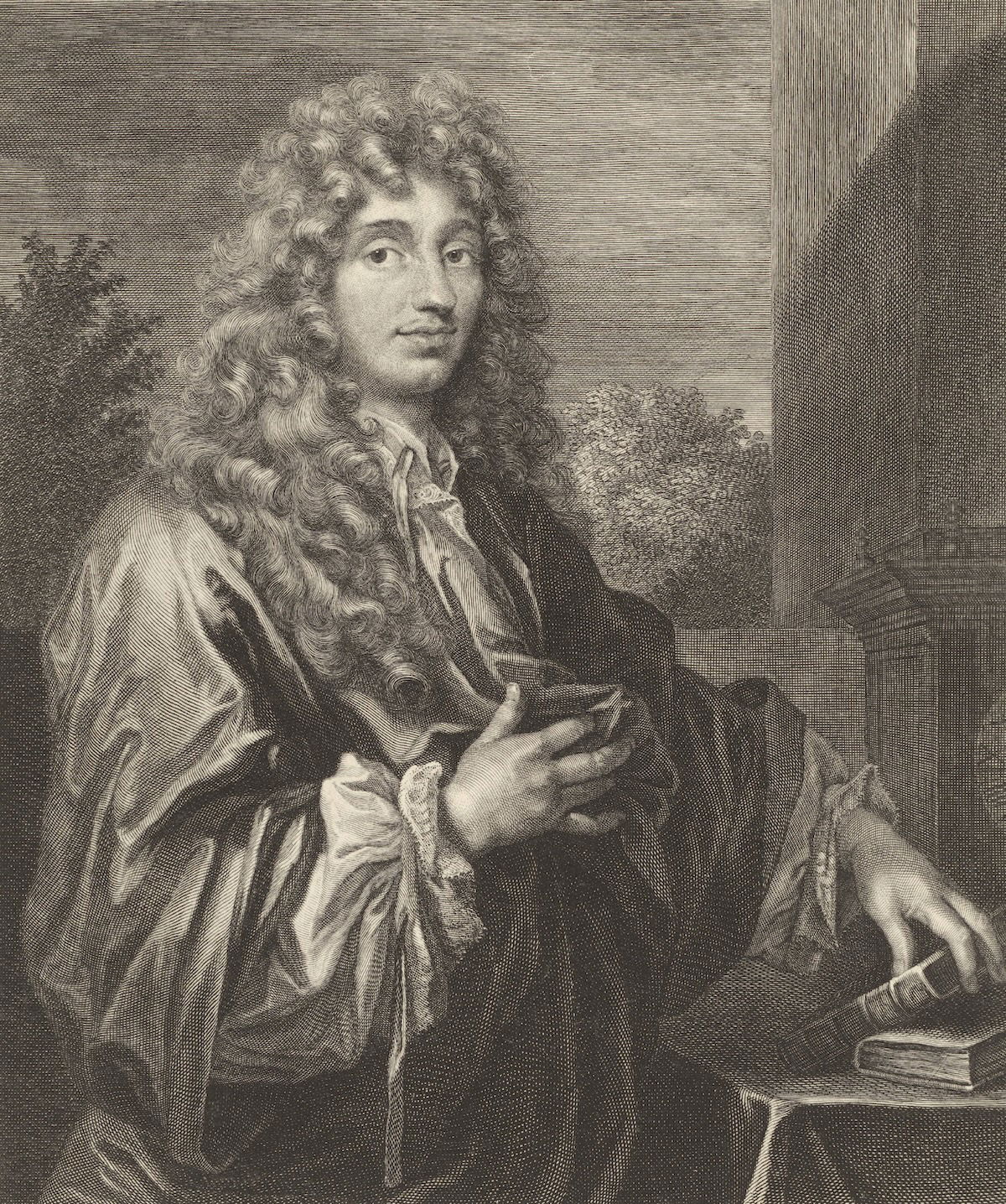
Who was this Huygens upon whose connections the great Newton depended? The Huygens family in The Hague had a long tradition of service to the House of Orange, the governing dynasty of the Dutch Republic. But since childhood, Christiaan Huygens had shown a fascination for the physical world, making little machines and solving mathematical puzzles, such that people began to refer to him as the ‘Dutch Archimedes’.
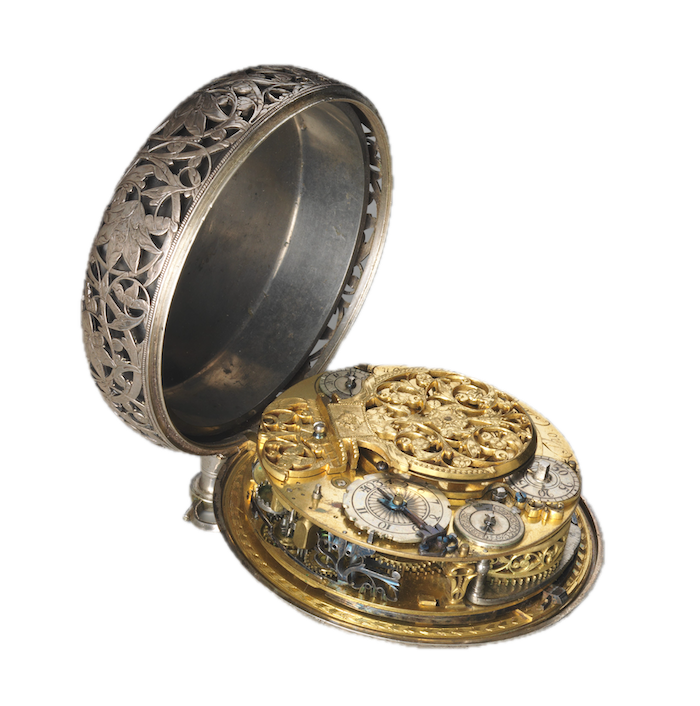
A watch built by French watchmaker Thomas Tompion using Christiaan Hygens’ spiral balance sping, 1680. Metropolitan Museum of Art. Public Domain.
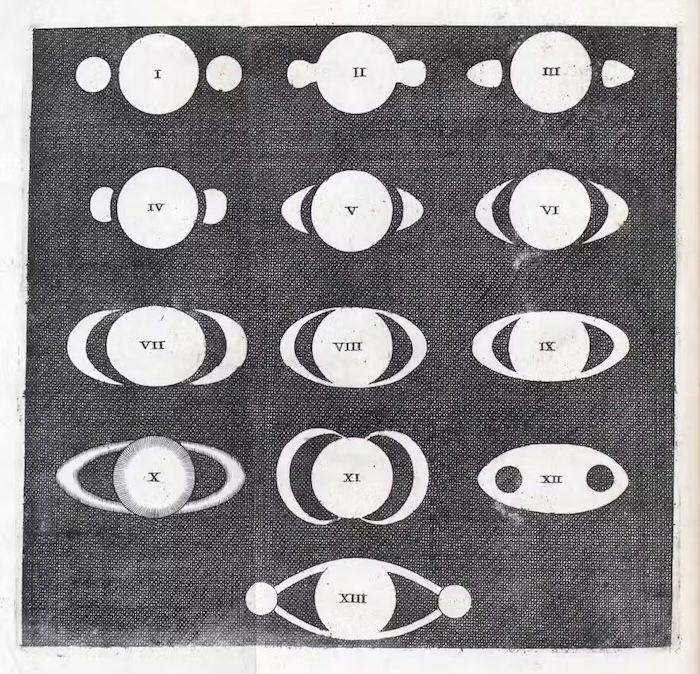
He rejected the life of a courtier and diplomat and soon distinguished himself in physics, mathematics and astronomy, scoring lasting achievements in all these fields. In the 1650s, he used a telescope of his own making to discover a ring on Saturn and its largest moon, Titan. He designed the first accurate pendulum clock and introduced the concept of centrifugal force. His experiments with moving objects led him to the conclusion that all motion is only relative (which later earned him the admiration of Einstein). He devised a wave-based theory of light, which was substantially correct but was neglected for nearly 150 years until it could be confirmed by experiment. And, in mathematics, he laid the foundations for the study of probability and was the first to use mathematical formulae to express problems in physics, such as objects’ motion and collision.
Great minds
These achievements would be more than enough to establish Huygens as the greatest scientist of the period between Galileo and Newton. At the time of their meeting, Huygens, 60 years old, was by far the more renowned figure and Newton, aged 46, needed Huygens’ support, as an equal in optics and mechanics, as well as for his powerful connections (although in fact Newton never became Provost of King’s, the fellows of the college ruling him ineligible).
They broadly agreed about the action of forces, although Huygens had reservations about the universal action of gravity proposed by Newton. Huygens admired Newton’s explanation of colours, finding it ‘ingenious’ and ‘very likely’, but his own wave theory of light was at odds with Newton’s concept of light existing in a particulate fashion as ‘corpuscles’. Huygens was one of the first to receive a copy of Newton’s Principia – it was hand-delivered by Edmond Halley, who had sponsored its publication – because he was one of the few readers whose critical opinion Newton valued. Although privately he found it obscurely written, Huygens praised the work and made constructive suggestions for amendments and hoped to see further editions.
Huygens had long been a convinced follower of Descartes and his theory that ‘vortices’ were necessary for gravitational force to act at a distance. Newton’s theory dispensed with vortices, but his omission of any explanation as to how gravity actually did work bothered Huygens (the maths explained the physics, and that was enough as far as Newton was concerned). Nevertheless, he recognised that physics had changed. ‘Vortices destroyed by Newton’, he wrote in his private notebook after reading Principia.
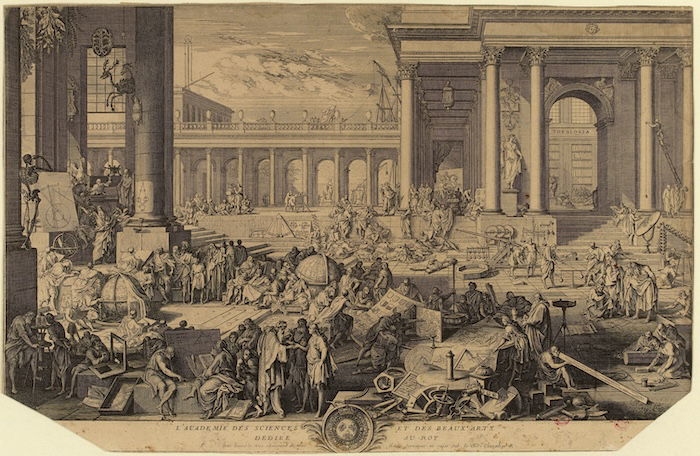
The Academy of Sciences, Sébastien Leclerc, c.1695. Musée Carnavalet, Histoire de Paris. Public Domain.
But there is more, which shows Huygens to be a closer prototype of a truly modern scientist than Newton. He maintained a systematic focus on his chosen problems and recognised the joint importance of their practical and theoretical aspects, rejoicing when on occasion these were shown to reinforce one another, as they did in his improvements to the pendulum. Although, like any natural philosopher of the 17th century, he worked on a range of problems that would seem hopelessly broad to a modern specialist, he did not – as Newton did – become sidetracked into alchemical investigations, occultism and matters of religious doctrine.
Above all, Huygens was an internationalist when compared with many natural philosophers of the age and certainly in comparison with Newton, who never travelled far beyond Cambridge and London. He sought to adapt his improved pendulum clocks with the aim of being able to calculate longitude at sea in collaboration with Scottish inventors. He swapped ideas about the air pump used to investigate the properties of the vacuum with the Irish Robert Boyle. He found himself caught in an ugly dispute with the English Robert Hooke over the invention of the balance spring to regulate the timekeeping of portable watches. He compared telescope designs and planetary observations with Johannes Hevelius in Gdańsk and the Italian Giovanni Domenico Cassini among others. He tutored the young German philosopher Gottfried Leibniz in mathematics (before the pupil surpassed the master and invented calculus). The Huygens family’s immersion in international diplomacy clearly paid dividends, even if Christiaan did not directly follow his father’s calling.
In 1663, Huygens became the first foreigner to be elected to the Royal Society. More significantly, he was instrumental in establishing the French Academy of Sciences around the same time, making him ‘the recognised leader of European science’, according to one biographer. The fragmentation of power among the provinces of the Dutch Republic ensured there was no possibility of a Dutch academy until much later. How it was that a Dutchman came to do this reveals much about the relationship between science and national politics. Huygens first visited Paris in 1655, using his discoveries related to Saturn as his calling card to gain introductions to the leading astronomers and mathematicians. He was warmly received in the philosophical salons and settled there in 1666.
In 1661, when Louis XIV assumed full governing powers in France, he appointed Jean-Baptiste Colbert as his minister of finance. Dubbed ‘Le Nord’, the North Wind, by the socialite Marquise de Sévigny, Colbert liked to rely on cold data when making administrative decisions. He held a vast library of learned works and government accounts and organised the collection of national statistics on all aspects of French life. His dream was to bring scientific methods to the heart of government and in so doing to increase the glory and beauty of the French state.
International talent
The Académie Française had been set up by Cardinal Richelieu, but Colbert founded a number of additional national academies for the various arts. For his academy of sciences, he sought to attract talent not only from France, but also from abroad (although he excluded Jesuits and other dogmatists whom he perceived as biased). Colbert’s intention was that any innovations made would become the property of the state to be harnessed to improve industrial productivity and national prosperity. Colbert naturally prized science that was directed towards these goals rather than areas of fundamental enquiry with no practical benefit. He probably believed that Huygens, coming from a country with a tradition of the technical ingenuity required for land drainage, was better suited to leading his new institution than many homegrown philosophes, whose salon discussions often lapsed into pedantry and arcana.
Huygens set out a programme of work for the new academy, recommending to Colbert that members ‘work on natural history somewhat following the scheme of Verulamius’, that is to say, adopting Baconian principles of inductive reasoning, the basis of the modern scientific method. He proposed more than two dozen areas of investigation, ranging from the obviously utilitarian, such as ‘to perfect spyglasses and microscopes’ and ‘to send pendulum clocks by sea ... to apply the invention of Longitudes’, to the more abstract: ‘to observe whether light is communicated from afar in an instant’. Colbert scribbled the word ‘bon’ in the margin against each item and the academicians went to work.
Saturn as it appeared to different observers, from Diagram from Christiaan Huygens’ Systema Saturnium , 1659. Smithsonian Libraries. Public Domain.
Some progress was made. The Danish astronomer Ole Rømer, for example, established that the speed of light was finite – it did not travel ‘in an instant’. But tensions soon grew. It became apparent that some of the most able thinkers were being overlooked because of Colbert’s strictures on who could join the academy. Academicians, meanwhile, irritated Colbert by persisting in regarding the pursuit of science as a European affair, openly discussing their results with colleagues in other countries, rather than reserving their secrets for the French state. As the repressive climate in France intensified in the years leading up to the revocation of the Edict of Nantes in 1685, admissions to the society stalled and no more foreign members were recruited. Ironically, the greatest legacy of the early years of the French Academy of Sciences may have been to goad the English into putting their own Royal Society on a secure footing.
Huygens himself, with his practical bent and Dutch expertise, was obliged to spend much of his time on trivial diversions, such as the design of ornamental waterworks. Sometimes, though, his ability to discern the physical and mathematical principles that governed the operation of mechanical devices meant this time was not entirely wasted. For example, he devoted hours to perfecting another inventor’s sprung carriage intended to minimise the discomfort of bumpy roads. It never performed well. But Huygens’ mathematical analysis of the force needed to lift a wheel of a given size over an obstacle in the road led him to new insights into centrifugal force.
Science my religion
Huygens’ scientific achievements are all the more remarkable when it is remembered that the three countries in which he was most invested were frequently at war with one another. Natural philosophers generally did their best to ignore these goings-on. Huygens is supposed to have remarked: ‘The world is my country, science my religion.’ His colleague Henry Oldenburg, the ‘foreign secretary’ of the Royal Society, wrote to him at the time of the Second Anglo-Dutch War (1665-67): ‘I wish always an end to the war and the plague, with an unequalled passion, so as to re-establish study and good relations.’
In practice, these military conflicts caused mainly minor inconvenience to the scientific community, such as the occasional interception of apparatus that doubtless looked suspicious to hapless border officials and the necessity of adopting name anagrams and decoy addresses for communications that might easily be taken as code. Even important research that might easily have military value, such as Huygens’ longitude clocks and powerful telescopes, carried on without much impediment.
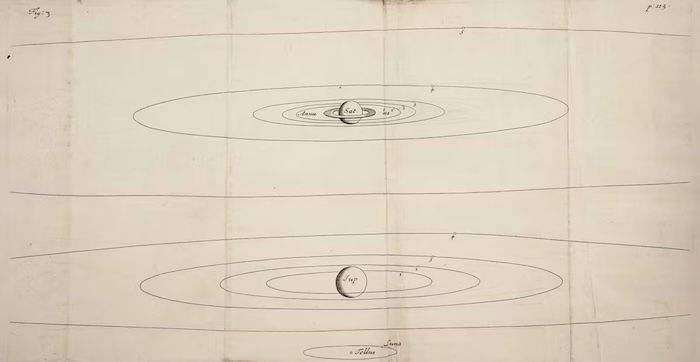
The orbiting moons of Earth, Jupiter, and Saturn, from Christiaan Huygens’s The Celestial Worlds Discover’d, 1722. Wellcome Library. Public Domain.
On one occasion, in November 1663, Huygens’ seagoing clock was to be tested against the clock of a Scottish inventor aboard the HMS Jersey. Captained by Robert Holmes, the Jersey had been tasked with escorting some English merchant vessels en route to West Africa engaged in the slave trade. Holmes’ robust interpretation of his task led him to attack a number of Dutch forts on the African coast in a possibly sanctioned provocation. ‘The cursed beginner of two Dutch wars’, as the poet Andrew Marvell later described him, Holmes soon found himself carrying Dutch prisoners aboard as well as the Dutch clock. Huygens’ clock was duly found to have performed well and Holmes’ trust in what he referred to possessively as ‘my pendulas’ may have saved the ships from a risky detour on their return voyage.
Despite sustained efforts, Huygens never cracked the longitude problem. When he died in 1695, aged 66, Leibniz called his loss ‘inestimable’ and ailed him as the equal of Galileo and Descartes. ‘Helped by what they have done, he has surpassed their discoveries. He is one of the prime ornaments of the age’, he wrote. Huygens’ obvious legacy remains his invention of the accurate pendulum clock and the balance spring and his detection of Saturn’s rings and satellite. Still more, though, it is his work in building the first national institutions of science and blazing a trail for the internationalisation of the science we depend on today for which we should be grateful.
Hugh Aldersey-Williams is the author of Dutch Light: Christiaan Huygens and the Making of Science in Europe (Picador, 2020).