In the 1970s private investigators in the UK came under attack for their distasteful methods and dubious legality. What did it mean to have a right to privacy?
In the autumn of 1974 Barrie Quartermain, a Rolls Royce driving, six-foot five private investigator who had recently been on the run, was sentenced to three years in prison for perverting the course of justice. The judge ruled that he had ‘stooped to every sort of dirty and dishonest trick’. Quartermain was already something of a minor celebrity, willing to appear on TV or give interviews to a press drawn in by boasts about how easily he could uncover people’s secrets. By the time of his arrest, Quartermain ran what was described as Britain’s ‘largest private investigation empire’, made up of a network of 17 companies, with a nerve centre in the otherwise sleepy southwest London suburb of Surbiton. When police raided the building, they found bugging devices, tape recorders, house breaking tools, and post office uniforms. The equipment was openly on display and featured prominently in his own promotional material.
Register to read more articles for free.
When you register, you will receive the History Today newsletter. Click here to read our Terms of Use.
In the 1970s private investigators in the UK came under attack for their distasteful methods and dubious legality. What did it mean to have a right to privacy?
In the autumn of 1974 Barrie Quartermain, a Rolls Royce driving, six-foot five private investigator who had recently been on the run, was sentenced to three years in prison for perverting the course of justice. The judge ruled that he had ‘stooped to every sort of dirty and dishonest trick’. Quartermain was already something of a minor celebrity, willing to appear on TV or give interviews to a press drawn in by boasts about how easily he could uncover people’s secrets. By the time of his arrest, Quartermain ran what was described as Britain’s ‘largest private investigation empire’, made up of a network of 17 companies, with a nerve centre in the otherwise sleepy southwest London suburb of Surbiton. When police raided the building, they found bugging devices, tape recorders, house breaking tools, and post office uniforms. The equipment was openly on display and featured prominently in his own promotional material.
In the early 1970s private investigators were rarely out of the public eye. Stories appeared in the press about them being charged with blackmail, trespassing, assaulting a police officer, child kidnapping, slander, and insurance fraud. But the stories were not all bad: there were also articles about private investigators preventing miscarriages of justice, revealing police corruption, and tracking down fugitive Labour MP and fraudster John Stonehouse, arrested in Melbourne in December 1974, one month after faking his own death on a Florida beach. Private investigators have long attracted public interest, seen as both invasive snoops and heroic discoverers of truth. Why did this all come to a head in the early 1970s? The answer to this question lies in the changing nature of Britain’s secrets.
The wager
Quartermain’s downfall began with a wager. According to the memoirs of Ian Withers, a former police officer and fellow private investigator, in the spring of 1971 the editor of the Guardian, Alastair Hetherington, had ‘placed a bet’ over lunch with prime minister Edward Heath. The bet followed an argument about whether the government was able to protect people’s personal information. Hetherington’s wager was that the Guardian could easily obtain private and confidential details on just about anyone through a few quick phone calls.
Hetherington was tapping into wider anxieties about the shifting contours of privacy. Social relationships were changing in the early 1970s. The notion that the family should be shut in on itself, hiding its shames, arguments, and intimacies from the outside world, was always partly a middle-class privilege, but was under increasing pressure from emerging ideas about the corrupting dangers of keeping too many secrets. As the historian Deborah Cohen has shown, people were increasingly encouraged to reveal things about themselves – through newspaper advice columns, tell-all memoirs, or marriage counselling, for example – that would have previously been kept firmly behind closed doors. Notions of privacy were transforming in unpredictable ways; no longer just associated with keeping family secrets, privacy was also linked to individual freedom and the right for people to live their lives as they chose. Just what was secret and personal was up for grabs. Secrets – around finances, infidelity, and homosexuality in particular – still attracted attention. In regard to both one’s reputation and the law, the stakes were high.
Ian Withers in his office, c.1970. Tony Weaver/ANL/Shutterstock.
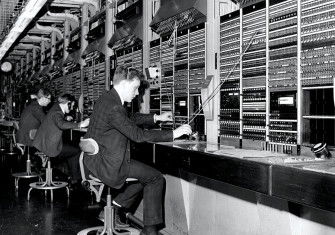
Into the flux of what people should know about one another came the excitement of the ‘white heat’ of technology. ‘Data banks’ – nascent repositories of computerised information used for credit checks or welfare records which had begun to emerge in the 1960s – telephoto camera lenses, and rudimentary listening devices provoked headlines such as ‘Electronic snooping gets too easy’ (Observer, 28 February 1965), ‘Menace hidden in computers’ (Guardian, 11 September 1970), ‘Biggest Brother of them all’, (Daily Mail, 13 July 1972), and ‘Bugging’s got to stop’ (Daily Mirror, 13 July 1972). Private investigators found themselves in the middle of all this, a lightning rod for unresolved questions about which secrets should be revealed, and how.
The wager accepted, the Guardian turned to Ian Withers. In the mid-1960s Withers had briefly worked for Quartermain but had then set out on his own, establishing a firm with his younger brother, Stuart. Withers rivalled Quartermain as one of Britain’s best-known investigators, gaining a particular reputation for tracking down missing children. He had boasted to the Daily Mail in 1968 that it was ‘surprising what you could find out when you say you are an insurance salesman’. So-called ‘blagging’ or ‘pretexts’ were a key part of the private investigator’s method, and Withers had perfected the art, becoming an expert at extracting information by pretending to be a government inspector or a police officer. He had learned the jargon of companies, banks, and bureaucracies and would pretend to be calling from the same organisation when asking for information. Phoning at lunch time apparently worked best, as managers were more likely to be away.
Withers took on the Guardian’s assignment with what Hetherington later described in his evidence to the subsequent parliamentary inquiry as ‘an element of bravado’, promising to find bank account numbers, criminal records, and national insurance records of several of the paper’s employees. He came back almost immediately with details of a military court martial and an accusation of domestic violence, as well as the salaries of a journalist and her husband. Hetherington concluded that the speed with which investigators could access information was ‘frightening’. The Guardian’s May 1971 story inspired by Withers’ activities– headlined ‘Commercial Spies Tap State Records’ and claiming that ‘confidential information on individual citizens is being systematically obtained from Government files and banks’ – touched a public nerve. It seemed to show how easy it was for private investigators to get their hands on information that many had assumed was secure. The same day the story came out, Edward Heath – perhaps sore at losing a bet – stood up in the House of Commons and declared that the paper had done the country a great ‘public service’, adding that there would be a ‘top level enquiry’. Quartermain, and Withers too, were in the sights of the law.
The Younger Committee
In the wake of the public outcry around the Guardian article, private investigators quickly came to the attention of the Younger Committee on Privacy. The Committee had been established in May 1971 to address wider concerns about new surveillance technologies and the use of ‘data banks’. Chaired by veteran Labour politician and former military intelligence officer Kenneth Younger, it eventually reported its findings in 1972 and remains the largest public inquiry into privacy ever conducted in Britain. At the time, both the government and the press were against a general right to privacy, fearing either that it would be unworkable as no one seemed able to precisely define what privacy meant, or that it would hinder their own attempts to find things out. The Younger Committee was therefore created to examine the best way to protect privacy without restricting the ability of the state, police, or journalists to legitimately investigate people. Just what counted as ‘legitimate’ was far from clear. Importantly, at the direction of the government, the Committee did not examine invasions of privacy carried out by public bodies, including the police. Instead, Younger quickly homed in on private investigators, declaring their work ‘of exceptional concern … because invasion of privacy is the essence of it’.
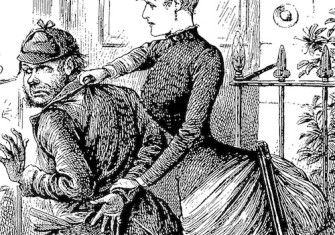
There was no shortage of people eager to talk to Younger about the threats represented by private investigators, as the profession had long been the subject of public concern and even dislike. It had first emerged in the middle of the 19th century, with small advertisements in the newspaper for ‘discreet inquiries’ and ‘secret watching’. This work was chiefly associated with uncovering infidelity in divorce cases and attracted a great deal of stigma for the ways it invaded the sanctity of the middle-class home. Throughout the 19th and early 20th century, private investigators were routinely described in the press as ‘snoops’, ‘charlatans’, ‘con men’, ‘peeping toms’, and ‘intruders’, personally sleazy and morally duplicitous.
On the other side of the Atlantic, American private investigators had long held a relatively close relationship with the state, particularly in the early 20th century when the leadership of the newly formed Bureau of Investigation (later the FBI) moved back and forth between private firms. In contrast, the British police were historically hostile to their commercial counterparts. Although many British private investigators were retired police officers trying to supplement their pensions, the police felt that they illegitimately encroached on their territory. Assistant Commissioner Peter Brodie of the Metropolitan Police, for example, told the Younger Committee that the ‘regular force’ viewed private investigators with a ‘great deal of dislike’. The profession tried to defend itself: H. Hazlewood, the Birmingham-based General Secretary of the Association of British Private Detectives, told the committee that ‘agitators, and their truly disproportionate dissensions’ should not be used to justify a crackdown. For Hazlewood, ‘wherever you find a group of characters who hate and oppose Private Detectives you will find among them some of those who have been thwarted by the Private Detectives’ defeat of their evil’.
Alongside private investigators, the Younger Committee was interested in technologies used to aid what it called ‘surreptitious intrusion’. This was part of a broader concern from the media, lawyers, and some MPs over the uncontrolled use of ‘bugs’. In 1966, for example, a judge in a divorce case complained that while the bugging of telephones by private investigators was not, at the time, illegal (and would not become clearly so until the Regulation of Investigatory Powers Act 2000), it was, nonetheless, a ‘most distasteful invasion’. Younger focused on what he called ‘new style’ hidden microphones, including those as ‘small as a tie pin’ and photographic lenses of ‘exceptionally high magnification’. Withers himself had a well-publicised sideline in developing new bugging technologies. He appeared in multiple newspaper articles in the late 1960s and early 1970s boasting about his skills, and featured in a 1968 Guardian story demonstrating a ‘bug in a bowler hat’, a set-up described by the journalist as being like something from Mission: Impossible. Withers defended his actions by saying that he was only trying to provide evidence about misdeeds and law-breaking. However, all the excitement over this new technology risked being overblown. The Younger Committee reported that it heard evidence of only five cases involving ‘technical devices for surreptitious intrusion’, including a ‘lady from Bradford who complains her neighbour snoops on her continuously’ and a divorce involving Ian and Stuart Withers.
It was not just parliamentary inquiries that went after private investigators. Following the Guardian story, Metropolitan Police Detective Superintendent John ‘Ginger’ Hensley was put on the case. Hensley made it his mission to put people like Quartermain and Withers behind bars for what he saw as their invasive methods. The Times described it as ‘one of the most painstaking’ investigations ever carried out. Hensley, a veteran of the force with a reputation for having ‘unrivalled’ knowledge of underworld gangs, had previously made headlines for the 1966 arrest of police killer John Duddy. Like Withers, Hensley was known for tracking down missing children, one of whom – a very young newborn – was then named after him. He was later accused of stealing gold found during a raid, part of a much larger set of allegations about corruption in the Metropolitan Police. Before that, however, he turned his attention to Barrie Quartermain.
PIs on trial
Quartermain had left the RAF in the mid-1950s and attempted to set up a news agency, but soon moved into the more lucrative business of private investigation. The liberalisation of divorce law in the 1960s, which reduced the importance of infidelity, meant private investigators had to look in new directions for work. Quartermain was at the forefront of a new generation of entrepreneurs. The brand of private detective work he developed mirrored some of the more coercive aspects of policing, and he had gained public prominence in 1969 for his involvement in a series of violent evictions in East London. Redbridge Borough Council had hired his firm to clear their properties as part of a redevelopment. Petrol bombs, bricks, and glass bottles were thrown, and pitched battles erupted between Quartermain’s men – wearing white steel helmets and armed with dustbin lids – on one side and squatters on the other. The bishop of Stepney accused the private investigator of recruiting a ‘private army’. Quartermain was himself left bloody and bleeding by the encounter. Although the police intervened to separate the two groups, Quartermain did not face any charges.
A great deal of Quartermain’s money was made as a result of the credit boom fuelling the ‘never had it so good’ atmosphere of the 1960s. The hire purchase agreements by which the living rooms of Britain were filled with television sets and new sofas opened new forms of work for private investigators. If people were going to be lent money, someone had to check whether they could be trusted to pay it back; and if people failed to repay, someone had to track them down. At the edges of credit checking agencies and debt collectors stood people like Quartermain and his small empire of companies. By the early seventies he boasted to the Daily Mirror that he was carrying out over a quarter of a million checks a year.
Barrie Quartermain under arrest following his return from South Africa, 18 January 1974. Bill Howard/ANL/Shutterstock.
The success did not last. In April 1973, after hearing he was being investigated as part of Hensley’s campaign against private investigators, Quartermain, then 39, fled to South Africa with his much younger secretary and girlfriend, Marilyn Harrison, leaving his wife and four children behind. To avoid detection, he obtained a false passport using the alias of a dead child, a move which the Daily Mirror later alleged had been inspired by the recently released film TheDay of the Jackal. An Interpol arrest warrant was soon put out, with 13 charges including ‘affecting a public mischief’, contravening the Wireless Telegraphy Act, and blackmail. South Africa quickly deported the two runaways for immigration offences and they were arrested upon stepping off the plane in Britain.
At Quartermain’s criminal trial at the Old Bailey in the autumn of 1974, the prosecution set out how, among other things, he had plotted to pervert the course of justice by using a version of a ruse for which private investigators had been infamous since the 19th century: planting red nylon underwear in Harrison’s husband’s bedroom as false evidence to be used in a divorce case.Quartermain seems to have fallen out with his lawyers and decided to represent himself, pleading guilty to all charges, apart from blackmail. In mitigation, a psychiatrist informed the court that Quartermain was a ‘manic depressive’ and could not stop weeping. The judge was not impressed, describing Quartermain as ‘evil’, before sentencing him to three years in prison and a fine of £500.
Quartermain was not the only private detective investigated by Hensley. Along with more than a dozen others, Hugo ‘Peter’ Merken was sent down. Merken was a former radio operator in the Second World War German navy who, after being held as a PoW, settled in Britain. Ian Withers was also arrested. For Hensley, the case against Withers seemed to be personal. In his report to the prosecutor, he described Withers as having ‘an ego that stands out like a diamond on a sack of coal’. There were many others who seemed to hold similar opinions: 103 people eventually gave evidence to Hensley in Withers’ case. The testimonies focused on Withers’ credit and debit work, but there were also accusations that he spied on dissidents for the embassies of South Africa, Mexico, and Brazil. When the trial opened, the prosecution argued that Withers openly advertised his services and took advantage of the fact that ‘ordinary life was carried out at high speed’, meaning that people often did not check the appropriateness of their request.
Stuart and Ian Withers at the Old Bailey, 1971. Jimmy James/ANL/Shutterstock.
Withers and three family members who worked for him were found guilty of a range of crimes, including, like Quartermain, ‘conspiring to effect a public mischief’ by unlawfully obtaining information from banks, government departments, and local councils. Withers was sentenced to 12 months in prison. His co-defendants received smaller sentences. The case was appealed all the way to the House of Lords where it was dismissed on the grounds that many of the acts of which Withers was accused were disreputable but not illegal. The prosecution’s conspiracy charge was designed to catch many of the things that private investigators did that made people feel uneasy, but it proved too broad and imprecise. For the Law Lords, ‘telling lies … in order to obtain information is not a criminal offence’.
Despite, or even because of, his acquittal Withers was hardly out of the news in the next few years. In 1974 he was followed by a crew from Southern Television as he tracked down a three-year-old girl taken to Majorca by her father in a ‘tug of love’ case, resulting in the award-winning documentary Finding Helen and an appearance on the David Frost Show. It was not all good publicity: in 1976 Withers was convicted of ‘child stealing’ during a custody case. There were unproven accusations that he was caught up in the assassination of political exiles from the Seychelles. The police also continued to take a dislike to him. In his memoir, Private Eye, Private Spy (2021), Withers claimed that in the mid-1970s a Metropolitan Police officer told him: ‘Do yourself a favour, move somewhere else and take your business with you … heed my words.’
Private afterlife
Despite promises to act on invasions of privacy provoked by the 1971 Guardian story there would be no significant movement to tighten protection around personal information. It proved difficult to outlaw specific surveillance methods, such as the use of bugs, when the same methods were used by the police and the press. Unknown to the wider public, at the very moment the police were going after Withers and Quartermain, they were themselves using undercover officers to pry into the intimate details of people’s private lives. It would be over a decade before privacy protections even began to be tightened by the introduction of a series of Data Protection laws from the mid-1980s, under the influence of European human rights law with their emphasis on personal information as a form of property. In the meantime, private investigators would continue to attract public attention, working at the rough edges of acceptable – and unacceptable – forms of intrusion.
Tobias Kelly is Professor of Political and Legal Anthropology at the University of Edinburgh.