For the ancient Greeks, the Peloponnesian War was a conflict involving the entire world. For Thucydides, it was a lesson in the realities of human nature
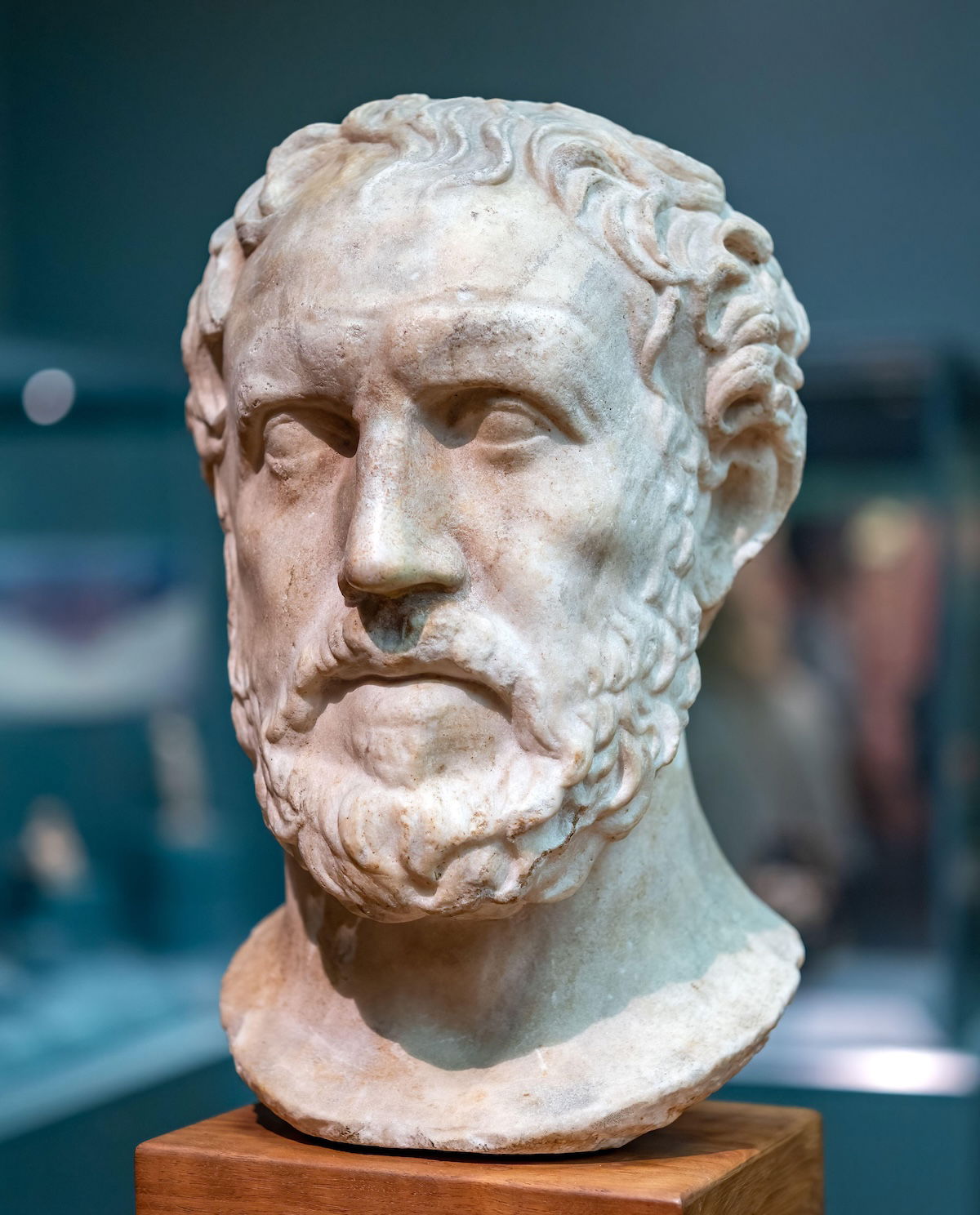
War has no redeeming features. The only good thing about the Peloponnesian War, fought between Athens and Sparta from 431 to 404 BC, is that it attracted the attention of Thucydides, whom many consider to have been ‘the greatest historian ever’ (as per the British historian and statesman Lord Macaulay) for his analysis of events and intellectual sophistication. Thucydides was an eyewitness to some episodes, and carefully interviewed other actors to gain as accurate an account as possible of the whole war. He wrote it all up in a work we call TheHistory of the Peloponnesian War, first properly translated into English by Thomas Hobbes in 1629. The style of the book is often experimental, but always confident. His Greek was considered difficult even in his own day, but it always matches the intensity of the narrative. If he had given his work a title, he might have called it The War between the Athenians and the Peloponnesians, avoiding the Athenocentrism of the title we habitually give it.
Register to read more articles for free.
When you register, you will receive the History Today newsletter. Click here to read our Terms of Use.
For the ancient Greeks, the Peloponnesian War was a conflict involving the entire world. For Thucydides, it was a lesson in the realities of human nature
War has no redeeming features. The only good thing about the Peloponnesian War, fought between Athens and Sparta from 431 to 404 BC, is that it attracted the attention of Thucydides, whom many consider to have been ‘the greatest historian ever’ (as per the British historian and statesman Lord Macaulay) for his analysis of events and intellectual sophistication. Thucydides was an eyewitness to some episodes, and carefully interviewed other actors to gain as accurate an account as possible of the whole war. He wrote it all up in a work we call TheHistory of the Peloponnesian War, first properly translated into English by Thomas Hobbes in 1629. The style of the book is often experimental, but always confident. His Greek was considered difficult even in his own day, but it always matches the intensity of the narrative. If he had given his work a title, he might have called it The War between the Athenians and the Peloponnesians, avoiding the Athenocentrism of the title we habitually give it.
In the year 423 BC Thucydides was serving as one of the ten Athenian generals. His family was wealthy, and had estates and mining interests in the northern Aegean, on the mainland opposite the island of Thasos, so that was where he was posted. His term of service coincided with the defection to the Spartans of Amphipolis, a town that was vital to Athenian commercial and military interests in the region. Thucydides failed to prevent the defection, and was punished by being sent into exile from Athens. He retired to his northern estates, and from there he conducted the research that would result in his History. ‘I lived through the whole war’, he says:
I was old enough to be in full possession of my faculties, and I paid close attention to make sure that I would have precise knowledge of every detail. In fact, I was banished from my country for twenty years, and so I was able to acquaint myself with the affairs of both sides, and to regard them calmly and collectedly.
War and false peace
The war broke out, Thucydides says, because the Spartans were frightened of the growing power and increasing imperialism of Athens. How far would the Athenians go? Did they see themselves dominating the entire Greek world? Given their extensive alliances, a war between Sparta and Athens would inevitably involve almost all Greeks everywhere, from the Black Sea and the eastern Mediterranean to southern Italy and Sicily. But the action began on the Greek mainland.
After only a few years, however, the war had reached a stalemate; honours were more or less even, with neither side able to achieve dominance. Sparta’s strategy since the outbreak of war had been regularly to invade Attica – the hinterland of Athens – to try to provoke a land battle they were sure they would win. The Spartan army, generally led by Archidamus, one of the two Spartan kings, arrived when they expected the cereal crops to be ripe enough for them to steal or burn, and stayed for a few weeks at the most, doing as much damage to farmland as possible. Athens’ strategy, guided in the first years of the war by Pericles (greatly admired by Thucydides as both a peacetime and wartime leader), was to refuse all such provocations and to whittle away at Spartan allies and possessions in and around the Peloponnese. But the Spartan invasions did have an unexpected side effect. The majority of the population of Attica had crowded for safety inside Athens’ city walls, so that when a pandemic struck in 430 it was devastating. Thousands of people died, in pain and gruesome disfigurement. Despite Thucydides’ long, careful, and clinical description of the plague, it defies identification; the symptoms of diseases change over time, making identification of ancient pandemics very difficult.
Gravestone commemorating the death of an Athenian soldier, depicting combat, possibly between a Spartan and Athenian, during the Peloponnesian War, late fifth century BC. Metropolitan Museum of Art. Public Domain.
The best way for Sparta to win the war would be for it to approach Athens’ ‘allies’ (or, rather, the subjects of its empire), but most of these allies were among the islands of the Aegean and along the coastline of Asia Minor, and, lacking a fleet, there was little the Spartans could do about them. But they could march overland to see if they could get Athens’ allies on the mainland in the north to secede. The attempt, made in the year 424, was immediately successful. The Spartan general Brasidas persuaded many towns, through diplomacy and the threat of force, and then by a domino effect, to leave the Athenian alliance. Amphipolis was the most important; hence the severity of Thucydides’ punishment.
Brasidas’ successes in the north balanced out Athens’ successes in the south – especially the capture of 120 of the highest-ranking Spartans at Pylos in the western Peloponnese – and in 421 the two sides concluded a peace treaty that lasted a few years, though certainly not the intended 50 years. But, as Thucydides pointed out, these were not years of peace:
It would be quite wrong for anyone to claim that the intervening stretch of time while the peace treaty was in force was not one of warfare. Anyone who wants to say this should look at what actually distinguishes peace from war, and he will find it implausible to think of this period as one of peace.
In effect, the Athenians and Spartans were fighting each other through proxies. In 418 the proxies were the old Peloponnesian rivals, Tegea (for Sparta) and Mantinea (for Athens). In 416 the Athenians launched a large expedition against the island of Melos, a Spartan ally that had refused to join the Athenian alliance along with almost all the other islanders. The Spartans were too afraid of the Athenian navy to send help. In an act of sickening familiarity, all the men the Athenians could lay their hands on were killed, and the women and children enslaved. The island was repopulated with Athenian settlers. Thucydides marked the occasion with a stark debate between the Athenians and the Melians, in which the Athenians cynically justify their actions by the doctrine that might makes right. ‘Justice’, they say, ‘is a consideration only between those who have an equal ability to coerce, while the strong do what they can and weak concede them that right.’
The affair of the herms
In 415 the Athenians launched their most ambitious campaign yet: a full-scale invasion of Sicily. The island was divided along ethnic lines between Dorians, who generally favoured Sparta, and pro-Athenian Ionians, with the Dorian city of Syracuse by far the dominant presence. War had already broken out on a small scale, but it was bound to escalate, and Athenian allies needed assistance. After considerable debate, the Athenians converted what might have been a relatively small-scale venture into an attempt to defeat Syracuse and take over the resources of the island. The idea had been floated before, in the 420s, but had been foiled then by the outbreak of peace on the island, making Athenian intervention unnecessary. The excuse in 415 might have been that this was a pre-emptive strike against the probability that the Syracusans would soon be free to come and help their Spartan allies. Pro-Athenian factions on the island certainly dangled that possibility as a lure to tempt the Athenians there. But it was utterly unrealistic to expect to be able to rule as troubled and as large an island as Sicily from distant Athens. Thucydides saw the importance of the expedition – it was, in effect, an act of self-destruction by Athens – and devoted no less than a quarter of what there is of his History to just these two years of the war. Though never expressly criticising the expedition, he starts his account of it by saying:
Few in Athens had any sense of the size of the island or of how many people, both Greeks and barbarians, lived there, and they did not appreciate that they would be undertaking a war that would be hardly less demanding than the one against the Peloponnesians.
One night in late May or early June, as the armada was poised to sail for Sicily, a terrible act of sacrilege took place. Herms were distinctively Athenian boundary-markers, placed at crossroads and at the entrances to streets, neighbourhoods, and homes; they were busts of the god Hermes on top of plinths, each with a prominent erect penis to ward off evil. On that night, the noses and penises of dozens of these statues were hammered off.
Funerary stele of two hoplites, Chairedemos and Lykeas, killed during the Peloponnesian War, c.420 BC. Luisa Ricciarini/Bridgeman Images.
Hermes was the god of travellers. This was clearly an attempt to jinx the expedition by those who were opposed to it. In the heat of the moment, the affair was taken, Thucydides says, to be ‘a revolutionary conspiracy to overthrow the democracy’. It was the sheer scale of the planning: a lot of people must have been involved, too many for it to have been merely a drunken prank. And it was obviously members of the elite who had done it. The thinking, presumably, was that oligarchs might want to stop the expedition, motivated by a desire not to escalate the war, some of the expenses of which were borne by the rich.
A witch-hunt ensued, with generous rewards offered for information. Armed citizens patrolled the streets and fortifications of Athens and Piraeus. And then, at the height of the hysteria, the general and statesman Alcibiades, the most vociferous champion of the Sicilian expedition, and certain of his friends were denounced not for the mutilation of the herms, but for a different sacrilege: perhaps as a form of initiation into a club, they had put on a version of the sacred and secret Mysteries of Eleusis in a private house, with non-initiates present. They had committed the crime of revealing aspects of the Mysteries to non-initiates. The Athenians might have been inclined not to take this too seriously, were it not for the fuss over the herms and the fact that Alcibiades’ contempt for democracy was well known: at one point Thucydides has him describe democracy as ‘a system the folly of which is undeniable’. Olympic victory was a traditional stepping-stone to personal power, and the previous year Alcibiades had achieved a unique success. It was not just that he had unprecedentedly entered no fewer than seven teams in the four-horse chariot race, and had come first, second, fourth, and seventh (his other teams presumably crashing), but also that, in doing so, he had ended a long run of Spartan victories in this prestigious event. Back in Athens he celebrated his victories ostentatiously, commissioning the internationally famous playwright Euripides to compose a celebratory epigram and famous painters to glorify his victories. The Athenians were probably right to be suspicious of the scale of Alcibiades’ ambition.
Disaster in Sicily
The authorities in Athens soon discovered the names of those responsible for the mutilation of the herms, and at least 65 men were put to death or fled into exile; these included some of the wealthiest men in Athens, and the sale of their confiscated property refilled the city’s coffers. But by then the armada had already set sail for Sicily: 136 ships (rowed by men who would double as soldiers on land), more than 5,000 hoplites, a small cavalry troop, and plenty of light-armed soldiers. A ship was duly dispatched to bring Alcibiades back from Sicily to face trial. He agreed to return, but he and his closest friends escaped in southern Italy. In Athens, he was found guilty of sacrilege and condemned to death in absentia, but by then he had made his way to Sparta, where he had influential friends. The Spartans welcomed such a high-profile defector, and listened as he advised them to send aid to Syracuse and added his weight to the idea, long discussed in the councils of the Peloponnesian League, that the Spartans should occupy some location in Athenian territory, to match the Athenian occupation of Pylos.
Bas relief depicting an Athenian trireme, c.400 BC. Luisa Ricciarini/Bridgeman Images.
The campaign in Sicily continued for two gruelling years. Before the Spartans sent reinforcements in 414 the Syracusans were on the ropes; afterwards, with their confidence raised, they hardly ever lost the initiative. In 413, facing certain defeat and having lost access to the sea, the Athenians tried to escape by land, hoping to march halfway across the island to friendly territory. There were tens of thousands of them. But the Syracusans had placed men in ambush along the various routes. On the sixth day of the retreat one division of the Athenians surrendered; their numbers had been severely reduced by constant enemy harassment, and their general, Demosthenes, gave up. On the eighth day the other half, under Nicias, was massacred, leaving only a thousand survivors. The two Athenian generals were executed, while their men were kept captive in quarries and those who did not die of starvation, disease, or exposure were ransomed or sold into slavery.
Thucydides rose to the occasion and wrote a striking vignette of the Athenians’ suffering:
There were a great many of them crowded together without much room at the bottom of the quarries, and since the place afforded them no shelter they were plagued, even at this season, by sunny days of stifling heat – and then, by contrast, the nights that followed were autumnal and cold, and the varying temperatures played havoc with their health. They were forced by the cramped conditions to do their business where they were, and moreover there were heaps of corpses piled up on top of one another. The stench was unbearable, and they suffered badly from hunger and thirst, because for eight months each of them received only half a pint of water and one pint of grain a day.
Athens doomed
Almost miraculously, Athens fought on. However, while it may not yet have been the end for Athens, it more or less was for Thucydides. What we have of his work is traditionally divided into eight books. The final book ends with the end of the year 411, even though the war went on until 404. Time and again in the course of the work Thucydides made it plain that he was going to write about the war in its entirety. For instance, after the end of the Archidamian War, he wrote, in a second preface:
The following account of events, also written by Thucydides of Athens, goes in chronological order, with the narrative divided into summers and winters, up to the time when the Spartans and their allies brought the Athenian empire to an end and captured the Long Walls and Piraeus. This moment arrived after a total of twenty-seven years of warfare.
Clearly Thucydides either abandoned the work or, more likely, died.
In the spring of 413 the Spartans prepared to invade Attica and renew the war in Greece. This time, ravaging the countryside was not the purpose of the invasion. They occupied the village of Decelea, fortified it, and stocked it with troops (mainly Boeotians). They now had a permanent force about 22 kilometres (13 miles) from Athens, and the ability to wage economic war against the Athenians by getting slaves to abscond (more than 20,000 according to Thucydides), by being a permanent presence in Athenian farmland, and by interrupting the easy overland route from Euboea, which was not only a source of grain, but also where much Athenian livestock was kept. The writing was on the wall for Athens.
Hoplites on a terracotta alabastron, c.590-570 BC. Metropolitan Museum of Art. Public Domain.
Athenian allies began to approach the Spartans, seeking guarantees of support should they defect. Ominously, the delegations from the Ionian Greeks of western Asia Minor were accompanied by representatives of the two Persian satraps of the region. Urged on by their king, Darius II, the satraps wanted a return to the situation when all the Greek cities of Asia Minor had been tributaries of the Persian empire. For their part, the Spartans were now prepared to cede the 40 or so eastern Greek cities in return for Persian cash, a decision that exposed the hollowness of their claim, repeated throughout the war, that they had gone to war in order to liberate Greeks. The entrance of Persia into the war doomed Athens.
The war in Ionia ebbed and flowed. Alcibiades was once again working for the Athenians, having convinced them that he could bring the Persians in on their side, and at first he achieved some signal successes at sea. But in 406 he irresponsibly left a subordinate in charge of the fleet, and the Spartan general Lysander inflicted a severe defeat on him. This single failure undermined Alcibiades’ popularity in Athens, and he retreated to exile in one of his castles on the Thracian Chersonese (the Gallipoli peninsula). Then, in 405, the Athenian fleet was annihilated at Aegospotami in the Hellespont by Spartan forces under the command of Lysander. Before long, Athens was blockaded by land and sea, and starved into submission. The city surrendered in March 404 and barely avoided utter destruction by the Peloponnesians. It was allowed to survive, but with its fortifications demolished and its navy reduced to 12 ships. It was also brought into the Spartan alliance: ‘The Athenians were to regard Sparta’s friends and enemies as their own and accompany the Spartans on all their military ventures on land and sea’, wrote Xenophon, the most important continuator of Thucydides, in his Hellenika. Xenophon records that the Athenians ‘began to demolish the walls to the music of pipe-playing girls; they went about the work with great enthusiasm, because they believed that this day marked the beginning of freedom for Greece’. They were wrong, but that is another story.
Thucydides’ trap?
Why did Thucydides consider the war so important? It was not just because it was, in Greek terms, a world war. Like all ancient Greek historians, he felt that it was his job to mark the events of the war as containing important lessons for the future – examples and case histories for future leaders and statesmen to emulate or avoid. His narrative is therefore not a straightforward account of every detail of the war. For instance, he gives a lengthy account of the civil war in Corcyra (Corfu) that started just before war broke out between the Athenians and Spartans, but then says little about other civil wars, only noting their occurrence. One detailed account is enough for him because he believed that human nature is a constant, and so many of the horrendous events of the Peloponnesian War were likely to happen again in the future. When Thomas Hobbes published his translation of the History in 1629, he applied this Thucydidean insight. He read Thucydides’ account as including a warning for his own times – an account of hawkish and unprincipled leaders dragging states into an ill-advised war (in Hobbes’ case, the Thirty Years’ War).
Titlepage to Thomas Hobbes’ translation of Thucydides, 1629. Houghton Library, Harvard University. Public Domain.
Thucydides would have approved of attempts to read his History as containing lessons for our own time. Close to the start of the work he enunciates a famous boast: ‘The work has been composed as a possession for all time rather than a virtuoso performance for a single hearing.’ Modern readers are attracted by his realism. He does not attribute events to divine causation, as his predecessor Herodotus had done. He stresses that historical events happen because of certain, largely unpleasant, aspects of human nature, such as greed and the lust for power: ‘The cause of all these evils was the pursuit of political power motivated by greed and ambition, and the consequent fanaticism of those competing for power.’
In the late 20th century some political scientists began to draw on Thucydides to argue that the sphere of foreign politics was one where moral judgements had no place, and where self-interest, power, and security should be the guiding principles. The so-called ‘Thucydides Trap’ – a concept identified in 2015 by the political scientist Graham Allison – has been used to point to the inevitability of war between the US and China. As Allison wrote, the ‘trap’ ‘refers to the natural, inevitable discombobulation that occurs when a rising power threatens to displace a ruling power’, following which a violent clash is ‘the rule, not the exception’. One way or another, it looks as though Thucydides was right to call his work ‘a possession for all time’.
Robin Waterfield’s translation of The History of the Peloponnesian War is forthcoming with Basic Books.