Buying British
From Elizabethan laws to modern food campaigns: the long history of Britain's patriotic consumers.
Following Brexit and Donald Trump’s declaration that US citizens should ‘Buy American’, in January 2017 the Labour Party’s deputy leader, Tom Watson, called on his compatriots to ‘Buy British’. Yet the idea that British consumers should support their farmers, factories, workshops and small businesses is not a recent phenomenon. Where did this trend start and what is so appealing about ‘buying British’?
Questions about how consumers could support – or even oppose – the identity and economic success of their country through shopping have long been asked. Although the means by which customers have been compelled to participate in patriotic consumerism have changed, the message – that buying British things will help make the country better, stronger and happier – has remained constant.
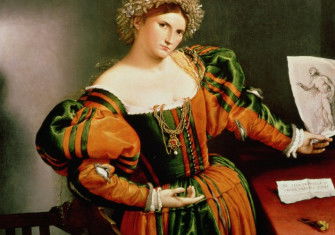
Buying British goods was once a legal requirement. In Elizabethan England, and across much of early modern Europe, sumptuary laws were used to control and dictate the goods people could buy and wear. Such laws, known as Statutes of Apparel, applied a penalty – normally a fine or the loss of property – if people failed to wear garments appropriate to their station or ones manufactured from British textiles. These laws were supposed to maintain the rigid social structure that was expressed and reinforced through clothing. In practice, they were also a useful means of raising revenue through taxes and fines and for the government to influence consumers into spending money on domestically manufactured textiles. Sumptuary laws dated back to at least the Roman Republic, but, with the rise of a wealthier merchant class in early modern England, the ruling classes’ desire to manage and maintain social structures through consumption meant that sumptuary laws enjoyed a resurgence.

The Statute of Apparel of 15 June 1574 proclaimed that the purchase of ‘unnecessary foreign wares’ contributed to the ‘decay of the wealth of the realm’ and woollen cloth made outside the country was forbidden to all but the aristocracy. Another law specifically enforced the wearing of English-made wool: an Act of Parliament of 1571 decreed that all males over six years old were required to wear woollen caps on Sundays or face a fine of three farthings. Although noblemen were exempt, it was not only the social order that benefitted from this law, but the national economy. From the 12th to the 18th century, the English wool trade was one of the nation’s most important economic resources. English wool was considered high quality, because its fibres were both long enough to ensure easy spinning and smooth and dense enough to provide excellent insulation. In spite of its quality and status as one of England’s most profitable exports, deliberate efforts were made to ensure that English consumers were supporting domestic trade rather than lining the pockets of foreign merchants.
Textiles remained at the heart of the mercantilist struggle to keep English consumers purchasing English products. In 1700, the first of the Calico Acts banned the import of cottons into England, partly with the intention of attempting to preserve the dominance of the English wool trade. These acts were part of England’s protectionist stance of the early 18th century and mark the dawn of a new age of patriotic consumer conscience.
The East India Company had been importing calico and chintz cottons from India with increasing regularity since the Restoration in 1660. These cotton fabrics were used for curtains and domestic furnishings, as well as clothing, and were usually printed in elaborate, colourful, floral designs: a far cry from plain dyed English wools. Unsurprisingly, these colourful calicos caught the attention of English consumers. In the 1660s and 1670s, the East India Company had provided Charles II with ‘voluntary contributions’ – money paid in return for his wearing a calico waistcoat – in order to stimulate the market. It made exotic imported textiles fashionable among the wealthy. The impact on the English wool trade was dire and, by 1700, the Calico Act had been introduced to ban ‘all calicos painted, dyed, printed or stained’ from import into England.
The Calico Act was not very successful in dissuading English consumers from seeking out these appealing cottons. Women in particular – from fashionable ladies to the servants who dressed them – were publicly denounced for continuing to indulge their desires for these imported wares. By 1720, pamphleteers were condemning Indian textiles as a national threat to English trade, gender and morals:
By the East we’re oppress’d,
By the South we’re distres’d,
Tho’ at peace with our neighb’ring nations,
Yet if Steps be not made,
To recover our Trade,
It will wear out each Sufferer’s Patience,
For both Sinners and Saints
Are so full of Complaints
Of the Tricks that have lately been plaid ‘em,
That they cause the South Sea
O’er their Coffee and tea,
For not drowning each Callico Madam.
This ballad, published as The Spitalfields Ballard: Or the Weavers Complaints against the Calicoe Madam in 1721, targets both the female consumer and the East India Company as being culpable for the suffering wool market. They were perceived not merely as a threat to the weavers and textile workers who were employed in the English silk and wool industries, but to the entire population. One writer stated that English textiles were ‘the Staple of our Trade, and the most considerable and essential Part of our Wealth, the Fund of our Exploration, the Support of our Navigation, and the only Means we have for Employing and Subsisting our Poor’. In other words, buying textiles produced in England was a patriotic act.
The ‘calico crisis’ that followed saw women publicly attacked for wearing garments that were made from these cottons. Weavers assaulted women on the streets, savagely ripping the offending garments from their wearers’ backs. One weaver, Peter Cornelius, ripped the clothes off Dorothy Orwell, leaving her ‘naked in the Fields’. This public denouncement and shaming of consumers – and, in particular, women – who failed to support the English textile trade was rabid and impassioned. By shopping for foreign goods, either due to an intentional desire for foreign novelty, or an unintentional ignorance of the implications of consumer actions, these women were perceived as unpatriotic. A new act of 1721 reinforced the legislation banning imported cotton. It would not be lifted for another two decades.
That this uproar against the unpatriotic consumer occurred as the 18th century dawned is not surprising. With the Act of Union in 1707, ideas of nationhood were in flux. The union of Scotland and England saw the two countries ‘United into One Kingdom by the Name of Great Britain’. Defining and reinforcing a new British identity became increasingly important in the 18th century. To some, this new identity was a British innovation; a coming together of nations. To many, however, English and British were becoming synonymous. Addressing Parliament in 1805, the Perthshire MP David Scott stated that he hoped he would ‘never be offended with the word English being applied in future to express any of His Majesty’s subjects, or suppose it can be meant as an allusion to any particular part of the United Kingdom’.
French fancies
France, in particular, was perceived as a threat to British power and security, due to its support of the Jacobites. In 1745 the Anti-Gallican Association directed its ire towards the French, stating that it wished to ‘discourage the introduction of French modes and oppose the importance of French commodities’. The Royal Society of the Arts, or the Society for the Encouragement of the Arts, Manufactures, and Commerce (now the RSA) was founded in 1754 and, much like the Anti-Gallicans, was primarily focused on promoting British trade and manufacture while suppressing foreign influence. It was keen for Britain’s textile industry to be able to dye cloth and fibre domestically rather than sending it abroad for this process.
At odds with this moral and political disparity between England and France was the persistent belief in French superiority in design and fashion. France had long seen fashion as integral to the cultivation of commerce and instrumental in the success of its economy. As the English poet Soame Jenyns wrote in his 1742 Fashion, a Satire, it was ‘France, whose Edicts govern Dress.’ To the English, French fashions were both desirable and distasteful. The cachet of fashions from France was consistently strong throughout the century and ‘French’ was a byword for style, elegance and modishness. Yet France’s fashion superiority was diluted by the increasing desire for decidedly English, rational styles of dress. In the latter decades of the century, the British consumer emerged as a patriotic economic force, harnessing purchasing power for the nation’s good; an economic strategy which the French had long been aware of yet, in their political turmoil, had failed to put into practice.

The fashion for French silks, however, outweighed patriotism for many consumers. A Man of Taste, published in London in 1733, scoffed at the concept of patriotic consumption by the English, asking:
Shall I wear cloaths, in awkward England made?
And sweat in cloth, to help the woollen trade?
In French embroidery and Flanders lace
I’ll spend the income of a treasurer’s place.
In France, on the other hand, courtiers were required to wear expensive silks produced domestically in order ‘to promote the country’s manufactures’, a custom encouraged but not enforced in the English court. The call for the consumer to support English-manufactured goods came primarily from religious quarters and was largely unheeded mid-century. Both Anglican moral writers and religious groups such as the Quakers were vocal in encouraging consumers to support domestic industry and production.
Political unrest in France in the late 18th century provided Britain with a new opportunity to inspire patriotism among its consumers and to expand its market. In 1786, London’s Fashionable Magazine even claimed ‘that London now, generally speaking, gives Fashions to Paris and, of course, to all Europe, not Paris to London’. Parisian fashion journalists did not necessarily agree. Nevertheless, in the years leading up to the French Revolution, Anglomania was rife in France, especially in men’s fashionable dress. The masculine woollen styles of the riding habit, or redingote, appealed to the increasingly egalitarian ideologies of the French and reinforced the effeminate connotations of French fashions. Although Louis XVI did his best to stem Anglomania, France continued to rely upon English imports of wool, silk gauze (actually woven in Scotland) and muslin imported by the East India Company.
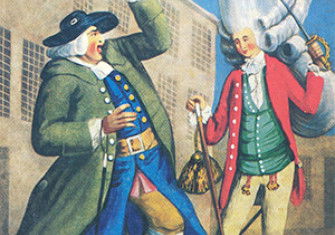
The success of London fashions in Europe contributed to an increasingly patriotic feeling among British consumers, which was articulated visually in the characters of John Bull and Britannia. The beef-eating, stout Englishman, who evolved into the stereotype of John Bull, was drawn in direct contrast to the foppish and skinny Frenchman. It was Britannia, however, who was more commonly employed to inspire the patriotism of the British consumer. Children were taught the significance of the image of Britannia, a female allegorical figure associated with the mother. From the mid-century, the Anti-Gallican Association had claimed Britannia as a key part of its anti-French iconography and prominently included her in the society’s coat of arms. During the 1780s, such symbols, widely recognised and understood by the consumer, became increasingly used on marketing ephemera, especially that associated with international trade.
This pro-British symbolism was used to promote both native manufacturing and trade and was able to evoke powerful patriotic emotions. Retailers’ trade cards, the equivalent of modern business cards and leaflets, made clear links between the goods they sold and the international trade networks and domestic manufacturing industries from which they sprung, transforming consumption into a positive, patriotic act. Such iconography stirred a sense of national duty in shoppers. Consumers could not escape the patriotic implications of their purchases.
Patriotic symbolism, which began to make its way into commercial and retail advertisements in the 1780s, became prolific by the turn of the century. Traders dealing in tea, ceramics and silverware, as well as textiles, used the symbol of Britannia. Its popularity is attested to by blank designs, with generic images of Britannia and the ephemera of trade. After the 1801 Act of Union between Britain and Ireland, such blank trade cards also depicted Irish symbols, such as the harp and the figure of Hibernia. Undoubtedly, this celebrates the Act of Union of 1801 between Britain and Ireland.
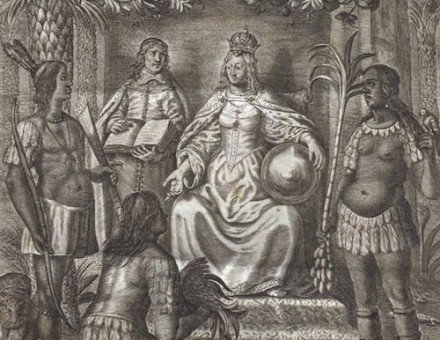
The iconography of the union was particularly resonant in the linen trade. Irish linen had been seen as an economic threat to the English for many years and the economic prosperity it could potentially create for Ireland was discussed in Parliament as part of the campaign against the union spearheaded by the Irish Patriot Party. Henry Grattan, an Irish politician and campaigner against the union, stated in a speech to the Irish House of Commons in 1800 that ‘Irish linen sells itself’. In trade cards, Hibernia both symbolically and literally passes rolls of Irish linen over to the regally seated Britannia.
By the turn of the century, the French monopoly on fashion and taste had been diluted. What remained was still coloured by the countries’ political relationships, but was now more a dialogue of style. Both French and British female consumers of dress were happy to be wrongly identified as belonging to the other culture based on their clothing. French émigrés fleeing the Revolution continued to be consumers of fashion. Those who could afford it bought clothing and others were frequently employed in the dressmaking and millinery trades, although, as the war dragged on and sympathy wavered, suspicion was felt increasingly by those who feared they might be spies. The Morning Post of 22 January 1799 complained that ‘Some Ladies of fashion now Employ French Emigrants in making their dresses, without considering that they thereby throw their own country women out of employment’. The continued tension did not prevent many émigrés finding employment in straw hat-making or embroidering muslins for gowns.
Rudolph Ackermann’s periodical, the Repository of Arts, Literature, Commerce, Manufactures, Fashions, and Politics (1809-29), established the female consumer of fashion as an economically and nationally important figure in the early years of the 19th century. The Repository not only saw the female consumer as a core component of the magazine’s readership, but also identified and played off the marriage between the consumer and the British patriot.
From the first issue of the Repository in 1809, Ackermann included a woodcut surrounding ‘patterns of British manufacture’. These ‘patterns’ were samples of fabrics and ribbons, accompanied by descriptions of the items and directions regarding where they might be acquired. This was a comparatively innovative inclusion, at least for British periodicals. By making the physical fabrics the core focus of these pages, Ackermann showed that he had understood how important being able to touch and feel fabrics was to the female consumer. Their material literacy – that is, their knowledge and understanding of fabrics – which they developed through childhood, was acknowledged and used as a means of marketing.
Backing Britain?
As Linda Colley wrote in her groundbreaking work Britons: Forging the Nation 1707-1837 (1992), it was broadly accepted that commerce ‘was the engine which drove a state’s power and wealth’. Manufacture and trade became inextricably linked with national identity in early 19th-century Britain. The Repository proudly stated that the patterns included were always made in Britain. Furthermore, the allegorical woodcuts surrounding the patterns drove home the link between patriotism and the consumer, instilling a connection between the good of the country and the material goods it produced in the minds of the periodical’s readership. The woodcuts featured the patriotic figure of Britannia at the forefront, sitting with Neptune, father of Albion and mythological God of the seas that surround and protect the nation, who represents Britain’s maritime power. The symbols of Britannia surround the fabric samples, proudly and unambiguously. The association between consumer goods and patriotism is unmistakable.
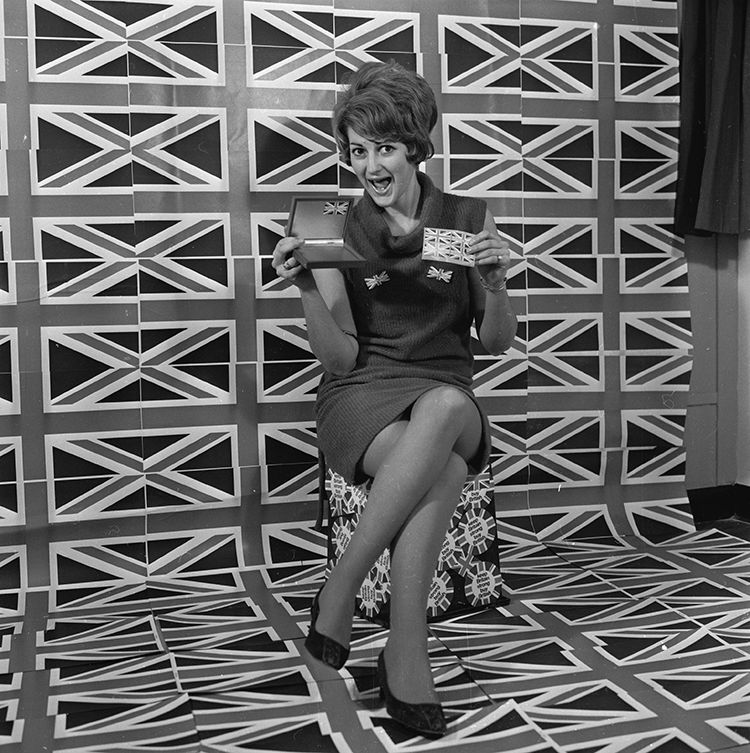
As Britain’s empire thrived, the concept of patriotic consumerism gained popularity. Empire Shopping Week was introduced to celebrate Empire Day on 24 May 1922 and within a few years it was a mass movement. Such events encouraged patriotic consumers to purchase items manufactured within Britain, or from elsewhere within the Empire. While men were the producers and builders of Empire, women were depicted as consumer-citizens, supporting the Empire with their shopping baskets. Empire shopping was branded as ‘a duty and a pleasure’ and, at their height, events were organised by the Empire Marketing Board in more than 200 towns. During these weeks, Union flags were unfurled and hung throughout shops and stores, along with maps displaying all the dominions and colonies of the Empire. Shopping was a patriotic duty.
Such consumer campaigns retained popularity throughout the century and, after 1945, became increasingly national in focus. ‘Buy British’ became the order of the day. 1968’s ‘I’m Backing Britain’ arose out of ongoing struggles with the postwar trade deficit and the patriotic spin placed on the actions of five secretaries from Surbiton in London, who volunteered to work extra time for no pay to increase productivity. The government soon got involved, turning the movement into a campaign to ‘Buy British’. The TV entertainer Bruce Forsyth even recorded and released a single called ‘I’m Backing Britain’. This burst of patriotic consumerism was, however, severely damaged when it emerged that thousands of T-shirts branded to support the campaign had been ordered not from a British manufacturer, but from Portugal. Disastrously, the manufacturer admitted that ‘we just cannot find a British T-shirt which will give us the same quality at a price which will compare’. Patriotic shopping came at a hefty price to the consumer.
Early campaigns focused on textiles and promoting products manufactured in Britain. More recent campaigns have shifted focus from what Britons wear to what they eat. In 2000, the food industry backed the Assured Food Standards scheme. The scheme introduced the Little Red Tractor mark, which equated products from UK farms with quality. Assuring consumers that their meat, dairy items and even beer are produced in Britain, the tractor also indicates standards of animal welfare and environmental protection. In essence, the logo makes an implicit association between being a patriotic consumer and a moral one.
The drive to encourage consumers to ‘Buy British’ is once again on the rise. Online supermarket shoppers may soon be offered the option to select only British products and to filter out foreign goods as part of post-Brexit plans. The department store John Lewis is branding products from its 130 British manufacturers, from curtains and lampshades to cutlery and fragrances, pitching this move as key to both sustainability and to attracting a patriotic consumer. Having started as a legal requirement, British-made and British-grown products are now being promoted positively to consumers.
Serena Dyer is Associate Fellow of the Institute of Advanced Study at the University of Warwick, and Curator of the Museum of Domestic Design and Architecture at Middlesex University.