
Jump to Navigation

James I: The Royal Touch

Print this article   Email this article

A monarch’s divine ability to cure scrofula was an established ritual when James I came to the English throne in 1603. Initially sceptical of the Catholic characteristics of the ceremony, the king found ways to ‘Protestantise’ it and to reflect his own hands-on approach to kingship, writes Stephen Brogan.

Towards the end of 1603 the Venetian Secretary in London, Giovanni Carlo Scaramelli, reflected on the death of Elizabeth I (1533-1603) in March of that year and the new beginning represented by the accession of her successor, James VI and I (1566-1625). Scaramelli remembered that as soon as the Scottish king acquired his English crown he had said that, unlike his Tudor predecessors, he would not practise the most significant aspect of English sacral monarchy, the miraculous healing of scrofula by the royal touch, as he did not wish ‘to arrogate vainly to himself such virtue and divinity, as to be able to cure diseases by touch alone’. In June, during the preparations for his coronation, Scaramelli had also heard James say that he would not touch for scrofula ‘as the age of miracles is past, and God alone can work them’. These remarks might have been surprising given that James was an eloquent proponent of divine right monarchy, though the reason for them was partly that he had already ruled Scotland for 19 years, a country that had no tradition of royal healing. But James’ articulation of scepticism towards the royal touch, as far as is known the first ever expressed in public by a monarch of England, represented an extraordinary break with tradition.
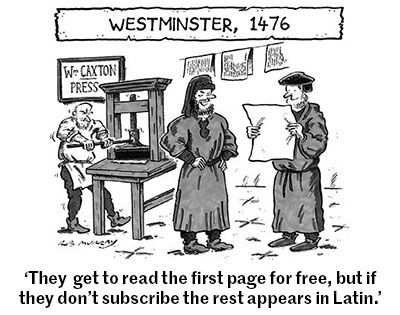
During the early modern period it was widely thought that Edward the Confessor (c.1003-66) was the first English king to touch for scrofula and that since then every English king had practised the royal touch by virtue of heredity. The ability to heal scrofula was also associated with the anointing of the monarch’s hands at the coronation, which accounted for any breaks in the direct line of succession.

Scrofula was also known as the King’s Evil and its primary cause was thought to be sin, especially the collective sins of the nation. The healing of scrofula by the king was thought to cleanse the body politic and make it more godly. Scrofula is known in the modern world as tubercular adenitis, that is the inflammation of the lymph nodes brought about by the tuberculosis bacillus. The lymph nodes of the neck are especially vulnerable to such infection and when scrofula is untreated painful abscesses and suppurations occur which can affect the face and eyes. The bovine strand of the bacillus is particularly robust and so scrofula was transmitted largely via unpasteurised milk; the disease has almost disappeared from the developed world, though it is found in some minority ethnic communities in the West and is still prevalent in parts of Africa and Asia. Scrofula can manifest as episodic, chronic or even fatal and was endemic in pre-modern England where doctors struggled to cure it and usually recommended the royal touch for especially difficult cases. Healing by touch was a thaumaturgic act, an imitation of Christ that displayed the ultimate charismatic quality that any Christian ruler could possess. The royal touch was practised by the sovereigns of England and France and it proclaimed the sacral nature of their monarchies: the rulers of both kingdoms were anointed in the manner of Old Testament kings, ruled by grace of God and regularly touched and healed the sick, although royal therapeutics were not expected to cure everyone immediately and those who remained ill were usually thought to lack faith.

One side of a Jacobean gold Angel or touch piece, showing the the ship of state representing the body politic.

English monarchs held public healings at which people from all ranks of society sought the royal touch as well as smaller, private ceremonies for those with connections at court. By the middle of the 16th century those who wanted access to public healings had initially to undergo a medical examination by a royal surgeon to ensure that they did have scrofula, after which they were admitted to the next ceremony. The healing ritual was structured around a liturgy of prayers and passages from the New Testament, while the royal surgeon led each person up to the monarch, in front of whom both knelt in obedience; the king or queen regnant then used both hands to touch and stroke the ill person’s scrofulous sores. Each time this happened the chaplain repeated Christ’s words to his disciples after his resurrection, from Mark 16.18: ‘They shall lay their hands on the sick and they shall recover.’ After everyone had been touched they were presented to the monarch for a second time so as to receive their commemorative gold coin, known then as an Angel and today as a touch piece, which was threaded onto a white ribbon and hung around each person’s neck by the monarch. It was worth approximately ten shillings and so was a generous gift. The monarch then blessed the sores by making the sign of the cross over them. Once everyone had participated in the rite, the monarch’s hands were ritually washed in public in order to signify the end of the ceremony.

Returning to Scaramelli, what is most interesting is his awareness that, despite James’ initial scepticism, within six months of becoming king of England he changed his mind and began to touch for scrofula. Why did he do this? The prevailing historiographical tradition, as exemplified by Marc Bloch (1886-1944) in his pioneering book The Royal Touch, is that, although James did not believe in his ability to heal by touch, he recognised the political value of the ceremony to the Stuart monarchy once it was explained to him by his English advisers. It was obviously the case that the royal touch could play an important part in the projection of monarchical authority, but in order to appreciate fully why James decided to touch for scrofula it is necessary to examine the underlying principles of the ritual and the debate concerning its efficacy.

James first touched for scrofula at Woodstock Palace in September 1603 and the timing of this occasion is significant. The largest public healings were traditionally held during Lent and Easter, at Michaelmas (September 29th) and Christmas. James became king a few days before Easter 1603. Because the ritual was seasonal, the new monarch would not have been expected to practise the royal touch until the end of the summer. Healings were not held over the summer due to the heat and the associated fear of catching diseases such as the plague.

Scaramelli said that by the autumn the king had begun to take an interest in the ‘ancient custom’ of the royal touch and so it was arranged for a number of people with scrofula to be presented to him in his ante-chamber at Woodstock. Prayers were said by a Calvinist minister, after which James gave a speech explaining his actions. This was summarised by Scaramelli, but, in addition, a copy of the entire speech also survives in the British Library. James began by acknowledging the longevity of the custom of English royal healings and said that although he did not want to withhold any ‘comfort’ from his subjects he was anxious to avoid the two extremes of superstition and contempt of his people.

The king then built up a case against the royal touch by arguing that it was not miraculous but superstitious, a term that in a Protestant country was associated with Roman Catholicism. Superstition has always been a pejor-ative rather than analytical word, but the fear of committing a superstitious act provoked great anxiety because what was at stake was one’s immortal soul. It was generally thought that those who worshipped God incorrectly had committed a heinous sin, part of the devil’s plan to reduce mankind to damnation. James said that belief in miraculous healings was a ‘superstitious conceite’ for two reasons. First, he argued against the idea of an interventionist, miracle-working God and instead advocated belief in providence:

I doe not think that because I am a King therefore I can cure diseases or because I am a King of England I can cure this disease [scrofula] for that were to attribute more to myself than belongeth unto any man for miracles are ceased and god doth work by ordinary meanes.

James was sceptical about the royal touch because he was a Calvinist who subscribed to the Protestant doctrine of the cessation of miracles. As such, miraculous healings were not possible because, although Protestants believed that miracles had been performed by Old Testament prophets and by Christ and his disciples, the doctrine maintained that they had ceased soon after the Apostolic Age or at the latest by about ad 600. This was because, by that time, the Christian Church had become established and so God did not need miracles to be worked to convince people of the truth of Christianity. Protestant polemic insisted that all medieval and contemporary Roman Catholic miracles were either shams or diabolical illusions and so, not surprisingly, the doctrine of the cessation of miracles generated much debate.

Second, James turned to the spoken word of the liturgy. He thought that this had no operative value, refuting the idea of sacred language, which he described as putting ‘confidence in sillables’: he said belief in this was evidence of either witchcraft or popery. This reflected the commonplace Protestant belief that the deference shown by Roman Catholics to the spoken word of prayer, for example during the mass, was analogous to a magical utterance or spell. James’ case against the royal touch was similar to the objections that had been made against it by many Puritans during the reign of Elizabeth I, discussed by her chaplain William Tooker (1553/4-1621) in his Charisma Sive Donum Sanationis (1597), the first book written on the royal touch, in which Tooker defended it.

James’ speech then changed direction and he addressed his desire to avoid showing contempt of his people, many of whom expected their king to practise the royal touch. James knew that it was important for kings to uphold customs, something that was associated with the idea that monarchs should rule justly, which he had discussed in his book The Trew Law of Free Monarchies (1598). As king, James had to uphold the mystique of monarchy and respect the custom of the royal touch but he was also answerable to God for his subjects’ salvation and so had to avoid leading them into superstitious practices. He overcame this problem by explaining that although ‘miracles doe yet cease ... in some cases prayer ... is [the] best fair remedy.’ He said that as God listened to even the ‘meanest’ sort of person when they prayed, the king’s prayers were given special attention by God and so James would not withhold them from his people. He concluded his speech by declaring:

As I find this my duty and your duty to pray for any afflicted creature I doe desire you all to pray with mee for this diseased child [and] if it please god to hear us he shall in wholle glory [grant] the child the benefitt of our faithfull requests. And soe endeavouring to yield this accord from all the superstition hereof I will not refuse to satisfy my peoples desires.

After James had made his speech, Scaramelli said that he ‘turned his eyes towards the Scotch ministers around him, as though he expected their approval of what he was saying, having first conferred with them’. This is a salient reminder that the king had to negotiate with his Scottish subjects as well as his English ones.

Once he had found an intellectual solution to his scepticism James was prepared to touch for scrofula. He was willing to perform a ceremony that upheld monarchical authority and reverence to God and might heal the sick, but was not prepared to condone miracles, which explains his emphasis on prayer and providence. Despite this emphasis he did touch for scrofula rather than just pray for people’s recovery as he had decided that it was his duty to do so. Tooker recorded that Elizabeth I had made a similar though far briefer statement when she was asked to touch for scrofula in Gloucestershire (he did not record the date), but James’ speech is important because no other English monarch explained their rationale for practising royal healing in such detail. The speech also helps to explain the changes to the ceremony that were instigated by James.

Rituals and customs could sometimes be altered to suit changing ideas, especially those concerning religion, and during the Reformation the royal touch liturgy had been stripped of its prayers to the saints and the Virgin Mary. James introduced two changes to the imagery of the commemorative Angel coins that were distributed at the ceremony. Their obverse bore an image of St Michael slaying the devil, which related to the contemporary idea noted above that scrofula was caused by sin. The reverse of the coin bore the legend A Domino Factum Est Istud Et Est Mirabile In Oculis Nostris (‘This is the Lord’s doing and it is marvellous in our eyes’, Psalm 118.23), accompanied by a depiction of the ship of state. This represented a healthy body politic, brought about by the efficacy of the royal hand. The ship had a tall central mast that had a small cross beam near the top, referencing the cross of Christ. James had the inscription abbreviated to A. Dno. Factum Est. Istud. (‘This is the Lord’s doing’), removing the word Mirabile (‘marvellous’ or ‘miraculous’), in keeping with his view that the age of miracles had passed. The cross beam from the mast was also removed: although this initially seems surprising as the image of the cross was acceptable to Protestants, it was probably removed because the Angel was worn around the neck and Protestants did not usually wear crosses.

James’ other modification concerned the practice of the ritual. His predecessors, whether Roman Catholic or not, had made the sign of the cross over the scrofulous sores of the person they touched but James removed this gesture from the ceremony. We know this from a number of sources, one of which is a broadside in the collection of the Society of Antiquaries in London, on which is printed the royal touch liturgy. The 19th-century archivist Robert Lemon (1800-67) dated this document to 1618 and noted that it bore the inscription Tempore Jacobi Regis (‘From the reign of King James’) in the hand of the book collector Humphrey Dyson (d. 1633). It is notable that, unlike earlier Tudor liturgies, the ‘1618’ liturgy makes no mention of the king making the sign of the cross over the sores.

The other main source is retrospective. The theologian and historian Hamon L’Estrange (1583-1684) published The Alliance of Divine Offices (1659), one of the earliest studies of the Church of England’s liturgy, in which he noted that James I had ordered the sign of the cross to be removed from the royal touch ceremony because many people objected that it was a ‘mysterious operation’, which presumably means that it was thought to be implicitly Roman Catholic. L’Estrange argued that the sign of the cross had no operative quality because the royal touch had not become less efficacious after the removal of the gesture from the ritual.

Also interesting in this connection is an occasion when James touched a person for scrofula in 1618, of which there are two contradictory accounts written by English courtiers who witnessed it: one says that the king made the sign of the cross over the sores whereas the other does not. What is noteworthy about this incident is that the person with scrofula was the son of the Turkish Ambassador, which indicates that on this occasion it was a Muslim who had recourse to a Christian healer. The ceremony seems to have been impromptu, as there was no chaplain present to read the liturgy, so if James did make the sign of the cross over the sores on this one instance it might have been because he thought he needed to add a Christian gesture to the practice. It was later reported that the youth was cured by the royal touch and it was even rumoured that he had converted to Christianity.

How did people respond to James’ reform of the custom? Once James started to touch for scrofula there is evidence that some viewed his healings with ambivalence. In November 1604 Nicolo Molin, the Venetian ambassador in London, reported to the doge that:

Yesterday, after the sermon ... his majesty touched a number of sufferers for scrofula; it remains to be seen with what result.

By Easter 1606, however, these doubts seemed to have passed; another Venetian ambassador noted that James had

... touched many for Scrofula, they say with hope of good effects, remembering the earlier cases of healing conferred by his hand.

It appears that both the healer and his Protestant reforms were popular. When James travelled to Scotland in 1617 he stayed at Lincoln and York: at Lincoln he touched 50 people in the cathedral and another 53 in St Catherine’s Priory and at York he touched 70 people in the cathedral. The numismatist Helen Farquhar (1869-1953) studied records from the Treasury and the Royal Mint and calculated that James spent an average of £435 per annum on Angels, which at a value of approximately ten shillings each means that on average the crown minted 870 Angels each year. We cannot assume that this total equals the exact number of people who were touched, but it provides a useful approximation. This means that James touched for scrofula on a larger scale than any of his Tudor predecessors: Henry VIII touched 30 people in 1530, a year for which figures survive, and Elizabeth seems to have touched about 12 people at any one healing.

The enthusiasm for James’ reformed practice of the royal touch partly explains why Shakespeare mentioned it in Macbeth, thought to have been written in 1606. In act four, scene three, Malcolm and Macduff are in England at the palace of Edward the Confessor, where they meet a doctor and ask him where the king is. The doctor replies:

There are a crew of wretched souls
That stay his cure: their malady convinces
The great assay of art; but at his touch –
Such sanctity hath heaven given his hand –
They presently amend.


Macduff asks what the disease is and Malcolm replies:

’Tis call’d the evil:
A most miraculous work in this good king;
Which often, since my here-remain in England,
I have seen him do. How he solicits heaven,
Himself best knows: but strangely-visited people,
All swoln and ulcerous, pitiful to the eye,
The mere despair of surgery, he cures,
Hanging a golden stamp about their necks,
Put on with holy prayers: and ’tis spoken,
To the succeeding royalty he leaves
The healing benediction.


It is a telling description, notwithstanding the fact that Shakespeare’s account was anachronistic because the Confessor (c.1003-66) was not the first English king to heal by touch. Bloch thought that distinction belonged to Henry I (1068/9-1135), but more recently the late Frank Barlow has argued convincingly that the practice originated with Henry III (1207-72) who touched for scrofula in imitation of his kinsman Louis IX of France (1214-70), and out of reverence to the Confessor. Not all of Henry III’s medieval successors practised the royal touch and even those who did did not touch on the scale of the Stuarts. However, when trying to understand the royal touch during the early modern period it is the contemporary belief concerning its unbroken practice since Edward the Confessor that is useful to bear in mind. This was important to James because he sought ways to represent himself as the lineal descendant of English kings.

The king's proclamation of March 1616 attempting to regulate the times of the year at which people should come to be touched.

A final piece of evidence suggesting the popularity of James’ healings is a proclamation that was issued in March 1616, which sought to regulate the times of the year when people could come to court to be touched: this is the earliest extant notice of its kind. It states that the seasonal healing calendar noted above had broken down and so people were coming to court to be touched ‘indifferently at all times’. This is not surprising as James’ court was renowned for being more relaxed than his predecessor’s, but, more importantly, it reminds us that he was an accessible monarch. This was an ideal quality for a royal healer.

Lastly, what of James’ attitude towards the ceremony? He appears to have been squeamish about touching inflamed glands, as in June 1611 Otto, Prince of Hess witnessed him perform the ceremony at Greenwich Palace and wrote that the king only ‘laid two fingers’ upon the scrofulous and another observer said that the ritual was distasteful to James to the point that he would have liked to abolish it. The historiography has concentrated on the king’s initial scepticism and so implicitly takes the view that James remained unconvinced of the efficacy of the ritual throughout his reign. The problem with this view is that so far no further evidence has come to light concerning James’ thoughts on the rationale of the royal touch after 1603 and it undervalues his reform of the justification and practice of the ritual.

James took the royal touch seriously: in his speech of October 1603 he implied that he would follow the established custom of royal therapeutics, but the numbers he touched each year and his reform of the ritual indicate that he did far more than that. James might have found touching scrofulous sores distasteful, but his emphasis on prayer and providence ‘Protestantised’ the ceremony and rendered it more acceptable to him and his subjects.

Stephen Brogan is an AHRC-funded doctoral student at Birkbeck, University of London, where he is completing a PhD on the royal touch in early modern England.

Further reading: 
  • Frank Barlow, ‘The King’s Evil’, English Historical Review, 95 (1980)
  • Marc Bloch, Les Rois Thaumaturges: Etude sur le Caractère Attribué a la Puissance Royale Particulièrement en France et en Angleterre (Istra, 1924), translated as The Royal Touch: Sacred Monarchy and Scrofula in England and France, trans. J. E. Anderson (Routledge & Kegan Paul, 1973)
  • James VI and I, James VI and I: Political Writings, ed. J. P. Sommerville (Cambridge University Press, 1994)
  • D. P. Walker, ‘The Cessation of Miracles’ in Hermeticism and the Renaissance: Intellectual History and the Occult in Early Modern Europe, ed.; Ingrid Merkel and Allen G. Debus (Folger Books, 1988)
  • Raymond Crawfurd, The King’s Evil (Clarendon Press, 1911)
 

About Us | Contact Us | Advertising | Subscriptions | Newsletter | RSS Feeds | Ebooks | Podcast | Student Page
Copyright 2012 History Today Ltd. All rights reserved.