Jump to Navigation

Reading History: The Enlightenment

Print this article   Email this article
Roy Porter on the European concept of Enlightenment.
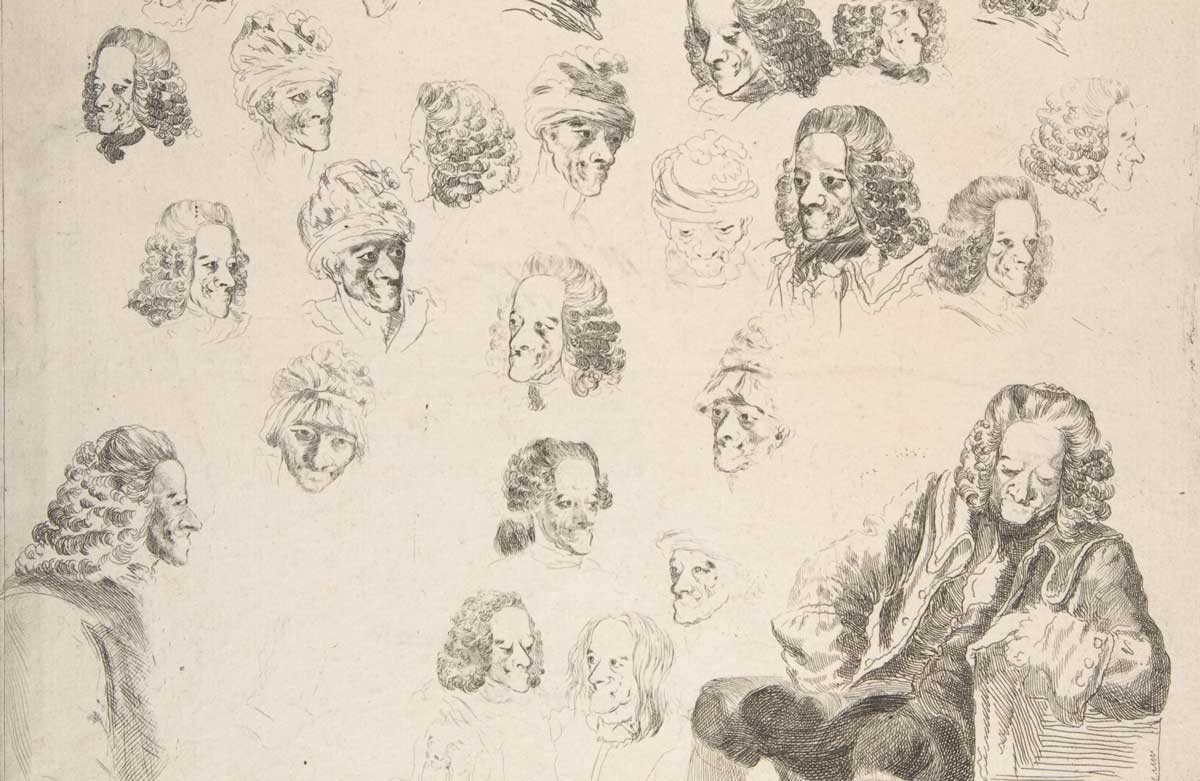
What is Enlightenment? Immanuel Kant tackled this question back in 1784. If, two hundred years on, historians are still searching for the answer, it is not through sloth, for new works are cascading from the presses – the Voltaire Foundation alone has published hundreds of monographs in the last twenty years. This enthusiasm, however, is fairly recent. In the wake of the Romantics, the nineteenth century damned the Age of Reason, scornfully lampooning the philosophes as Panglossian poseurs, whether impractical idealists like Rousseau, or glib rationalists like Voltaire (an indictment wittily perfected in Carl Becker's The Heavenly City of the Eighteenth-Century Philosophers , Yale University Press, 1932).
This century, great scholars have put the Enlightenment back on the map, forcing us to take its convictions seriously. Though offering contrasting interpretations, three have been particularly seminal. In his The European Mind, 1680-1715 (Penguin Books, 1964) and European Thought in the Eighteenth Century (Penguin Books, 1965) Paul Hazard dramatized the philosophes as confronting a New Found Land of the mind. The pillars of traditional Christianity, Aristotelian philosophy and Eurocentric outlooks were being dynamited by the Scientific Revolution, Descartes's and Locke's psychology of doubt (how can we know?), anthropological discoveries and historical criticism. Hazard's dazzling but elliptical books stress how this age of crisis was also a watershed of liberation for men of letters intoxicated by new vistas and their own cleverness.

 This article is available to History Today online subscribers only. If you are a subscriber, please log in.

Please choose one of these options to access this article:

  • Purchase a online subscription and receive unlimited access to our archive for one week, one month or a year

  • Purchase a print and website subscription, giving you one year's access to all our content and 12 editions of History Today magazine.

  • If you are already a print subscriber, purchase the online archive upgrade for a year's worth of access at a reduced price

Call our Subscriptions department on +44 (0)20 3219 7813 for more information.

If you are logged in but still cannot access the article, please contact us


About Us | Contact Us | Advertising | Subscriptions | Newsletter | RSS Feeds | Ebooks | Podcast | Student Page
Copyright 2012 History Today Ltd. All rights reserved.