Jump to Navigation

What’s in a Name: The Death of the English Civil War

By Martyn Bennett | Published in History Review 2003 
Print this article   Email this article

Martyn Bennett examines how the terminology we use about the great conflict of the mid-seventeenth century reflects and reinforces the interpretations we make.
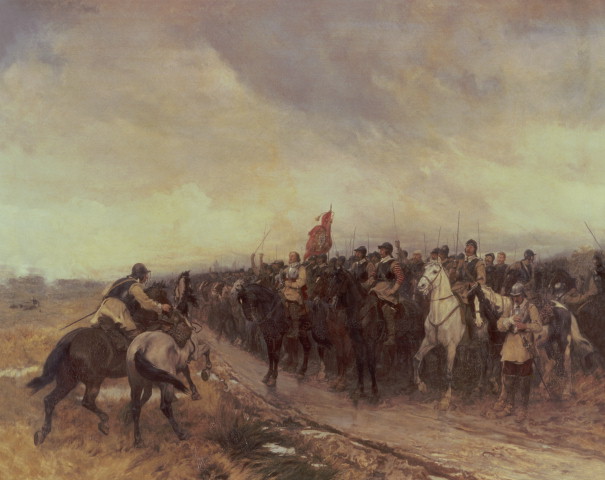
The enduring symbol of the crisis which gripped the British Isles during the middle of the seventeenth century is the name given to it, 'The English Civil War'. Yet this symbol is itself problematic and can even act as a barrier to a clear understanding of what happened in that turbulent century. It may be argued that calling the conflict the English Civil War limits the scope of our perceptions. By labelling it an English event, we can marginalise Scotland and Ireland and perhaps even ignore Wales altogether. Yet all four nations were involved in the rebellions, wars and revolutions that made up the period.
The image is certainly enduring. In 1991-2 the 350th anniversary of the outbreak of the civil war was commemorated across England by English Heritage and in Wales by Cadw, with the cooperation of a vast range of co-ordinated museums, re-enactment societies and visitors' centres. It heralded a nine-year programme of events culminating in the 'end' of the war at Worcester, 350 years earlier, on 3 September 1651. Yet it can be argued that 1992 was neither the anniversary of the beginning of the war, nor 2001 the anniversary of its end. Such misconceptions are very potent and widespread. (Similarly, in recent years the contestants on a range of quiz shows have been expected to name Oliver Cromwell as the leader of Parliament's armies during the civil war and thus score points for a wrong answer.)

Imposing the dates 1642-1651 on the civil wars renders them relatively meaningless outside the bounds of England and Wales: calling them the 'English' Civil War is similarly problematic. The term English Civil War became common during the last century, adding to the range of titles available - from the contentious 'English Revolution' to the 'Great Rebellion' and the 'Great Civil War'. Yet such a title does obscure the involvement of the other nations as effectively in the book market as it does in popular entertainment.

Older Interpretations

The consequences of the terms we use are important. The title 'English Civil War' limits the discussion. For a start, it underplays the pan-British Isles elements of the period and moreover it removes the contentious term 'revolution' from the public arena. Yet the centrality of England may have come about because of the perceived location of the revolutionary dynamic. Since the nineteenth century it has been claimed that there was an English Revolution, although descriptions of it have changed over the years and its nature and its very existence have been debated from various perspectives. What was less in doubt was the revolution's Englishness and this transmitted itself to the wars, which surrounded the revolution.

In the early twentieth century R.H. Tawney linked the causes of the civil war to the major structural and economic changes wrought by the Reformation in England. The break up and sale of monastic and other church lands resulted in a shift of wealth downwards and outwards, firstly to the monarch, then to the aristocracy and onwards to the gentry. The effect was to create an imbalance between wealth and power. Although the gentry became richer, executive power was still held by the aristocracy and monarchy; so although a greater portion of the nation's wealth was passing into the hands of those sitting in and represented by the House of Commons, the lower house still had limited access to the exercise of national political power. This imbalance would lead in the middle of the seventeenth century to a major power struggle. Add the religious element, anger at Charles I's perceived favouring of Roman Catholics and his liturgical reforms, and it was easy to argue that society was breaking down.

Marxist historians such as Christopher Hill interpreted the religious element as part of the power struggle, in many ways similar to the dynamic perceived by the great nineteenth-century historian Samuel Rawson Gardiner. Gardiner perceived a revolution driven by puritan radicalism, but Marxists looked through, what they argued was, puritan rhetoric and saw an economic dynamic to social change and revolution. Puritanism, it was argued, was the creed of the economically progressive. These progressives were associated with the dramatic shifts in wealth identified by Tawney. Therefore society was not falling into a state of collapse, it was being driven there by the dis-empowered creators of wealth.

Notions of a rising gentry were, however, highly contentious. Lawrence Stone's work on the shift in power from a declining aristocracy to an emergent gentry class was challenged by Hugh Trevor-Roper in the 1950s. Although some of the tenets of the rising gentry idea remained unscathed from the attack, it was clear that the amount of statistical evidence being analysed was too small for firm judgement.

The study of the relationships between gentry and aristocracy fragmented somewhat in the fashion for county studies, which occupied historians between the 1950s and early 1980s. This work revealed new problems and issues, highlighting the apparent federal nature of England's county structure and the supposed isolationism of counties like Kent exposed by Alan Everitt. The struggle became that of a centralising court versus conservative (and defensive) county government and administration. The court became associated with old-fashioned mercantilism and an old fashioned religion, thus out of step with either economic or religious radicals. This dichotomy was set against the backdrop of an alienated nation of isolationist county hierarchies. The question was not therefore would the state collapse, but when and what would be the trigger? Despite the complexity of these debates and issues, one thing remained common to them all: England was central.

On the other hand, the range of county studies also revealed the complex and multifaceted nature of English counties and their relationships with central government. It seemed clear that there was no overall pattern, which therefore indicated that there was no national impetus for revolution. As a result some historians, referred to as 'revisionists', were able to question the idea that there were any long-term causes for the civil war, never mind a revolutionary impetus. The puritans, far from being a dynamic group powerful enough to spur revolution, were small in number. Apart from disliking Archbishop William Laud and the restructuring of the Church of England, they were fairly diffuse in their beliefs, which ran from Presbyterianism to Anabaptism. In other words, there were not enough of them and they had no coherent means of impelling the nation toward revolution. Evidence from state papers and the letters sent between national and local government did not give the impression of a society in crisis. Complaints about Ship Money, revisionists argued, were largely localist in tone, querying the amount levied, arguing about the sub-divisions in the county or complaining that the large towns were not paying their fair share. Such queries were clearly not about constitutional issues; such letters and papers did not raise questions about the king's right to levy tax without Parliament's consent. Therefore, revisionists argued, this was not revolutionary England.

These critiques of the so-called 'high road' to civil war have been quite persuasive, but some historians point out that the papers passing between wings of government would not have been an appropriate place to raise constitutional issues. The real forum for such complaints was Parliament, and certainly the legality of Ship Money was a central issue in Parliament once it sat again in April 1640. Moreover work on local government has shown that in some counties' local courts, the Quarter Sessions were clogged with defaulters hauled to court for not paying Ship Money and that this was against a background of threats made against agents of the high sheriffs attempting to collect money. Richard Cust showed that complaints against Charles I's extra-Parliamentary taxation in the 1620s created a tradition of default, and this seems borne out at local level. Other critics of revisionism have made more general arguments. One suggested that Kevin Sharpe's monumental book The Personal Rule of Charles I (Yale University Press, 1992) demonstrated conclusively why civil war did not occur in England during the seventeenth century!

The British Dimension

Of course war did break out, and revisionists had to explain why it did if England was so unrevolutionary. Amongst English historians, Professor Conrad Russell was one of the first to suggest that the civil war was therefore a British issue or problem. The war could only be understood if we appreciated the relationships between the component parts of the British Isles, not simply between England and Scotland and England and Ireland and England and Wales, but between Wales and Ireland and Ireland and Scotland and so on.

Russell was perhaps the first to locate crisis in this network of relationships, but others such as Professor J.G.A. Pocock had suggested earlier that the history of the British Isles needed to be seen holistically, with equal attention paid to each of the four nations and to their relationships with each other. This was to become known as the 'New British History' - the implication being that old British History was often English History writ large. Studies of the civil war naturally fitted into this critique of old English History, because it could be seen to have reduced the roles of Scotland and Ireland to subsidiary ones.

This apparent new awareness allowed historians to explore Charles I's attempt to rule three very different nations with their own distinct religious and political structures. Debate has tended to focus on whether the collapse of the British Monarchy stemmed from the inability of this 'multiple kingdom' to function, or whether it was the inability of the king himself which precipitated the crisis. Following Professor Russell's lead, other historians, including Professor Ann Hughes and Dr Peter Gaunt, have sought to broaden the discussion to include cultural, economic and social history in addition to the exploration of political, economic and religious history. Still more historians have pointed out that there was already a tradition of looking beyond England's centrality, more often than not by historians from Scotland and Ireland. This again has raised issues of taxonomy (classification). Irish historians find the title 'New British History' and the use of terms like 'British Isles' problematic. Alternatives have been suggested. John Morrill has tried 'the Britannic Isles' in an attempt to find a title which predates Modern and Early Modern Nations. Jane Ohlmeyer has used the term 'Three Kingdoms', but this buries Wales within England, and the nature of the distinctiveness of Wales's civil war and revolutions is an important topic. Nicholas Canny has referred to the 'Atlantic Archipelago', but this has not caught on either. 'Four Nations' has been used too, recognising that the term nation was flexible at the time and could mean both a state and a people. Many others use Britain and Ireland or, in the case of James Scott Wheeler's latest book, Ireland and Britain.

The New History of the Civil Wars

There is certainly a good reason for seeing the civil war as part of a British Isles-wide conflict. Whether the breakdown in government was part of the 'multiple kingdom', the nations were quickly linked by rebellion.

The crisis began in Scotland where Charles I had sought to accelerate his father's reform of the Kirk. Whereas James had brought about a series of structural and liturgical changes with sophisticated subtlety, Charles sought to speed up the process and bring the Kirk into line with the Church of England. In July 1637 a new prayer book was introduced into the Kirk, modelled on the English Book of Common Prayer. The Scots regarded it as an unwarranted intrusion, claiming that it was the first step towards the reintroduction of Roman Catholicism, or at best an example of Anglican imperialism. Riots broke out across the country, leaving Charles bewildered. His unfamiliarity with the nation of his birth prevented him from understanding the genuine fears and anger of the Scots. In turn, the king's intransigence provoked nationwide resistance in the form of the National Covenant, a document that bound every Scots man and woman to defend the Kirk, against the king if necessary. The king was effectively rendered powerless: when it met, the Kirk's General Assembly reformed itself and abolished the office of bishop. The Scottish Parliament - the estates - was equally unmanageable and it established its own mechanisms for governing, to a great extent without the king. Charles tried to re-impose his authority by force of arms twice, in 1639 and 1640, only to be defeated by the Scottish Covenanter army.

Charles had sought to mobilise the resources of his other three nations against the Scots. However, the resulting failure of this multiple kingdom approach spread rebellion throughout the British Isles. Attempts to destroy support for the National Covenant amongst the Presbyterians of eastern Ulster resulted in ministers and flocks returning across the North Channel to strengthen Covenanter resolve and leaving behind them an economic crisis and untilled fields. Charles's plan to use an Irish army in western Scotland failed to materialise, but it had the result of creating suspicions that the army was an advance guard of Roman Catholicism intended to crush the king's opponents in Scotland, England and Wales. Even the brief war of 1639 had caused economic difficulty in England and Wales. Charles's hopes of re-financing his war against Scotland through Parliamentary taxation raised in England, Wales and Ireland backfired.

This British Isles plan involved summoning the seemingly compliant Irish Parliament, in the (correct) expectation that it would agree to raise taxation. However, instead of rallying patriotically to the king, the English and Welsh Parliament refused to follow the Irish Parliament's lead and would not discuss finance until there had been redress of a range of political, religious and economic grievances dating back to the 1620s. In anger, Charles dismissed this Parliament after three weeks. Defeat in summer 1640 left Charles exposed to demands for a new Parliament in late summer: not only did leading aristocratic politicians demand new elections, but the Scots demanded that a Parliament ratify any peace treaty negotiated by them and the king. Over the Irish Sea the hitherto loyal Dublin Parliament then began to back-track on its financial commitments. As soon as the English and Welsh Parliament met, representatives from Scotland, England, Wales and Ireland drew up a series of grievances, some of which became treason charges levied at the King's Irish Lord Deputy, the Earl of Stafford, the following year.

Links between the nations continued in a political vein, as the Westminster Parliament sought to introduce political reforms copied directly from the Scottish Estates, such as minimising the monarch's role in the summoning of Parliament. Such dramatic restructuring encouraged the Irish Parliament to seek to strengthen its own position, including redefining the role of future Lord Deputies and abolishing Poyning's Law, which had entailed that all prospective legislation be vetted in England before being presented to the Irish Parliament for debate. The unity of the Parliamentary revolt against Charles I, however, could only go so far. The demands of the Irish Parliament received little sympathy in either the Estates or the Westminster Parliament, and did not progress significantly. Moreover, some of the deeply held grievances of the Irish Catholic population were not even discussed at Parliamentary level. The mixture of Parliamentary and extra-Parliamentary pressure, coupled with economic dysfunction, created a dangerous brew of frustration and anger.

From 22 October 1641, when rebellion broke out in Ireland, the links between the four nations were largely military-related. In England, Wales and Scotland there was a determination to defeat the rebels, and this briefly overcame domestic political differences even to the extent of drawing a veil over the king's attempted coup d'état in Scotland - The Incident. Nevertheless once the king began to suggest that he raise and lead an army to Ireland, unity collapsed. Charles again tried to seize the political initiative, this time by staging a coup d'état in England, but he failed to arrest his principal targets and what little trust remained between him and Parliament evaporated.

As civil war in England and Wales broke out, the government's military effort in Ireland lapsed and the Irish rebels were able to assert their military strength and create their own local and national government structures, opening the route for negotiations with the king. Fear of an attack from Ireland once the king and the Irish signed a cessation drove the Scots into an alliance with Westminster in September 1643. In turn the Scots' entry into the war in early 1644 inspired the king to try to distract them from the fighting in England by using Irish and Highland troops in a war within Scotland. The Irish readily agreed in the hope that such a war would also cause the Scots to withdraw troops from Ulster. As the war in England and Wales turned against him in 1644, Charles again thought in terms of a British Isles-wide solution, seeking help first from Scottish royalist forces and then from Ireland, all to no avail.

The defeat of the king in the First Civil War allowed the Westminster Parliament to turn its attention once more to the re-conquest of Ireland. Yet the attempts to create a new army for service in Ireland instead led to the collapse in relations between Parliament and the New Model Army. When this breakdown led to the army dominating Parliament, it inspired the final breakdown in relations between Parliament and its allies the Scots. The Scots were driven into siding with the king at the end of 1647 by their fear of, and revulsion towards, the army's religious sectaries. In the Second Civil War during 1648 the New Model Army defeated a series of royalist risings in Britain and the Scottish invasion force.

The next phase of British Isles interrelations all spring from the revolution of 1648-9. The execution of the king and the creation of the Free State and Republic in 1649 were followed by the conquest of first Ireland and then Scotland in the 1650s and their incorporation into the republican united nation. From 1653 until the Restoration of the monarchy in1660 a Parliament based at Westminster comprised representatives of all four nations. In some ways the outcome of the civil wars and revolutions presaged the creation of the United Kingdom that came into existence in 1801.

The English Revolution?

Whilst the New British History has become central to current interpretations of the civil wars, one of the most enduring areas where England's centrality is less in doubt is in the revolution of 1649. The incomplete political revolution of 1639-1641 was truly a British affair, initiated in Scotland and emulated partially in England and Wales before the war broke out. This political revolution in turn inspired the reluctant revolutionaries of Ireland who almost led their rebellious nation into political independence.

Yet the revolution that occurred in England and Wales after the Second Civil War was rejected by Scotland and Ireland. In a November 1998 article in History Today, J.S.A. Adamson argued that here England truly demonstrated its distinctiveness and any four nations context comes about when only England imposed its revolution on the other nations. But even here we could add that Welsh politicians and soldiers were involved in this revolution too. Moreover Ronald Hutton reminds us in The British Republic (1989) that the revolutionaries of 1648-9 were themselves products of the civil wars, who were changed so much by the experience of the war that they eschewed many of their long-held traditional political beliefs when they led the nation into the republican experiment. So even that most English of phenomena - the revolution - was a product of the crisis of the four nations.

Nevertheless Peter Gaunt has warned us against thinking that this current interpretation of the war is the last word: historical fashions come and go. It may be as well to paraphrase Mark Twain: reports of the death of the English Civil War may yet be greatly exaggerated.

Timeline

1637 July Issue of the new Prayer Book in Scotland
  October Presentation of the Supplication to Charles I asking him to withdraw the Prayer Book
1638 February Drafting and signing of the National Covenant
1639 May-June 1st Bishops' War
1640 March Meeting of the Dublin Parliament
  April-May Meeting of the Westminster Short Parliament
  August Defeat of the king's forces in the 2nd Bishops' War
  November The Long Parliament assembles
1641 May Strafford executed after evidence assembled from across the British Isles was used to bring charges of treason against him
  October Irish Rebellion breaks out.
1642 September War (the First Civil War) breaks out across England and Wales
  October A government is formed in Ireland and based at Kilkenny.
1643 September A Cessation is arranged between the king and the Kilkenny government; Scotland enters an alliance with the Westminster Parliament
1644 January Scottish army enters England
  August Troops from Ireland open a new front in Western Scotland
1645 June The King's army defeated in Scotland and his plans to use an Irish army in England are revealed
  September Royalists and Irish defeated in Scotland
1646 May First Civil War in Ireland
  June Irish forces defeat Scots troops at the Battle of Benburb in Ulster
1648 April-August 2nd Civil War in England and Wales
  December Royalist-Irish alliance concluded
1649 Jan-March The English Revolution
  August Oliver Cromwell leads the republican forces in the re-conquest of Ireland, which leads to the absorbtion of Ireland into the republic
Further reading: 
  • Ann Hughes, The Causes of the English Civil War (Macmillan, 2nd edition, 2000)
  • Peter Gaunt, The British Civil Wars (Routledge, 1997)
  • Conrad Russell, The Fall of the British Monarchy (Oxford University Press, 1991)
  • James Scott Wheeler, The Irish and British Civil Wars (Routledge, 2002)

Dr Martyn Bennett is the Director of the Faculty of Humanities School of Graduate Studies and Research at Nottingham Trent University. He is the author of several books on the civil wars, including The Civil Wars of Britain and Ireland (Blackwell, 1997) and The Civil Wars Experienced (Routledge, 2000).

Historical dictionary: English Civil War
 

About Us | Contact Us | Advertising | Subscriptions | Newsletter | RSS Feeds | Ebooks | Podcast | Student Page
Copyright 2012 History Today Ltd. All rights reserved.