Attlee, Bevin and Britain’s Cold War
Caught between the end of empire and the birth of NATO, Britain's postwar Labour government played a key role in the early stages of the Cold War.
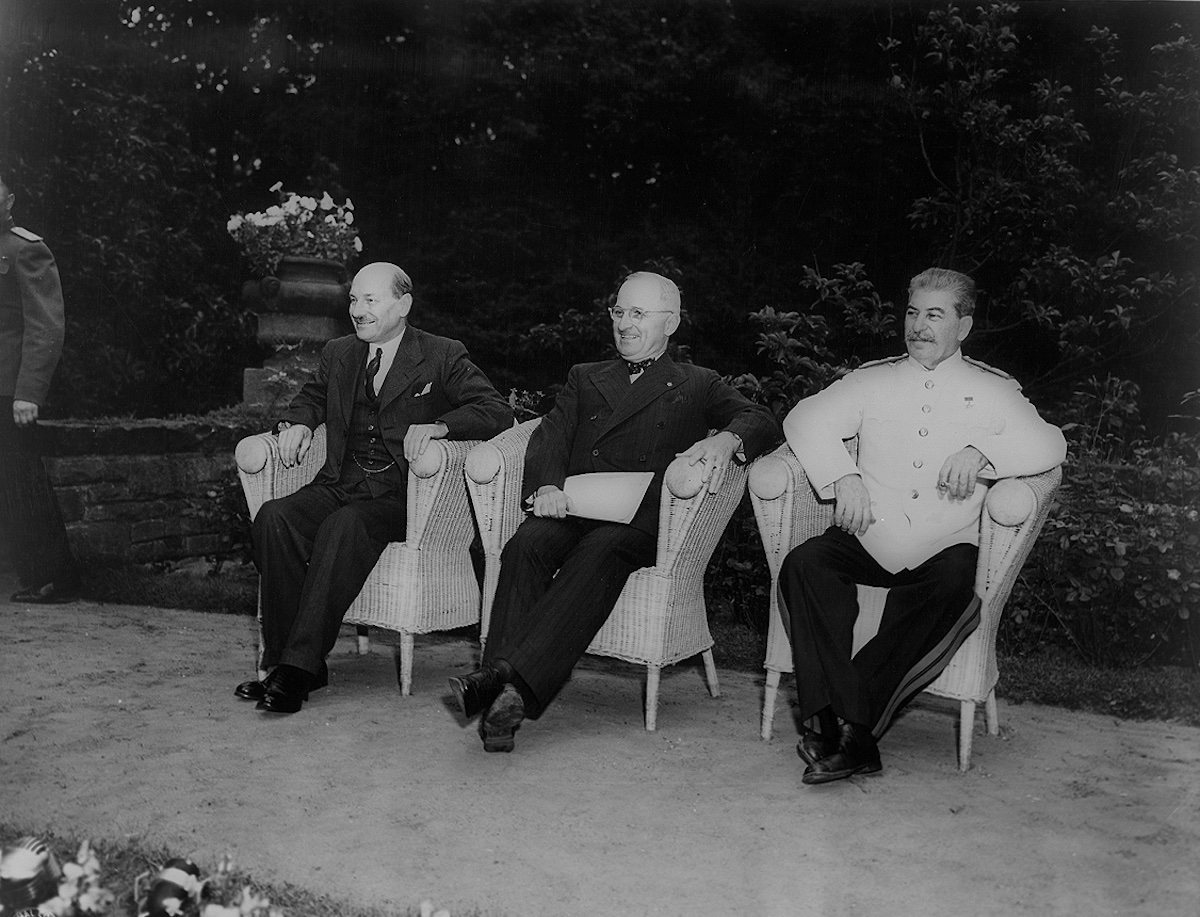
Britain’s first majority Labour government was elected in July 1945 at a pivotal moment in international affairs. The Second World War was almost over, with Nazi Germany defeated and the fall of imperial Japan imminent. As tensions emerged in the alliance between the USA and the Soviet Union, this was a critical time for Britain as the third strongest of the allied powers. This article discusses the role of the Labour Prime Minister, Clement Attlee, and his Foreign Secretary, Ernest Bevin, in the events which led to Britain’s involvement in the opening stages of the Cold War. It also examines some of the controversies surrounding British foreign policy in this period. How justified is the argument, advanced by some historians, that the Labour government failed to develop a distinctively ‘socialist’ approach to foreign affairs? At the time many on the British left hoped that the new government would promote international co-operation, independently both of the USA and the USSR.