England
|
EDITOR'S CHOICE
Phillip Drennon Thomas on how Henry III's elephant started the ball rolling for one of London's earliest visitor attractions. |
To read any piece marked
, you'll need a subscription to our online archive
|
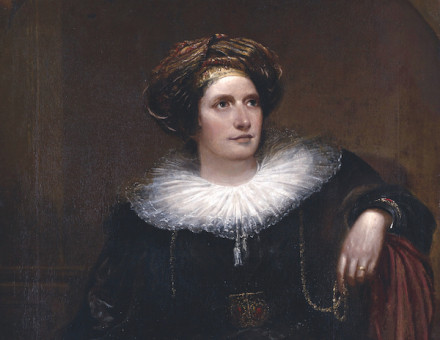
These letters, written between 1797 and 1815, are part of a series from Maria Josepha Stanley to her father Lord Sheffield. At the beginning of the period Maria Josepha had been married six months, and was living in Newcastle-upon-Tyne where her husband, a Captain in the Cheshire Militia, had been posted with his regiment to resist any attempted invasion by the forces of the Directorate. Edited by Lord Stanley of Alderley. Published in History Today, Volume: 4 Issue: 9, 1954
|
|
J. Hurstfield analyses social conditions in the Elizabethan age. |
|
“Shakespeare, the only history of England I ever read,” the great Duke of Marlborough is said to have remarked; and Shakespeare’s enormous influence in shaping subsequent concepts of fifteenth-century England is nowhere better illustrated than in the case of the character of Richard III. |
|
Trade was the impetus for early contacts between Russia and England, though each country had its own view of how the relationship should function. Helen Szamuely examines the first two centuries of Russian embassies to London. |
|
John Gillingham challenges an idea, recently presented in History Today, that the Anglo-Saxon King Egbert was responsible for the naming of England. |
|
Derek Wilson looks at Henry Tudor’s long period of exile and asks what influence it had on his exercise of power following his seizure of the English throne in 1485. |
|
Joan M. Fawcett utilises the household records for the Countess of Leicester, sister of Henry III, to retrace a crucial year for the de Montfort fortunes. |
|
Garth Christian appraised the “ancient character” of Lewes, taking in its Puritanical influence, its legacy of ironworks and its architectural highlights. |
|
S.M. Toyne draws upon Guy Fawkes’ background in an effort to better understand his single-minded motivation. |
|
J.D. Hargreaves appraised Swindon, “a city very much itself”, with a view of its idiosyncrasies, architecture and people. |
|
Far from enslaving Anglo-Saxons under the Norman yoke, the Conquest brought freedom to many, as Marc Morris explains. |
|
George T. Beech investigates whether a King of Wessex adopted a new name for his country in 828, but failed to implement the change. |
|
Philip Baker considers the lasting impact of the Levellers’ famous efforts to reform the English state in the aftermath of the Civil Wars by means of written agreements guaranteeing the sovereignty of the people. |
|
The wedding of Elizabeth Stuart and Frederick V took place on February 14th 1613. |
|
Thomas Balston profiles John Boydell, Lord Mayor of London in 1790, who created the first great printselling business in Britain, and could count Reynolds, Romney, Fuseli, Benjamin West, and Wright of Derby among the artists who worked for him. |
- Home
- Location
- Period
- Themes
- Magazine
- Subscribe
- Archive
- Ebooks
- Reviews
- Blog
- Contact
Related Blog Posts
|
Derek Wilson discusses the future Henry VII's years in exile, and how this... |
|
Adrian Teal shares with us some of the images from his fictional Georgian... |
|
Sam Willis welcomes the campaign to erect a statue of Admiral Benbow in... |
|
William Hogarth’s life was a microcosm of the three main themes of Georgian... |
Book Reviews
|
A new book on the battle is full of "contortions, omissions, misconceptions... |
|
Paul Lay enjoys a loving, almost lecherous, illustrated book that looks back... |
|
A readable and reliable quick guide to the broad sweep of English history.... |
|
Disentangling the distinctive contribution made by Scotland to the British... |
From The Current Issue
|
Benn Steil
|
|
Roderick Beaton
|
|
Sarah Gristwood
|