Religion's Role in the Glorious Revolution
Bill Speck considers the three-cornered manoeuvrings between Anglicanism, Dissent and Catholicism that culminated in the events of 1688-89.
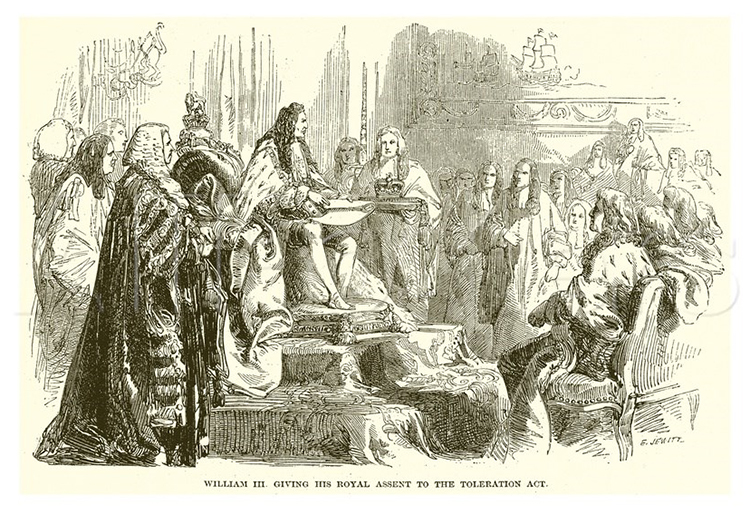
The Glorious Revolution used to be recognised as a milestone in the history of religious freedom. Despite its theoretical inconsistencies, the Toleration Act of 1689 was held to have achieved as wide a measure of liberty of conscience as was practicable in the circumstances. 'It is true that the Toleration Act recognised persecution as the rule, and granted liberty of conscience only as the exception', observed Macaulay, 'but it is equally true that the rule remained in force only against a few hundreds of Protestant dissenters, and that the benefit of the exceptions extended to hundreds of thousands.'
This article is available to History Today online subscribers only. If you are a subscriber, please log in.
Please choose one of these options to access this article:
- Purchase a online subscription and receive unlimited access to our archive for one week, one month or a year
- Purchase a print and website subscription, giving you one year's access to all our content and 12 editions of History Today magazine.
- If you are already a print subscriber, purchase the online archive upgrade for a year's worth of access at a reduced price
Call our Subscriptions department on +44 (0)20 3219 7813 for more information.
If you are logged in but still cannot access the article, please contact us
If you enjoyed this article, you might like these:
- Home
- Location
- Period
- Themes
- Magazine
- Subscribe
- Archive
- Ebooks
- Students
- Blogs
- Contact
Newsletter
From The Current Issue
|
Tom Holland
|
|
Derek Wilson
|
|
Roger Hudson
|
|
Mihir Bose
|
From The Archive
|
'Brothels on wheels' thundered the moralists but Peter Ling argues the advent of mass motoring in the 1920s was only one of the changes in social and group relationships that made easier the pursuit of carnal desire. |
On This Day In History
Richard Cavendish describes the execution of James Graham, Marquess of Montrose, on May 21st, 1650.