Ancient Greece
|
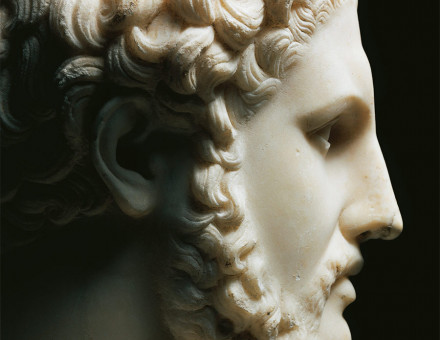
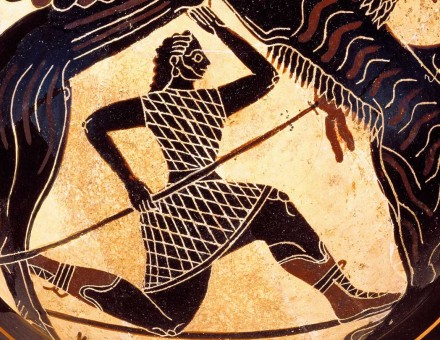
Greece is a mountainous country and the ancient Greeks were a hardy, independent people. Their first civilization, the Mycenaean, rested on agriculture but also extended trade networks. A Dark Age... read more |
|
EDITOR'S CHOICE
There is evidence, argues Adrian Tronson, to suggest that the thirteenth-century Mali empire, and its ruler Sundiata, were strongly influenced by the life of Alexander the Great, 356-323 BC, an influence that was to be capitalised on in the late 1950s. |
To read any piece marked
, you'll need a subscription to our online archive
|
The Battle of Marathon has long been presented as the decisive moment at which Greeks led by the newly democratic Athenians gained the upper hand over the despotic Persians. Barry Baldwin reappraises the battle, and explains why it is still a byword for endurance. Published in History Today, Volume: 48 Issue: 5, 1998
|
|
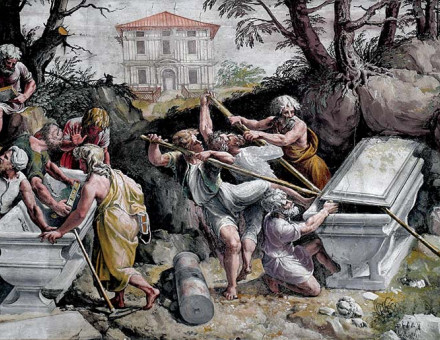
Graham Shipley meets the dead in a Greek cemetery - an oasis of classicism in modern Athens. |
|
A look at a new exhibition in Venice, which shows the flow of culture between East and West in early Greece. |
|
Louis Crompton argues that male love and military prowess went hand in hand in classical Greece. |
|
Lesley Beaumont looks at how children's games were not just seen as pastimes but as active stimuli to learning and good citizenship in the world of Plato and Aristotle. |
|
E. Hall looks at the methods used in ancient Greece to court public opinion in the light of the modern media and messages of democratic politics today. |
|
Barry Strauss looks at the contrasts and similarities between the city-states and the 'land of the free'. |
|
Susan Cole looks at how, though formally excluded from the political process, Athena's sisters nevertheless made their mark. |
|
François Hartog on how urban living has coincided with the advocacy of popular rule from Plato through to Machiavelli, Rousseau and 20th-century sociologists. |
|
Mary Beard looks at the new ways of thinking about what life was like for women in Greece and Rome. |
|
Charlemagne may have been the first Holy Roman Emperor but what did he do to dispel the 'Dark Ages'? Mary Alberi looks at the work of his leading court intellectual, Alcuin, and how his hopes for a 'New Athens' in the Aachen palace school promoted the Carolingian Renaissance. |
|
Rebel without a cause? Paul Cartledge probes whether the chequered career of one of fifth-century Athens' most famous sons reveals more about conflicting codes of loyalty than just the machinations of a turncoat. |
|
The symbols, slogans, ideas and architecture of the Founding Fathers were saturated in the world of Ancient Greece and Rome. |
|
'You are what you eat' was as relevant an observation for the ancients as for more modern thinkers, argues Helen King |
|
'Plus ca change, plus c'est la meme chose'... many of the agricultural practices described in the art and literature of classical Greece persist to the present day. |
- Home
- Location
- Period
- Themes
- Magazine
- Subscribe
- Archive
- Ebooks
- Reviews
- Blog
- Contact
Related Blog Posts
|
In this month's edition: the death of Alexander the Great, the life of... |
Book Reviews
|
What was it like to attend the Olympics 2,400 years ago? |
|
Tom Palaima reviews two timely titles focusing on Greek athletics and the... |
|
The publication of The Barrington Atlas of the Greek and Roman World fills a... |
|
Paul CartledgeGreek Civilisation: An IntroductionBrian Sparkes
|
From The Current Issue
|
Nigel Richardson
|
|
Malcolm Murfett
|
|
Roger Hudson
|